









Michiel van de Bunt of ZinCo Benelux on roof gardens and green roofs:
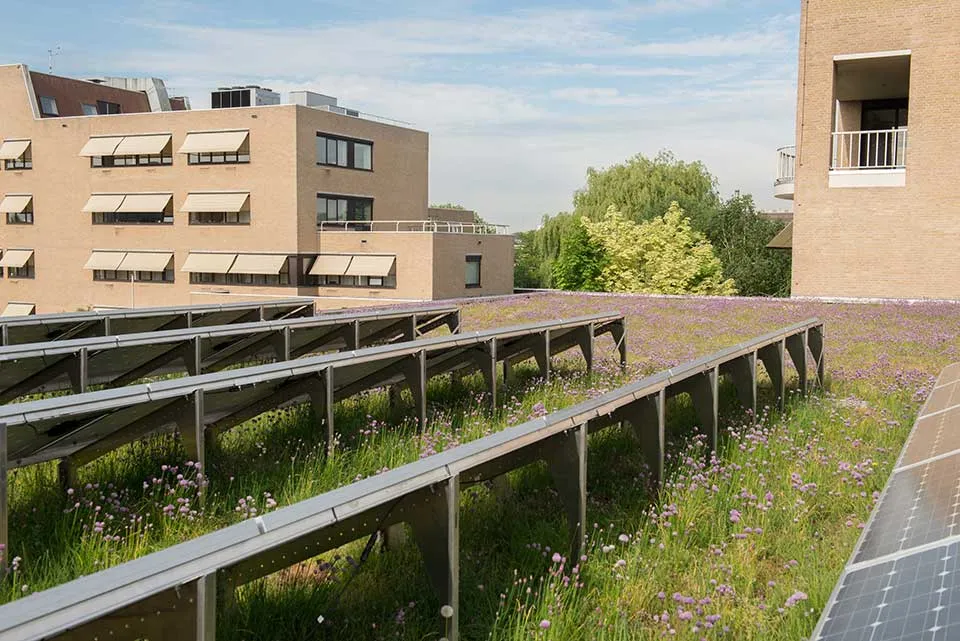
Complexity and opportunity mean we are working together more and more.
According to Van de Bunt, a roof is primarily intended to do two things: keep water out and maintain the right temperature indoors. “But there is now so much more that can be done with roof gardens and green roofs. This makes the design process more complex, so it is helpful for us to talk to architects and designers about it from the outset.”
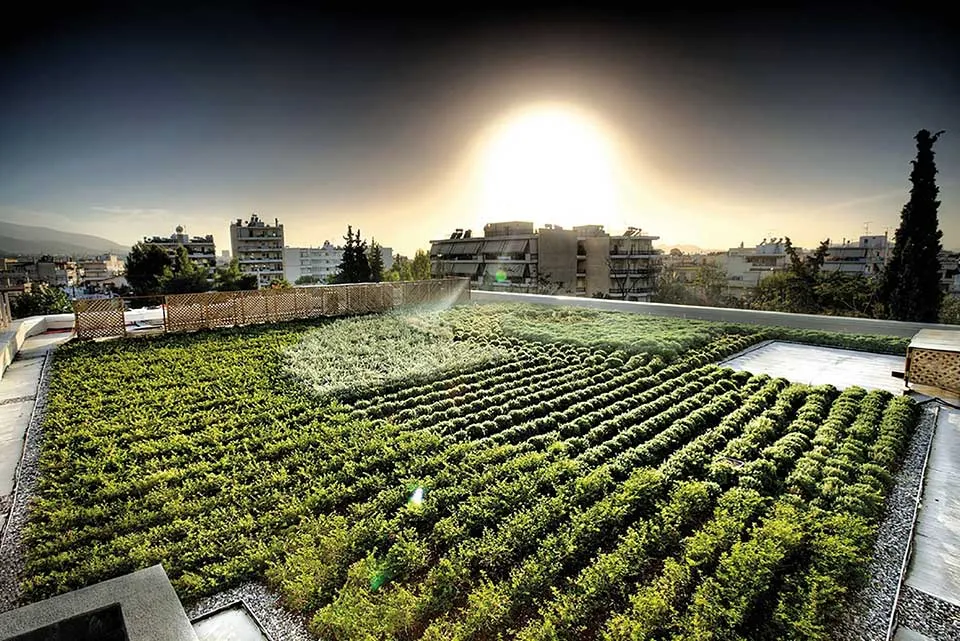
Van de Bunt: “Developments in housebuilding are moving at breakneck speed. In the past, developers building a new residential area would factor in fewer than one car per household. Nowadays, the figure is more than two and a half. It is falling, admittedly, due to the effects of coronavirus and the social trend towards car sharing, but developers still have to take on the challenge of mobility. Household composition also plays a role: single people, younger or older residents, families or pensioners, and of course income. Ideally, there would be plenty of land available for building, with space for parking bays. That is possible, but unfortunately not in urban areas. Project developers therefore often build underground car parks, with space for a roof garden above.”
Additional functions
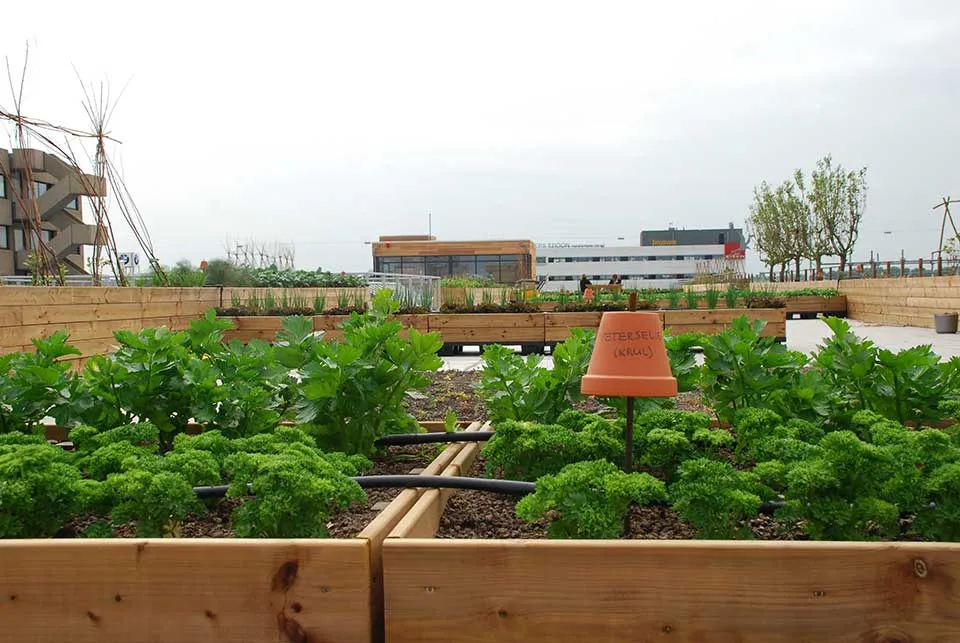
A garden at roof level adds extra functions to a roof. “And there are more and more of them. Rainwater can be collected and discharged either quickly or slowly. Or energy can be generated on green roofs with water features, insect hotels or certain native plants. The aim is to compensate for lost square metres of landscape and ensure that the loss of habitat for flora and fauna is offset. The use of multifunctional roofs goes even further, from gardens to entire sports fields. You name it. In Denmark, there is a ski slope and even a full athletics track on a roof. If we take each other’s needs into account early enough in the process, a great deal is possible. There is just one condition: the roof structure must be able to support it.”
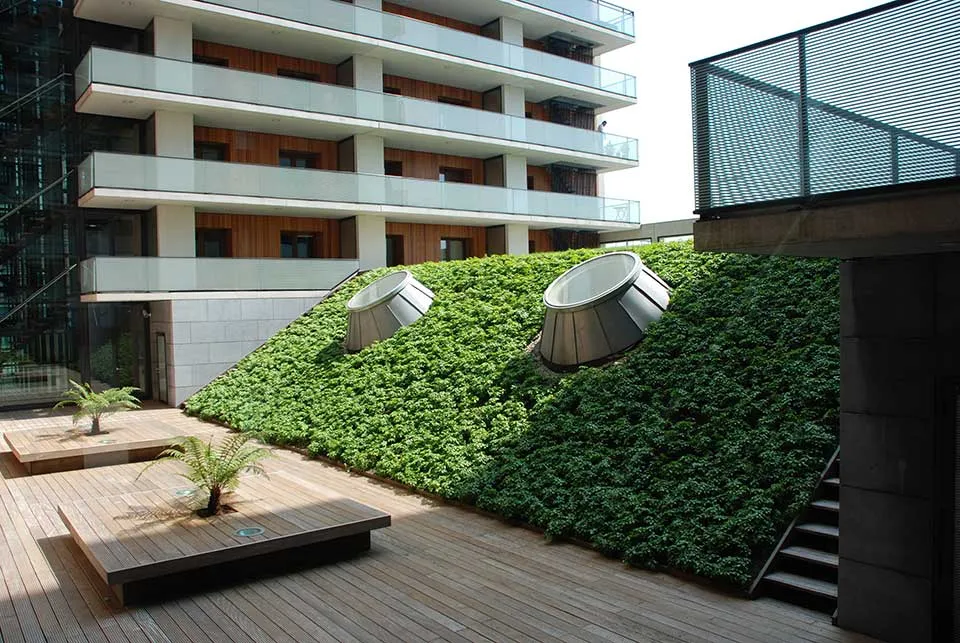
For Van de Bunt, that is the biggest challenge. “Roofs are increasingly being seen as usable space. In Rotterdam, for example, they are working on a kind of second level, Rotterdam at 20 metres, and want to connect the roofs to create a proper walking route from roof to roof. The multifunctional nature of roofs is growing, as is the number of people living in urban areas. But because for decades we built in a way that seemed perfectly fine at the time, we are now seeing a decline in the quality of flora and fauna and worsening water problems.”
More collaboration
One solution is to keep cars out of cities, at least. “I welcome the ‘fifteen-minute city’ concept: everything within a 15-minute walk. From a supermarket or sports club to even a café terrace. You no longer need a means of transport. Shops on the ground floor, with gyms and residential and work spaces above. It is important, though, to ensure that all possible functions work together structurally. That means we will have to collaborate even more. A roofing or garden specialist will no longer be able to consider only their own systems. The tendering process will also need to be reviewed. Think of solar panels on the roof, where the landscaper also wants to create green space and rainwater needs to be collected at the same time. You need to understand all the technical possibilities offered by materials and structures and, where necessary, adapt them to work together. So let’s join forces.”
Question about this story? Ask your question
Keep following this
Get an email when a new story is published. No account needed.
- ThemeSpace for urban green
- SubjectGeneral







