









Multifunctional green roof on a listed building. A green oasis in the city
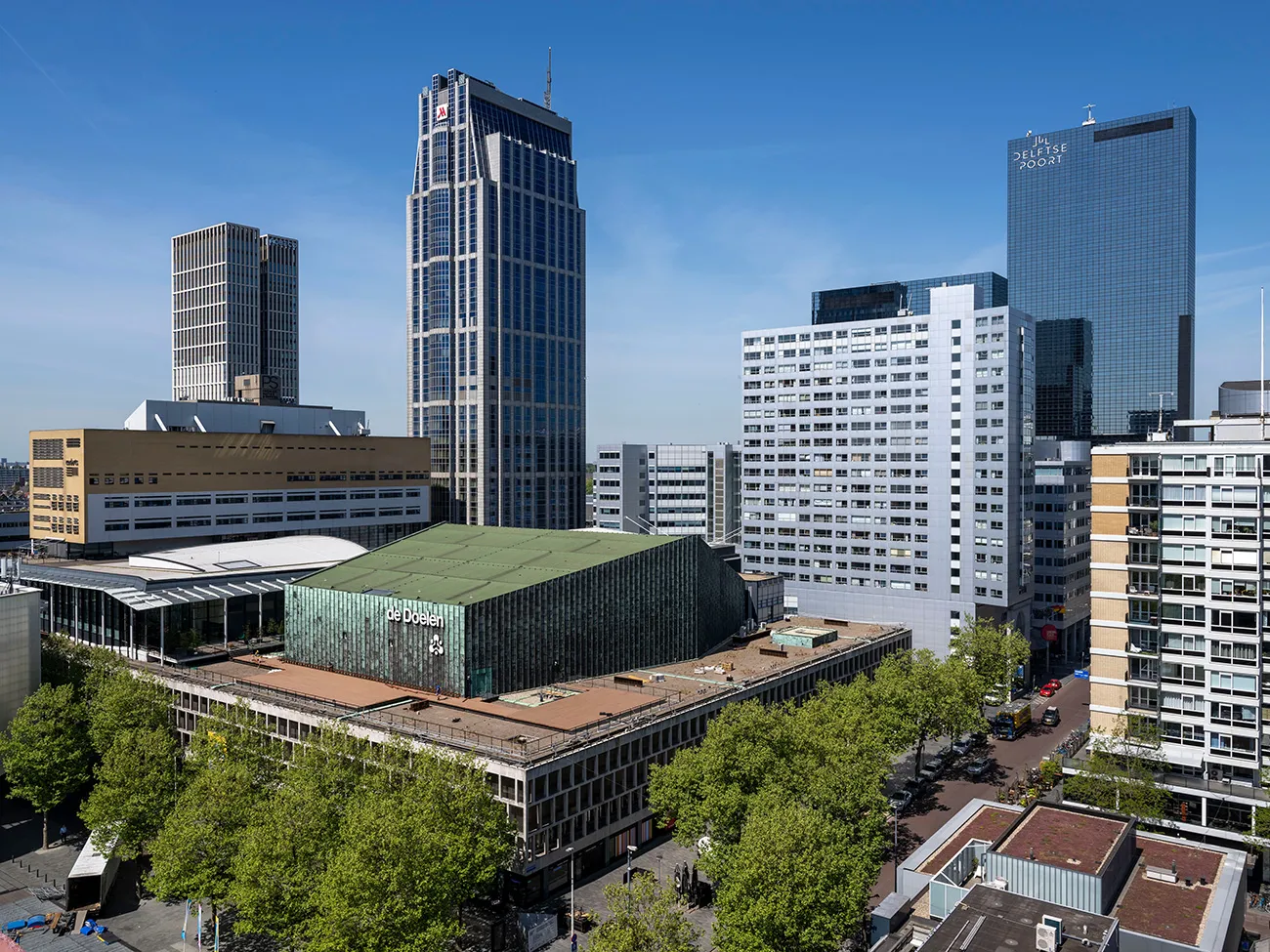
Van der Tol B.V. has created a multifunctional roof garden of around 2,500 m2 on the roof of de Doelen, a conference and concert venue in Rotterdam. It is the first time a large municipal building and national heritage site in the city has been given a multifunctional roof of this scale.
Van der Tol has been in business for more than 75 years and works to make cities in the Randstad, also known as the Ecostad, more climate-resilient. “We look at how we can make cities more liveable and greener, and provide solutions to current challenges,” says Wessel Peek, estimator and work planner at Van der Tol. “These include the effects of climate change. The heavy rainfall in recent years has put enormous pressure on the sewer system. By using smart technology in roof gardens, rainwater can be stored, reused or discharged more slowly.”
Buildings with bitumen roofing often have rainwater drains connected directly to the sewer. Green roofs can help slow the discharge of water, among other benefits. This reduces the load on the sewer system.
A range of techniques
Demand for roof gardens has increased in recent years. Peek says this is hardly surprising. “Many local authorities now impose requirements for water storage at both existing and new buildings. This presents an additional challenge for our clients. We are
happy to support them and offer a range of solutions.”
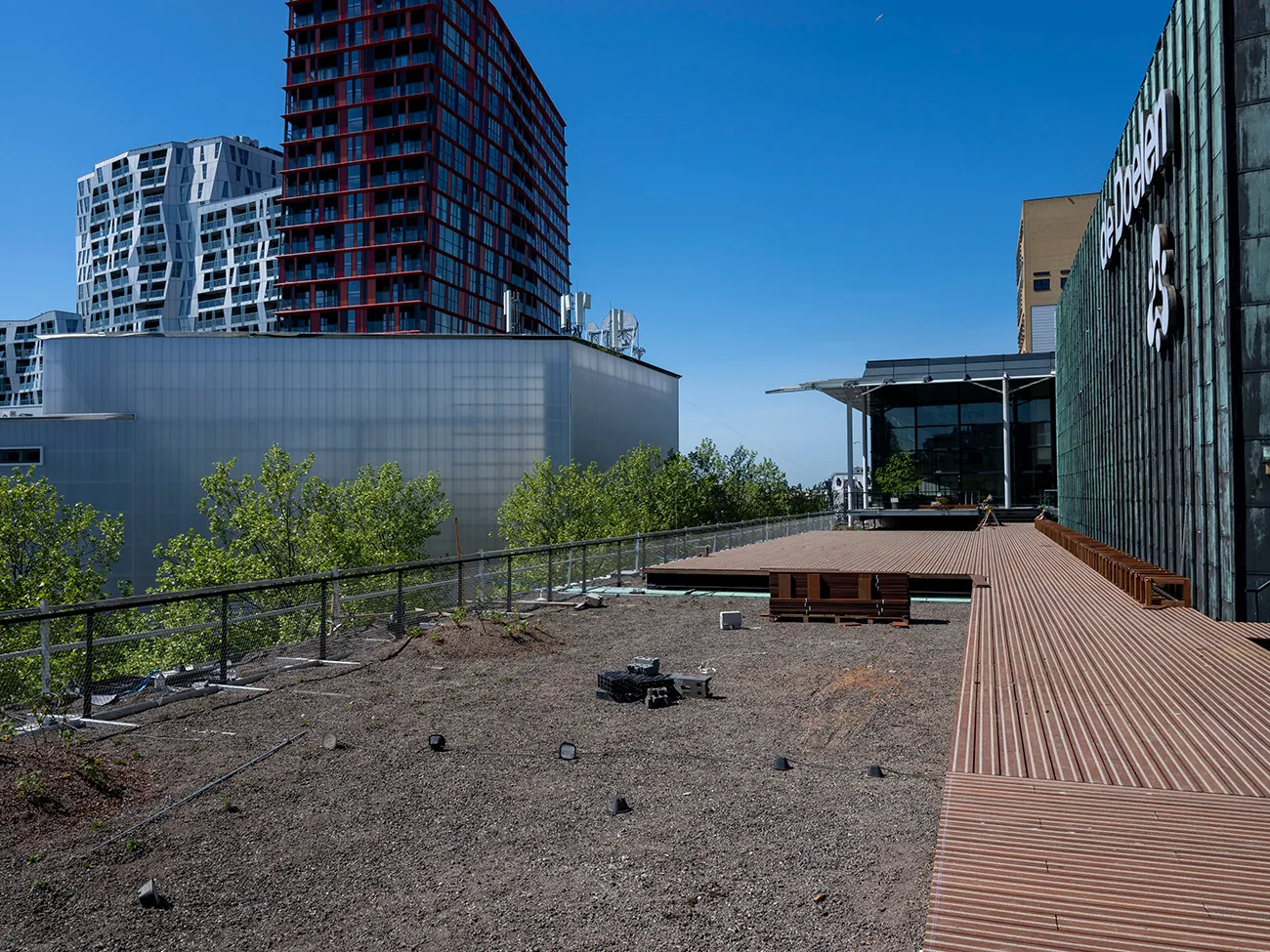
After winning the tender issued by the municipality of Rotterdam, work on the project began at the end of September 2021. “To prepare for the roof garden, the municipality installed insulation and roofing across the entire roof. We built ‘dykes’ on the roof. Retention crates were installed inside them, providing storage for 300 m³ of water. This serves as a water reserve for the plants. Rainwater from the higher roofs of the concert hall drains into the retention crates. There are several roof sections, with retention crates at different heights. A Zinco Meteo Active system was installed on each roof section. This data-driven water management system responds to the weather forecast and water levels. Rainwater is discharged only when the sewer system is not under strain.”
A variety of plants
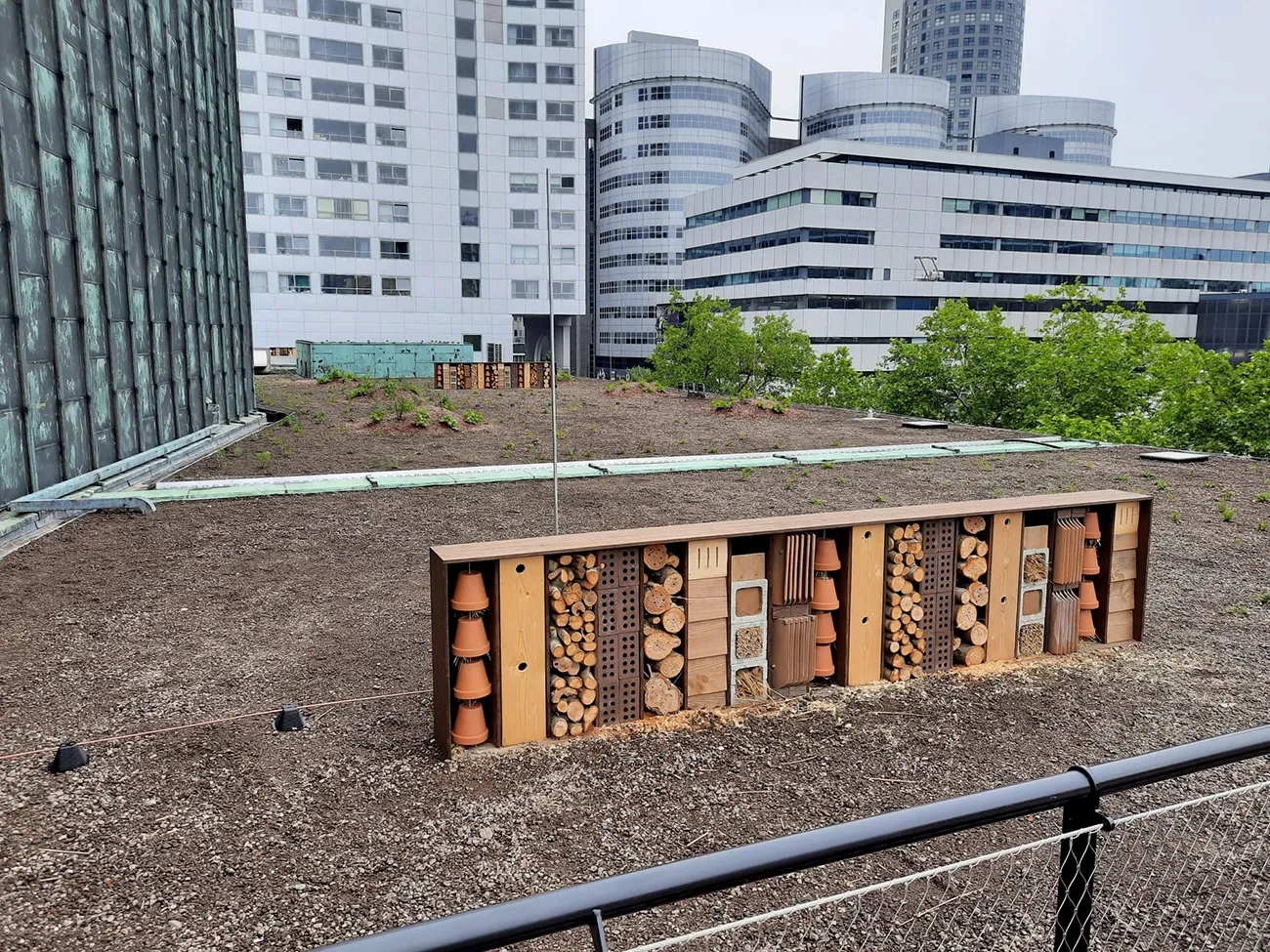
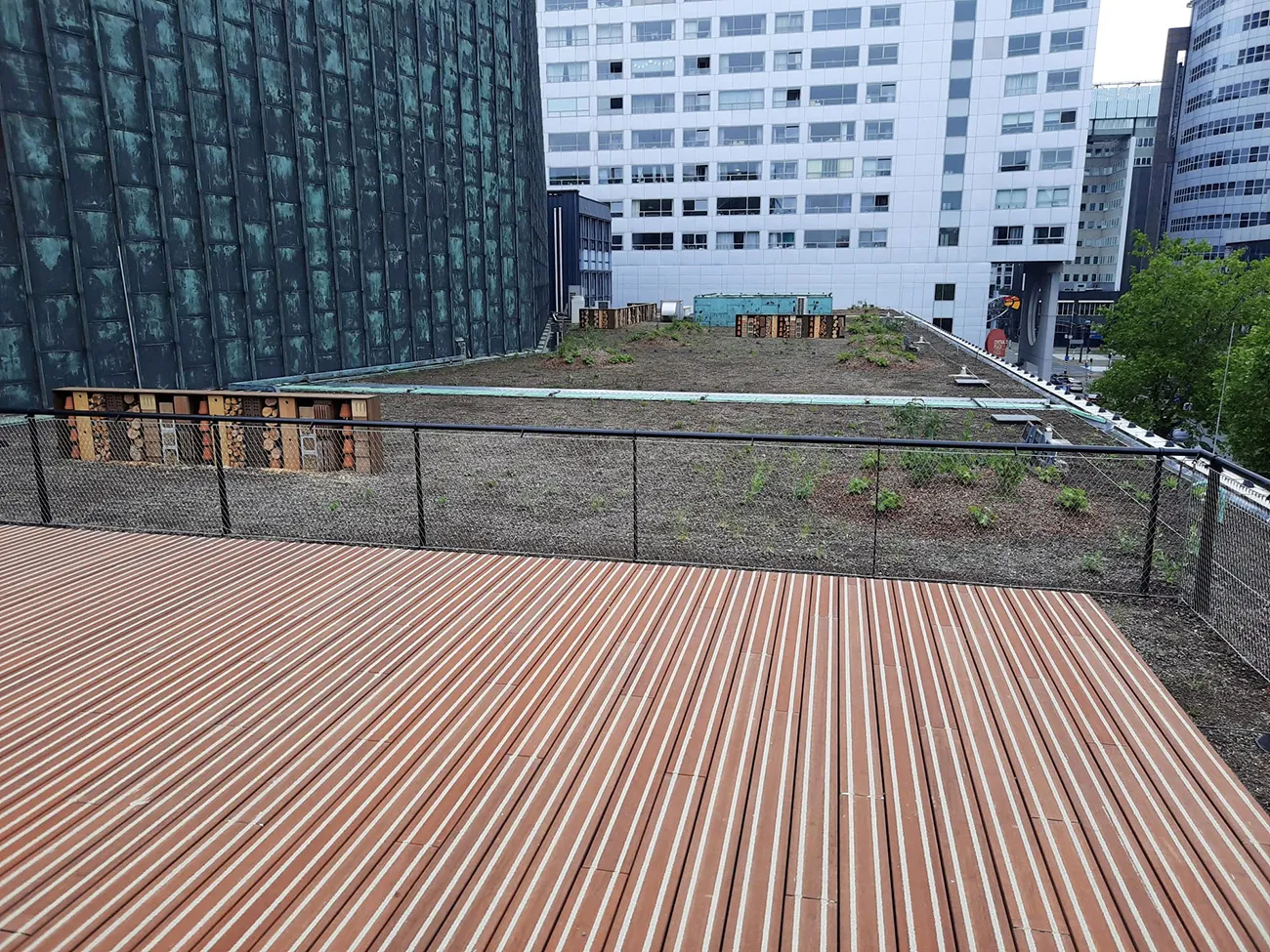
One striking feature is the wide variety of plants. A range of native herbs, bulbs, ornamental grasses, perennials and shrubs have been planted. The vegetation attracts bees, butterflies and birds. Five insect hotels, with various nesting boxes for birds, have also been installed, covering a total area of 31m². There are several pools on the roof for birds and insects, making the water retention system visible. On the Schouwburgplein side, a sustainable 480 m² bamboo deck features a 31-metre-long bench for educational and social activities. A huge steel structure weighing around 40 tonnes was installed on the roof to support the bamboo deck and its visitors. Peek says: “A fine piece of engineering to make this possible on a roof that was not originally designed for it. We worked closely with
GKB Staalwerk.”
Eye-catcher
The roof was designed by Kraaijvanger Architecten. The planting plan was drawn up by Deltavormgroep in collaboration with Cruydt Hoeck.
A roof garden has many benefits. It provides insulation, keeping the concert hall cooler in summer. It also helps improve biodiversity in the city. It benefits local residents too: there is a clear difference between looking out over a bitumen roof and a green oasis.
Of course, it does require some maintenance. Both the roof garden and the water management system need annual maintenance to keep the garden in good condition.
Peek is very pleased with the result. “It was a pleasure working with the parties involved. The plants are still small, but will soon develop into a green oasis. The deck is a real eye-catcher.”
Question about this story? Ask your question
Keep following this
Get an email when a new story is published. No account needed.
- SubjectGeneral







