









New elective gives students broader knowledge of planting
Text Nolanda Klunder | BeeldL James Byng, Frans Snijder, Rosa de Wolf
Plant knowledge in education
The demand for specialist planting knowledge is growing, while it is receiving less and less attention in education. TU Delft has introduced a new course on plant knowledge. “The greening challenge has changed the role of the designer,” says landscape architect and plant specialist Nico Tillie.
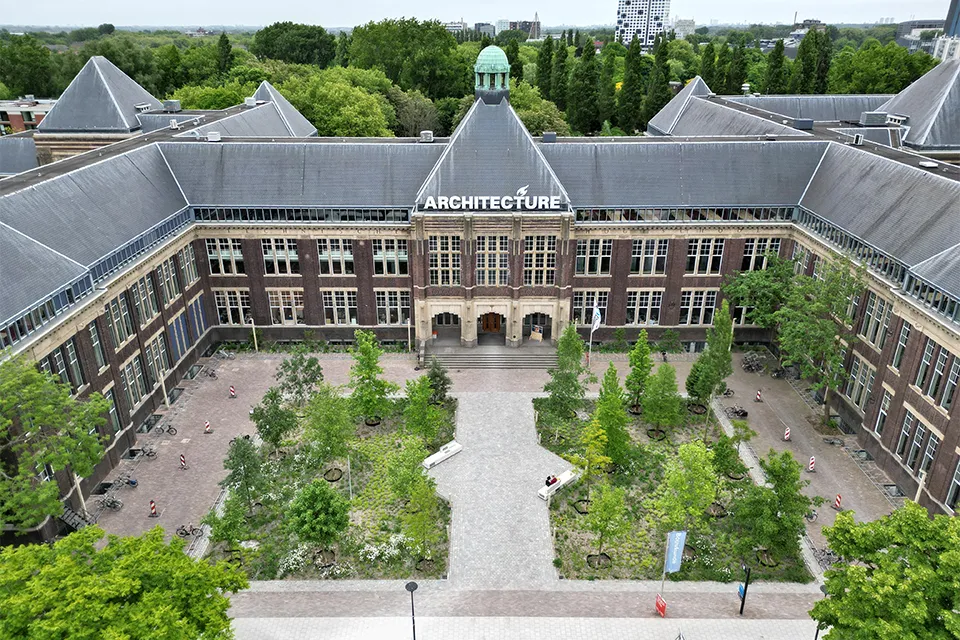
Across the board, from vocational to higher and university education, the role of plant knowledge in education has declined sharply over the past few decades. As a result, young people entering the labour market know far less about plants than the generation now leaving it. At the same time, the need for specialist knowledge is growing as urban areas are greened. This prompted TU Delft to make plant knowledge part of its curriculum: since the last academic year, the elective Plantscapes has been taught on the master’s programme in Landscape Architecture at the Faculty of Architecture and the Built Environment.
Demand for greater depth
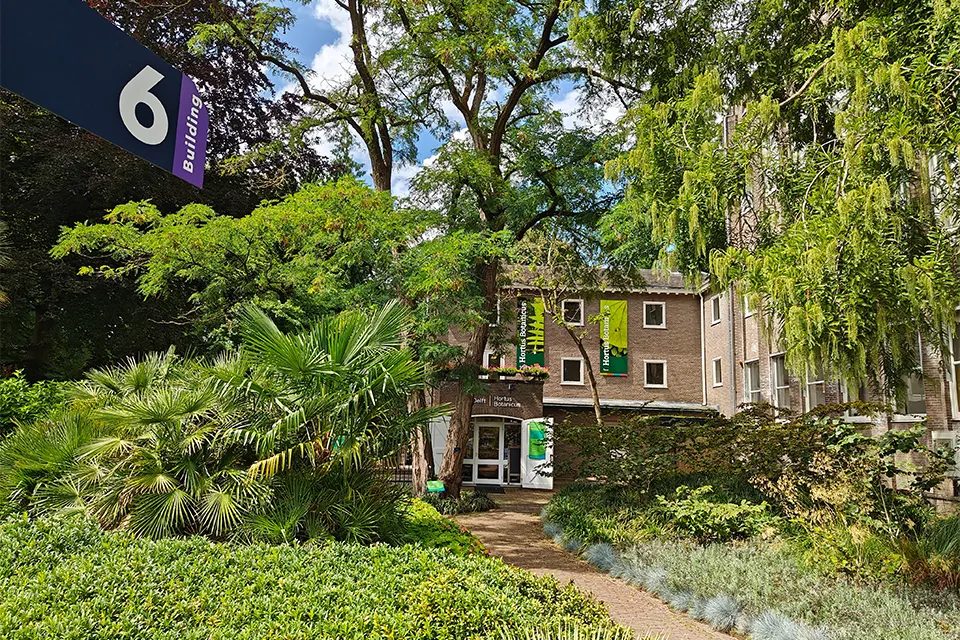
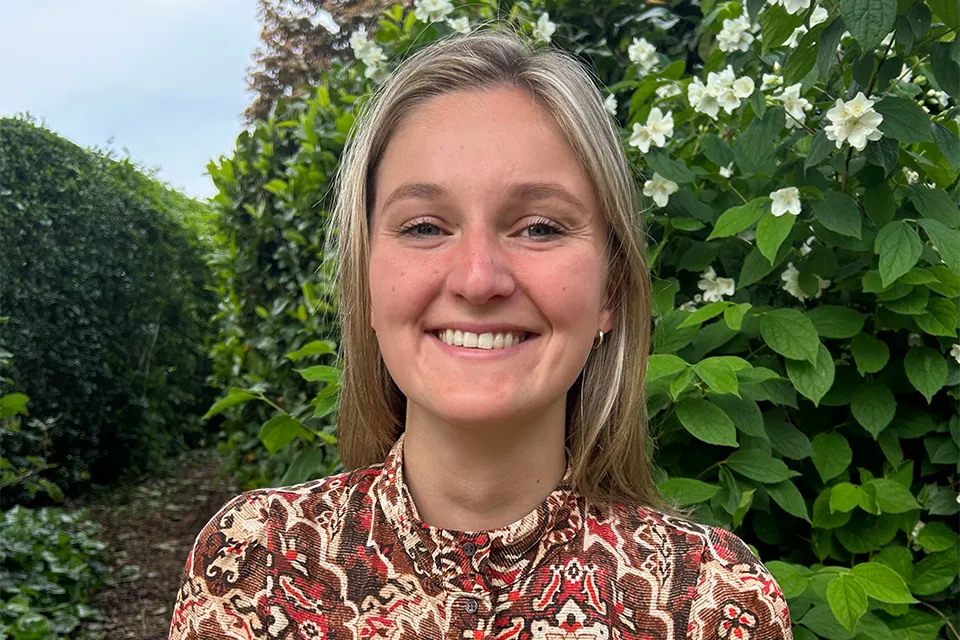
The Plantscapes elective was set up by university lecturers Nico Tillie and Rene van der Velde and PhD candidate Rosa de Wolf, in collaboration with Rene Hoonhout, green space manager at the TU campus, and James Byng, director of the Hortus Botanicus at TU Delft. De Wolf explains: “During my studies, I noticed that on the master’s programme in Urbanism, you learn to design the urban landscape without any knowledge of plants. I had to seek out that deeper knowledge myself. I wasn’t the only one: students feel a strong need for a course on plants as part of their studies.”
Knowledge is disappearing
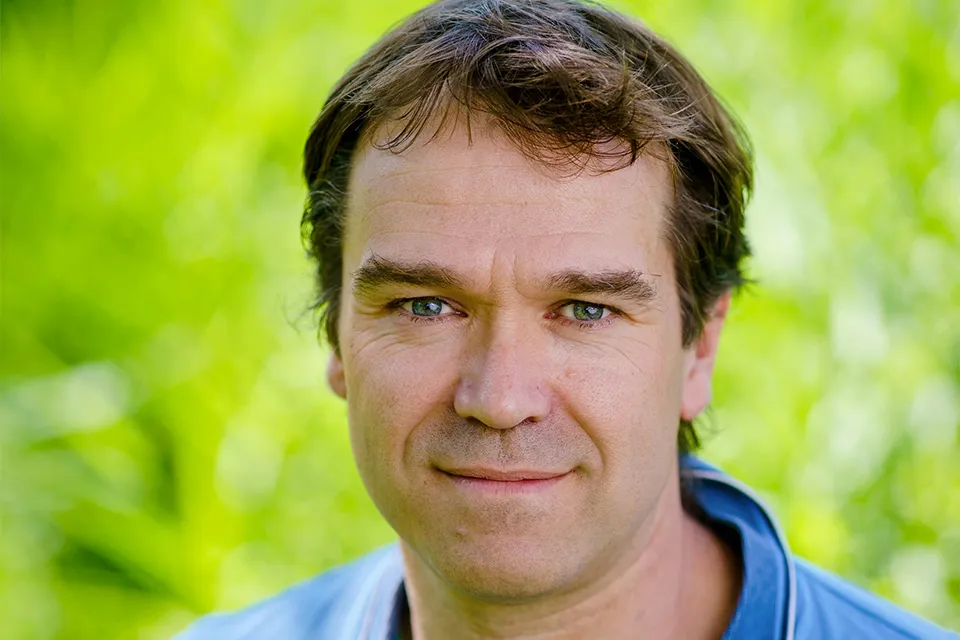
“The greening challenge has changed the role of the designer,” says Tillie. “Whereas previously the architect would indicate in the design, ‘We need greenery here’, the question now is what kind of greenery is needed. What should the planting do for biodiversity or climate mitigation in this location? What conditions, such as drought, heat or water, must the plants be able to withstand here? Plant selection needs to be more precise. At the same time, knowledge of plants is declining.” Hoonhout adds: “I went to horticultural college in Boskoop, where we had to learn plant names by heart. But if I ask my interns now to name ten trees, they can’t. This decline in knowledge has serious consequences. I see engineering firms producing designs and specifications with the wrong plant choices. That creates problems for the maintenance team, because the greenery may not survive and may need replacing quickly, or may otherwise be difficult to maintain. Or simply, the wrong choices have been made.”
Ten weeks
Plantscapes is a ten-week, full-time elective. During those ten weeks, students learn the basics: at the Hortus Botanicus, they learn about the classification of the plant kingdom according to the latest thinking; they learn to measure and describe greenery, visit nurseries and tree nurseries, and shadow green space manager Hoonhout. External experts, including green specialists from De Bloeimeesters and specialists in green roofs and facades, come to Delft to share their knowledge. Students compile a portfolio of 100 species, covering trees, perennials, bulbs and shrubs. De Wolf says: “Those 100 species provide the foundation for a different approach to design, one that goes beyond aesthetics. From there, students can continue to develop, because they have a solid foundation and their interest has been sparked.”
Better planting plans
“You don’t become a plant specialist in ten weeks,” says Tillie. “The aim is for students to learn enough about greenery on this course to ask the specialist the right questions. The more someone knows about planting, the more specifically they can question the specialist and the more critically they can assess their answers. That leads to better planting plans. Students learn to take many more aspects into account: you can choose plants because they are threatened, help mitigate climate change, are edible or easy to maintain; because they help combat heat stress, can tolerate certain conditions, are native or flower for a long time. In ten weeks, students learn about all the factors involved.” Biodiversity is an important topic.
Byng says: “A third of the Dutch flora is threatened. Dutch horticulture is geared towards mass production, which leads to a narrow range of plants. Because designers quickly choose what is available from wholesalers or nurseries, urban landscapes become monotonous. At Plantscapes, we show that designers can play a major role in conserving threatened species through their choices.”
Not just Architecture students
At present, Plantscapes is only open to Architecture students, but next academic year the elective will also be open to students from other faculties. These could include Industrial Design students who work with plants, Civil Engineering students exploring nature-based solutions for riverbeds and coastal protection, or students developing AI for assessing the health and safety of green spaces. Then there are professionals outside the university. “Anyone who graduated 25 years ago will have learnt little about climate and biodiversity during their studies,” Tillie continues. “That’s why we are also working on setting up a post-academic masterclass that people from outside TU Delft can attend.”
Everywhere
Plant knowledge may not be something people associate with a technical university. “The combination of technology and greenery is precisely what makes it so valuable,” says Byng. “In the past, the Hortus Botanicus grew plants for research projects, particularly in microbiology. That has changed completely: the focus is now on bio-based materials, urban ecology and building with nature.” Tillie adds: “We now have at least 25 students on Plantscapes each time. After graduating, they go on to work in all kinds of places and share their knowledge and insights there. That means the impact of this elective continues to grow.”
Question about this story? Ask your question
Keep following this
Get an email when a new story is published. No account needed.
- ThemeTrees and plants for tomorrow
- SubjectGeneral







