









‘Non-conforming’ does not have to be a drama
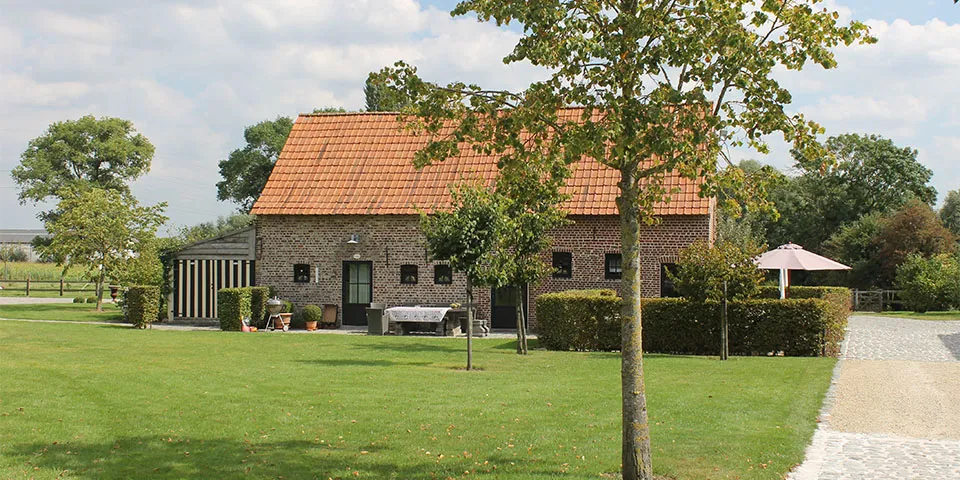
People who enjoy spending time outdoors often choose the countryside, away from the hustle and bustle, where there is still room to shape your home and garden exactly as you wish. Sometimes, the term ‘non-conforming’ comes up. What does it mean? What should you look out for? Which permits do you need if, for example, you want to run a B&B in a vacant farmstead?
Vacant farmsteads offer many possibilities
‘Correct zoning’
By definition, a property is non-conforming when it ‘does not have the correct zoning under the current plan’. These current plans are regional plans, general or detailed land-use plans, or spatial implementation plans drawn up by the authorities. They divide Flanders into residential, agricultural, industrial and recreational areas, and so on. There are, however, many further subdivisions of these main categories, as well as regional variations.
Although the first regional plans date back to 1972, historical circumstances already meant that businesses, for example, ended up in residential areas and homes in agricultural areas. In other words, they became non-conforming.
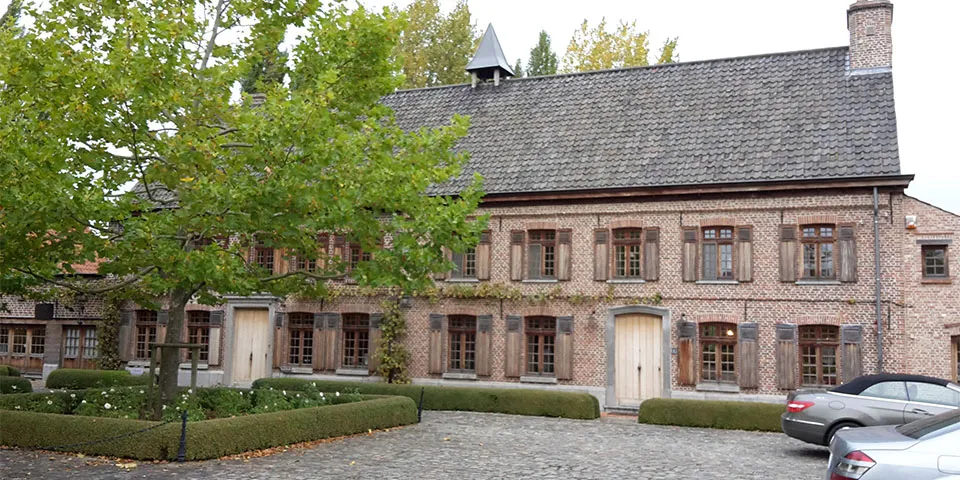
The timeless charm of an old façade.
No longer automatic
It is possible for someone whose main occupation is not farming to live in an agricultural area, provided the buildings have been properly permitted. However, if you wish to extend, renovate or rebuild, or change the use of a building, this must be done in accordance with the conditions set out in the ‘non-conforming use legislation’. It is therefore advisable to get well informed in advance if you have plans involving non-conforming use.
The potential new uses for agricultural buildings are listed in the decree on changes of use for non-conforming properties. These include office use, storage and rural tourism, as well as specific uses for heritage buildings. One common option is to change the use of farm buildings from agricultural to residential, and then apply the non-conforming use legislation.
In the past, when a farm ceased operations and was decommissioned, it was common practice to apply the non-conforming use legislation automatically, without changing the building’s use. This has recently been met with stricter enforcement. Under circular RO 2017/01, an application must first be made for a change of use to private use before the non-conforming use legislation can be applied. This permit requirement gives the authorities the opportunity to assess whether the change of use is appropriate for the site. The aim is to reserve vacant farmsteads that still have value for agricultural and horticultural use for the sector as far as possible, and to assess whether the proposal is consistent with good spatial planning. The authorities are also seeking to reduce non-conforming use, additional land take and the extent of hard surfacing as much as possible. The permit requirement for this change of use is being given extra attention in light of the Beleidsplan Ruimte Vlaanderen, also known as the so-called ‘concrete halt’.
Broadening the scope
To allow desirable non-conforming activities on a temporary basis, with a firm legal footing, the draft Instrumentendecreet was approved at the end of 2019. One of the tools it provides for is the use of activity covenants and contracts.
The aim of this tool is to temporarily enable small-scale, non-agricultural economic activities that are not covered by the decree on changes of use, while retaining the existing zoning designation. For example, a multi-dwelling property or a hair salon in an agricultural area.
The arrangement is designed as follows: first, the municipality and the Flemish Region must enter into a covenant setting out the policy framework, including the minimum requirements and area of application. The resident can then enter into a contract with the municipality, setting out specific agreements within the framework of the applicable covenant. The contract with the municipality can last for a maximum of ten years. To qualify for an activity contract, the building or building complex in which the activity takes place must already exist, must not be dilapidated and must be largely permitted. In addition, it must be located on a sufficiently equipped road and be structurally suitable for the new activity.
A vacant farmstead in an agricultural area therefore offers many opportunities today, and certainly in the future, for other uses, whether temporary or permanent. These options apply to existing buildings and are varied, so it is advisable to first take stock of your own or your client’s wishes and needs before demolishing any buildings. Be sure to discuss your plans with an expert so they can be checked against the legal options.
Questions? Contact a DLV adviser via info@dlv.be or call the freephone number 0800 90 910.
Question about this story? Ask your question
Keep following this
Get an email when a new story is published. No account needed.
- SubjectGeneral







