









Outdoor play can be fully circular
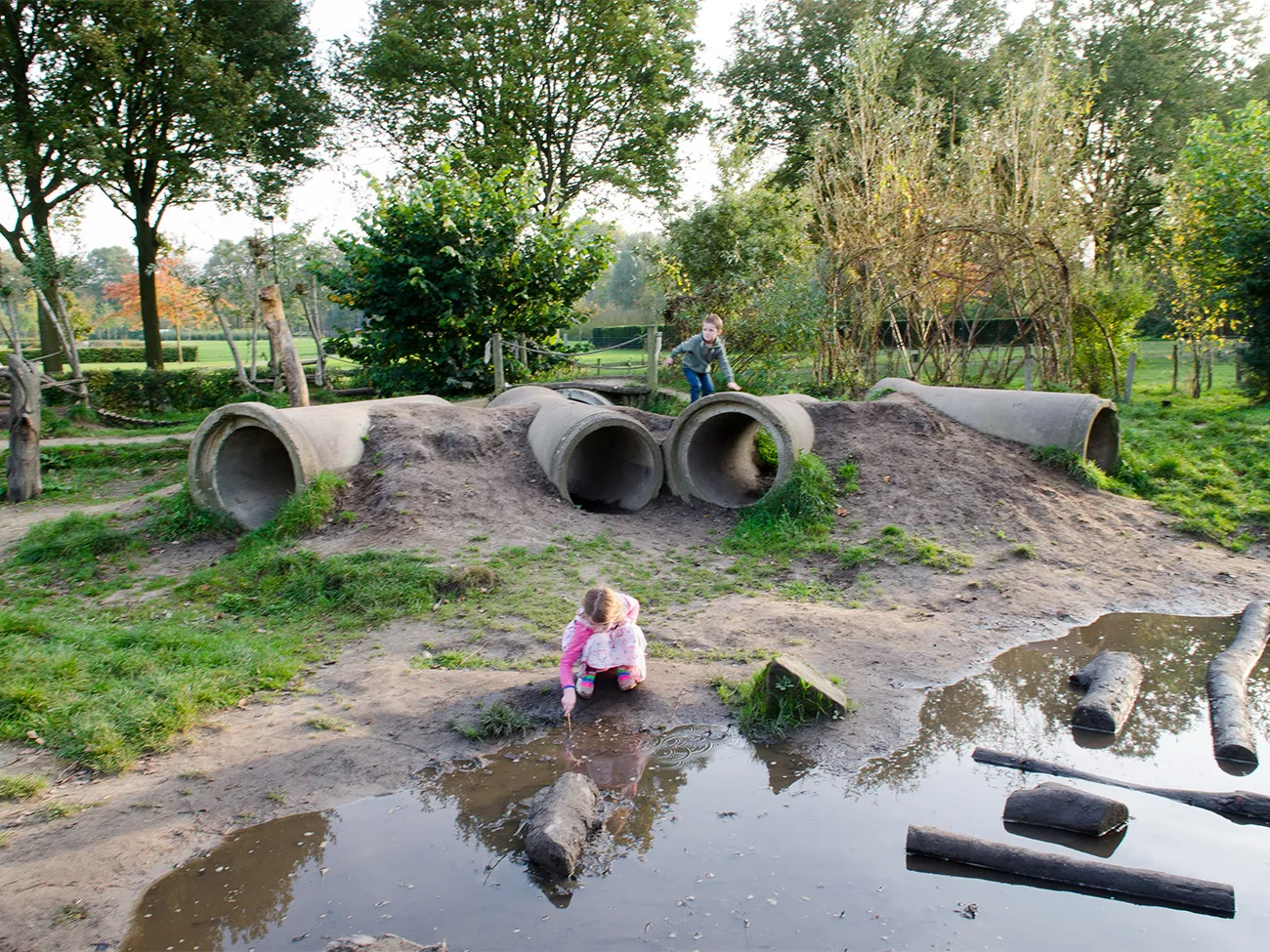
Circular procurement is about increasing positive impact. What better way to do that than through play in outdoor spaces? Lotte van Weert and Elske Oost-Mulder are working to encourage MRA municipalities in this direction, sustainably. They are doing so in both word and deed. The latest addition to their efforts to promote this approach is a guide to circular practices in the design of play areas.
Discovering, challenging yourself, being active, meeting others, playing and taking part in sport. Asked about the benefits of outdoor play, these are the key words for Lotte and Elske. “Just think of your own happy memories of playing outdoors. It is essential for children’s healthy development.”
With the Interactive Play Space Guide, the pair have produced a practical resource to help make this happen. The document, available online at mraduurzaam.nl, contains a wealth of tips for making outdoor play more appealing. And with an added benefit: it is fully circular. “That starts, incidentally, by removing things. Everyone assumes a play area needs play equipment that the municipality has to buy and maintain. But public space is already one big playground. A stream, for example, is also a piece of play equipment. And there are climbing trees everywhere, so why put in a climbing frame as well? A play tree also helps address climate and biodiversity. That way, you achieve three goals at once.”
Source of expertise
If it is that straightforward, why produce a guide? “First of all, our guide offers all kinds of tips for making outdoor play even more appealing. It is therefore a source of expertise for municipalities. Play equipment will, of course, continue to play a role in getting children excited about playing outdoors. But it should be made from circular materials. We also focus on communication. Action is needed in this area too, to encourage parents to give their children more space, both literally and figuratively. Remember that engagement always needs to be tailored to the local context. You need to know who you are dealing with. That is why we focus on asking parents where they used to play when they were ten. It is a good starting point. They often talk about adventures in the woods, playing football on a nearby pitch, playing tag and so on. We find that this leads to a very different conversation about outdoor play.”
Play equipment
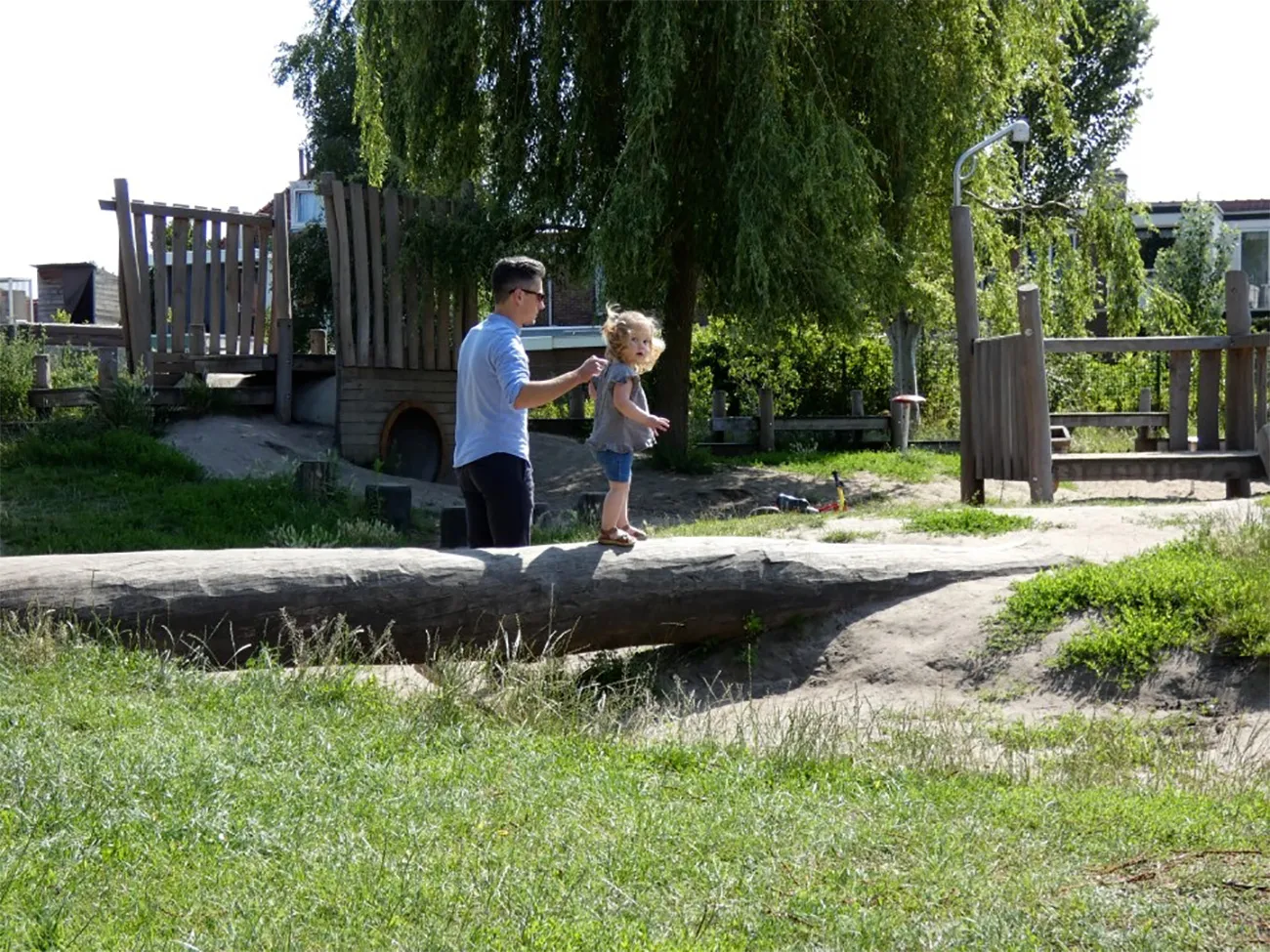
The guide estimates that around 80% of outdoor play takes place in the neighbourhood. Play equipment is needed for the remaining 20%. “So it remains important. It provides a challenge, and encourages children to push their boundaries, not only in play but also in sport.” Their advice on this point is clear: focus on installing circular play equipment in the coming years. Lotte and Elske say this is not difficult. “Much of the equipment currently in use is already fairly circular. It is made from wood, steel or recycled plastic. The only thing usually missing is responsibility at the end of the product’s life. Suppliers deliver the equipment, but do not yet take it back. And that is something we want to change. The whole cycle needs to become part of the way people think. That means installing play equipment made from circular materials that can be reused at the end of its service life. Then the circle is complete.”
An integrated layer of use
Practice has shown that thinking green encourages action. “We see that municipalities embracing this approach start to view public space very differently. They suddenly take a much more integrated approach and spontaneously start making other things more sustainable too. This ranges from green design to upgrading street furniture, fencing and paving. They treat it as a project and also look to the future. We are also seeing different approaches to budgeting, for example by theme rather than by sector. Play areas can be an excellent springboard for thinking about what a neighbourhood will look like and how it will function in thirty years’ time. Many municipalities are working to get to grips with circular area development anyway, and our guide to play areas fits seamlessly into this. This makes play space a layer of use extending across all public space.”
Three-pronged approach
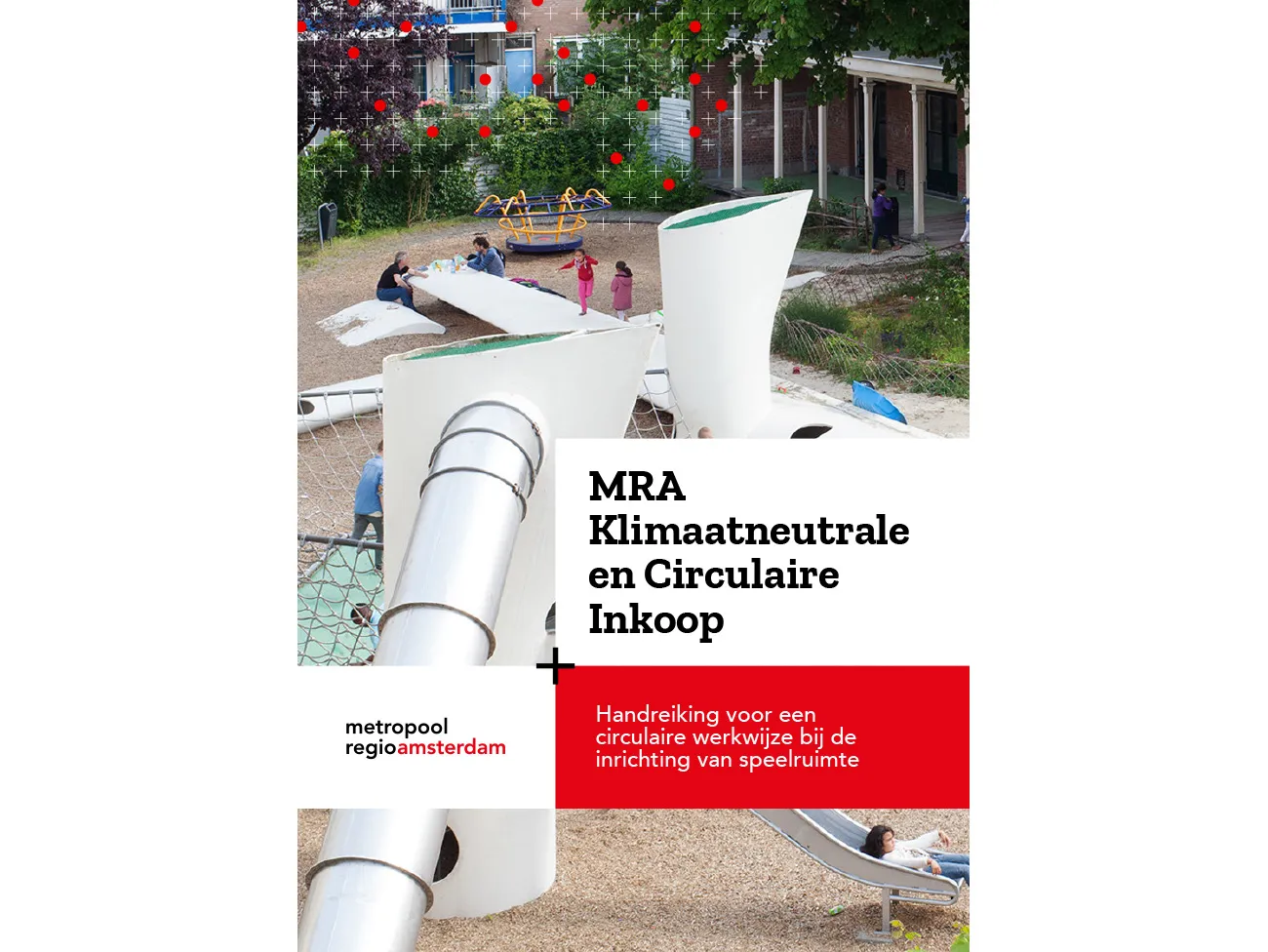
To help municipalities get started with this way of thinking, courses on policy and implementation have been developed to complement the guide. “We also cover circular procurement. MRA civil servants can take part, including through online sessions.” The transition is also easier if a municipality already has a circular policy in place. “We saw this in Almere. There, it was possible to bring policy, the specialist team and the tendering process together in one go, covering both maintenance and supplies. That is probably essential. When these three strands come together, you can make the transition in about four years. People really start to enjoy it, and as a result the rest of the organisation gets involved too.” Is this not wishful thinking? “No, Almere has already done it. Tilburg, Assen and Veenendaal are also working hard to put this into practice in their organisations.”
Question about this story? Ask your question
Keep following this
Get an email when a new story is published. No account needed.
- SubjectGeneral







