









Plants for the tiniest gaps: green between the paving
With the move away from paving already a talking point for some time, more and more forms of natural paving are being used. Pesticides can no longer be used in many places, or are avoided at the request of garden owners. So we are looking for alternatives, because we would rather not have annual meadow grass growing between the paving. One form of natural paving has been around for centuries, but has become increasingly popular in recent years. Instead of controlling weeds between the joints, we plant them with species that can tolerate a certain amount of foot traffic.
These so-called stepable plants are mostly alpine plants that can grow in the tiniest gaps and cracks, need little water and are content with very little garden soil. There is far more choice than you might think, for both shade and sun. With help from Cathy Portier, who has run an alpine plant nursery for many years, we have selected some of the best.
Although rock plants are generally associated with sunny, dry spots, stepable plants often do better in shade and partial shade. This is, of course, because the capacity to store moisture in a joint is very limited. On top of that, we also tread on them from time to time, so only very low-growing plants can cope. Even so, we have found a few.
Miniature mint
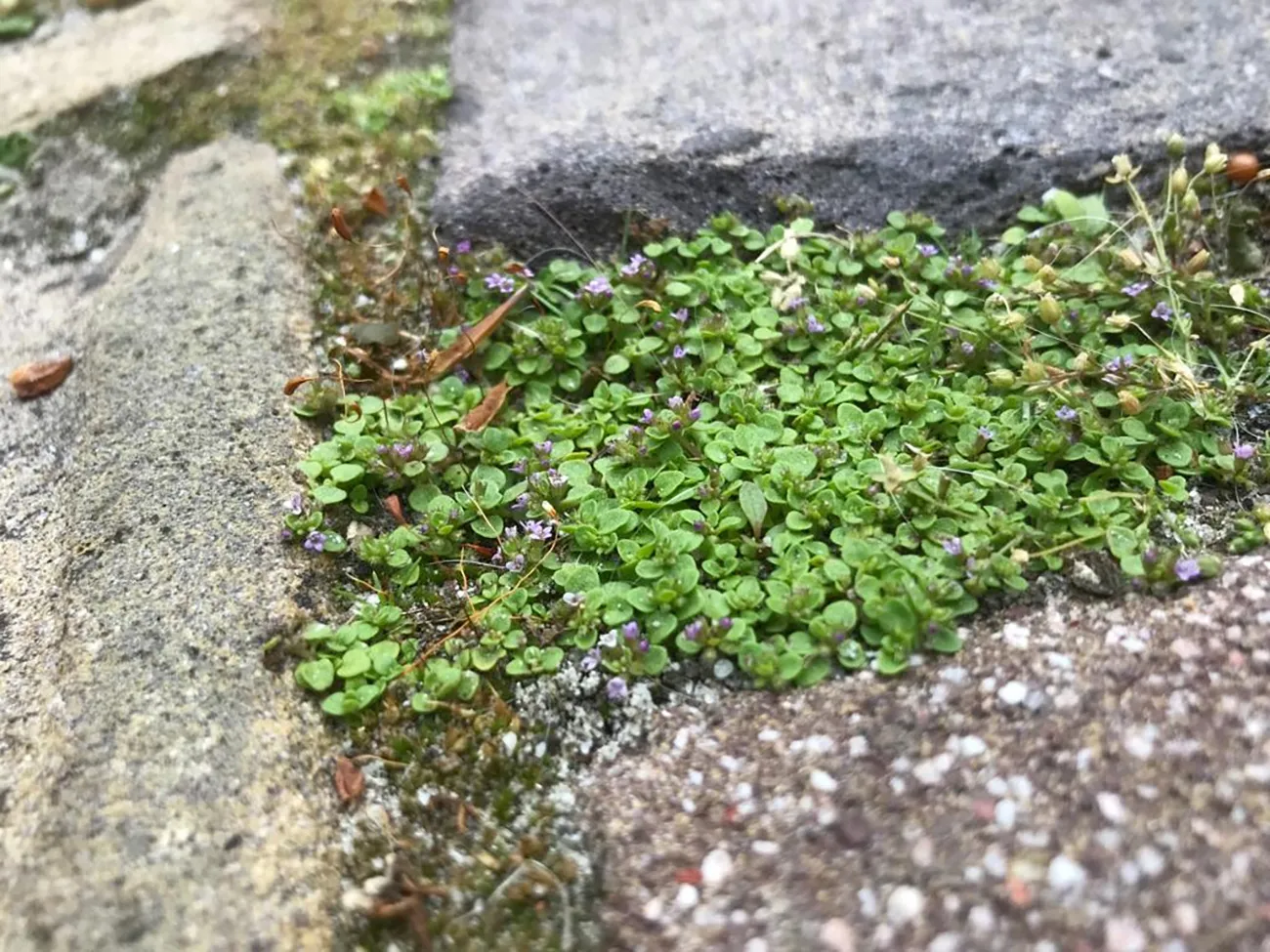
Mentha requinii, for example, is a miniature mint that releases a gentle scent when stepped on. This Corsican mint is native to the mountains and grows quite quickly. It reaches a maximum height of 2 centimetres and is hardy to -10°C. As an evergreen ground cover, it is of interest all year round, but comes into its own from June to September, when it flowers with tiny purple blooms.
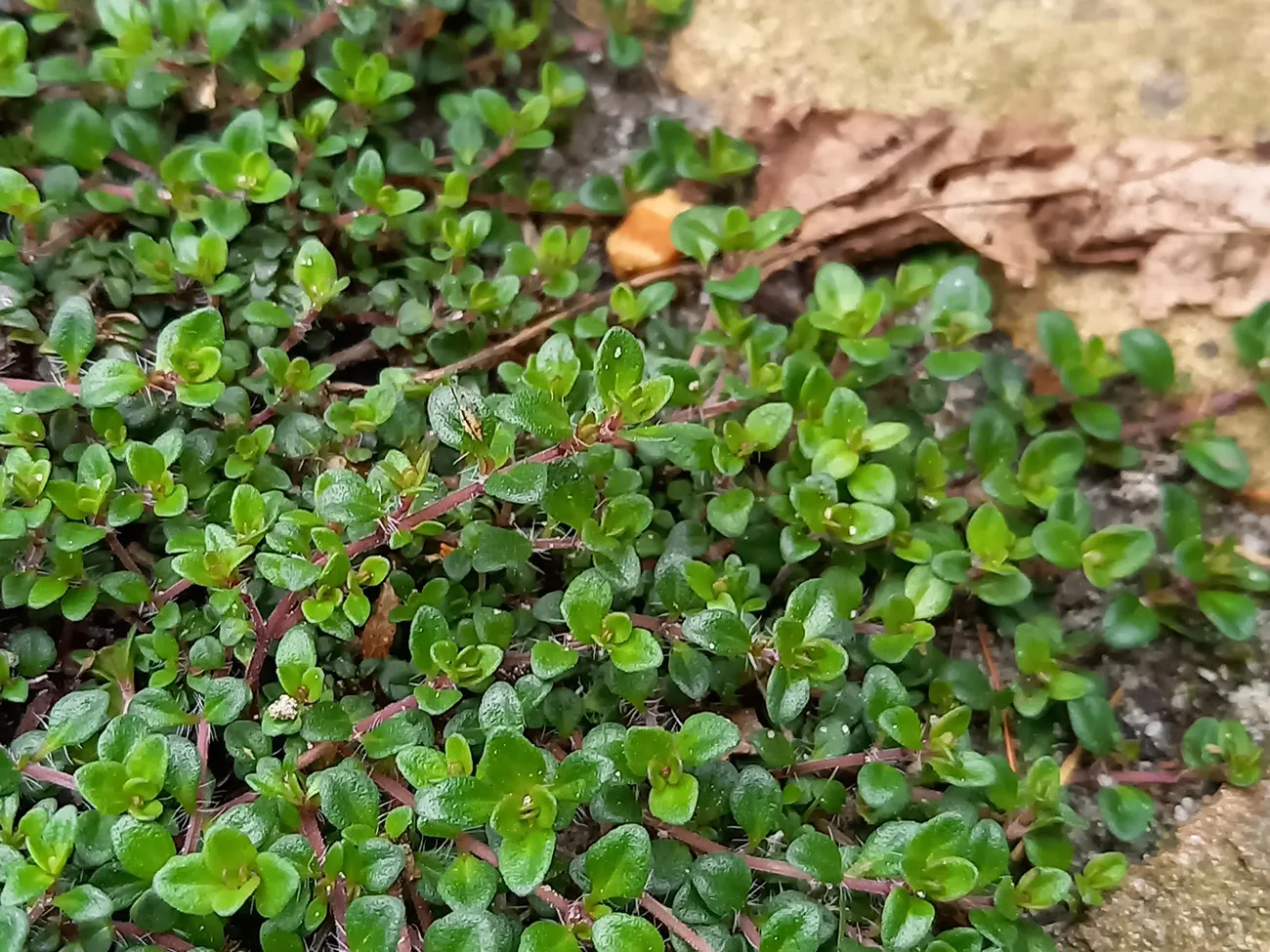
Thyme varieties are another fragrant addition to the selection. Thymus serpylllum, or creeping thyme, is particularly suitable. Other low-growing varieties can also work, such as the rather more exclusive Thymus ‘caborn Wine en Roses’. It was discovered in 2004 by Margaret Easter, who manages the National Thyme Collection in England. This is a vigorous, mat-forming cultivar with small flower spikes in purplish pink. It is unique for its beautiful deep colour and flowers magnificently from May to June. It is also an excellent plant for bees.
Beautiful and yellow
Raoullia australis, also known as cushion plant, is a silvery, moss-like plant. At just 1 centimetre tall, it is the perfect plant for paving joints. However, this plant, which is native to New Zealand, does not like soil that is too calcareous and must not be too wet in winter. This can sometimes be a challenge. It is hardy to -15°C and flowers in June and July, producing attractive but very small yellow blooms.
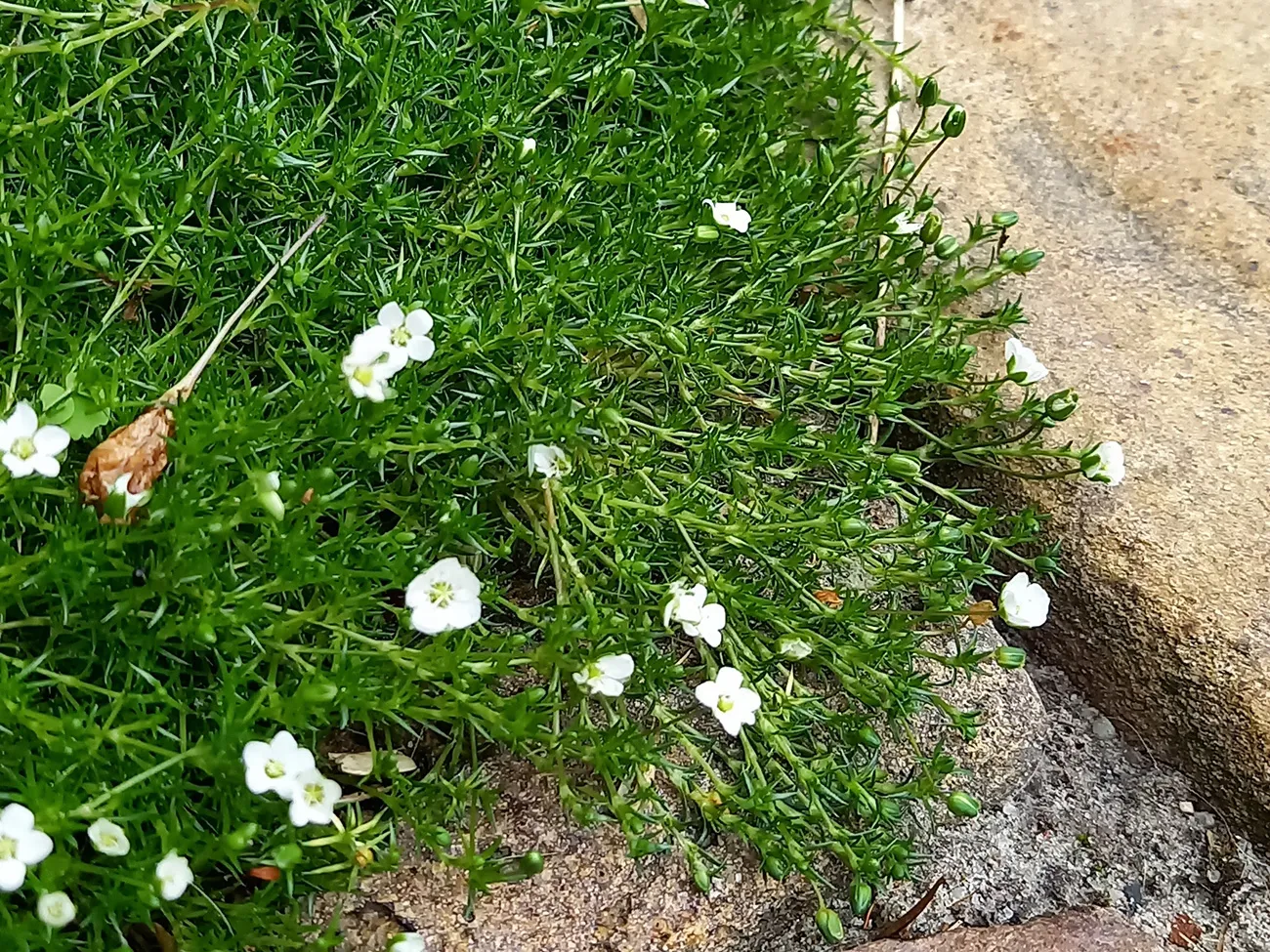
Sagina subulata, or Irish moss, is a native plant that prefers a moist, lime-poor spot. Partial shade is therefore usually better than full sun. However, if you want to enjoy its beautiful white flowers, some sunshine is recommended. It flowers from May to July, with blooms rising slightly above the leaves. Sagina can sometimes look a little like moss, but it is a true perennial.
A lawn alternative
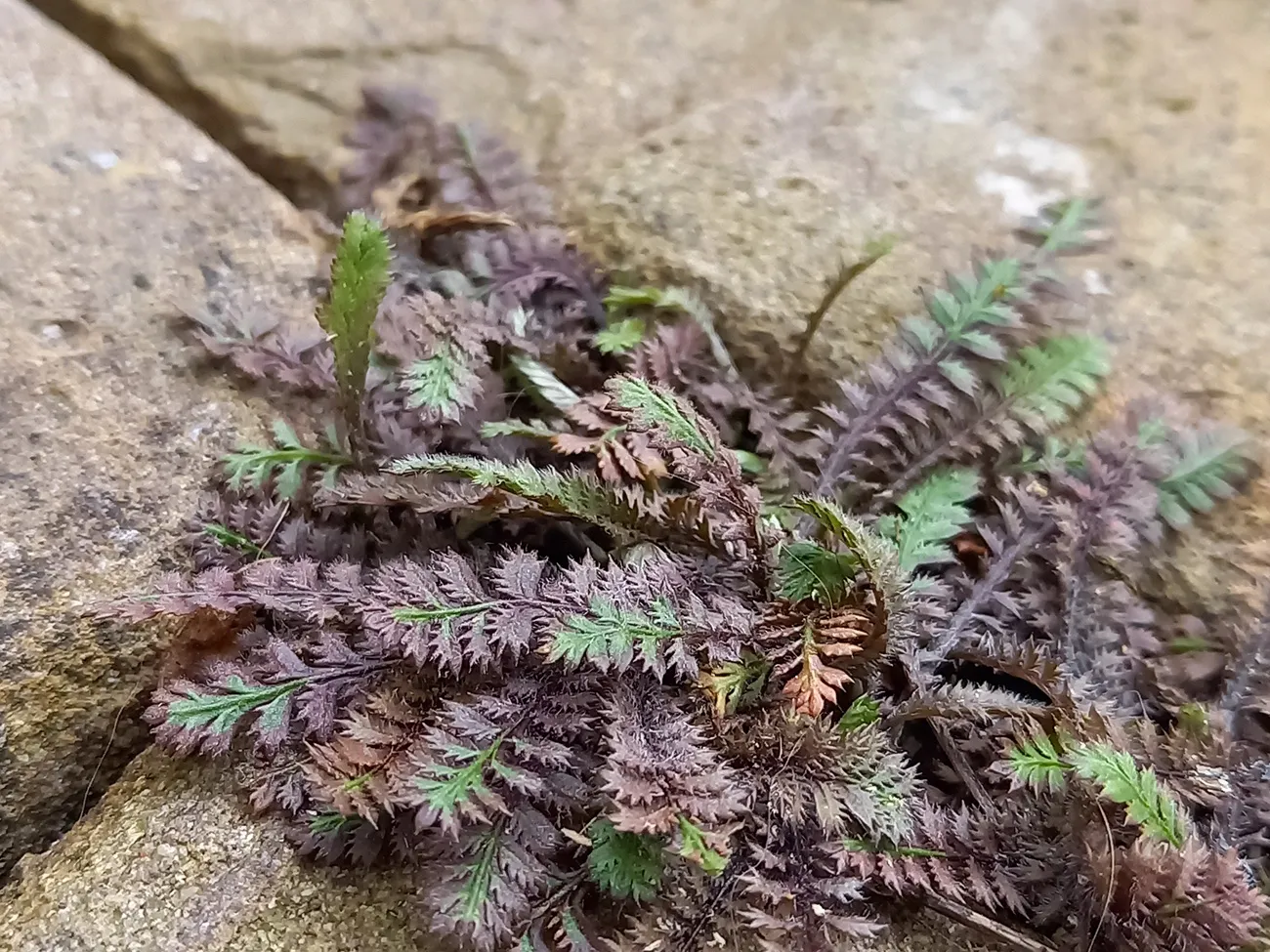
For shade and partial shade, there is also a stepable plant that looks a little like a miniature fern: Leptinella squalida, or brass buttons. It grows into a dense mat and can tolerate quite a lot of foot traffic, so much so that it can be used as a lawn alternative if the traffic is not too heavy. It is not suitable for a sports or play lawn, then. It stays green all year, except in winter, when it takes on a more bronze colour. Cultivars with dark foliage all year round are also available. It flowers with small yellow blooms in May and June. Between paving joints, it is better planted in shade than in sun, otherwise it will dry out too much in summer.
Question about this story? Ask your question
Keep following this
Get an email when a new story is published. No account needed.
- SubjectGeneral







