









Promoting plant growth with organic soil improvers
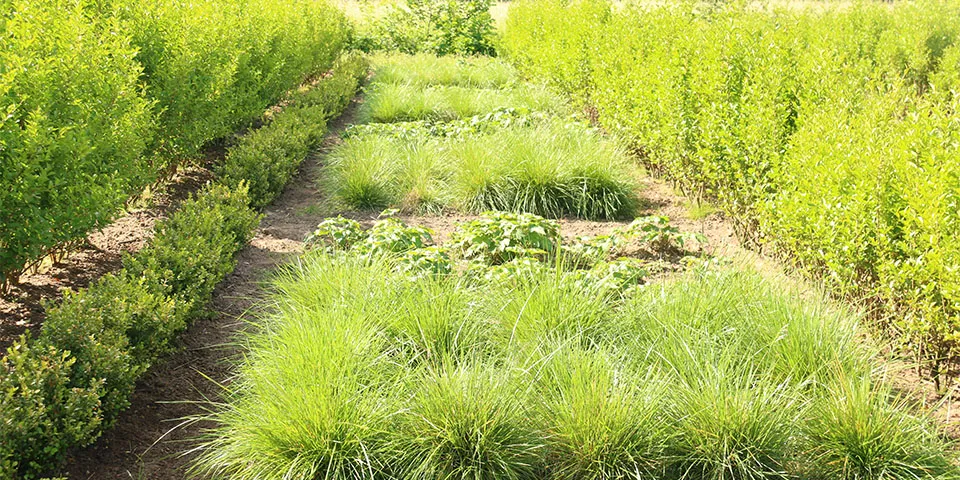
PCS, the Ornamental Plant Research Centre, regularly carries out practical research at the request of the ornamental horticulture and green space sectors. Its aim is to make as much scientific information as possible available to growers and green space managers, and to build a link between science and practice. Recently, it launched a study into soil improvers. The study began in 2018. Various soil improvers were compared with green compost and an untreated control.
Research by the Ornamental Plant Research Centre
A wide range of commercial soil improvers
Soil improvers are widely available on the market in a range of brands and formulations. This variety of products and claims is causing uncertainty in the green space sector. The study therefore looked at their actual, demonstrable added value compared with green compost, or with no soil improver added. The effect of worm compost was also investigated, as this type of compost appears promising in terms of microbial life.
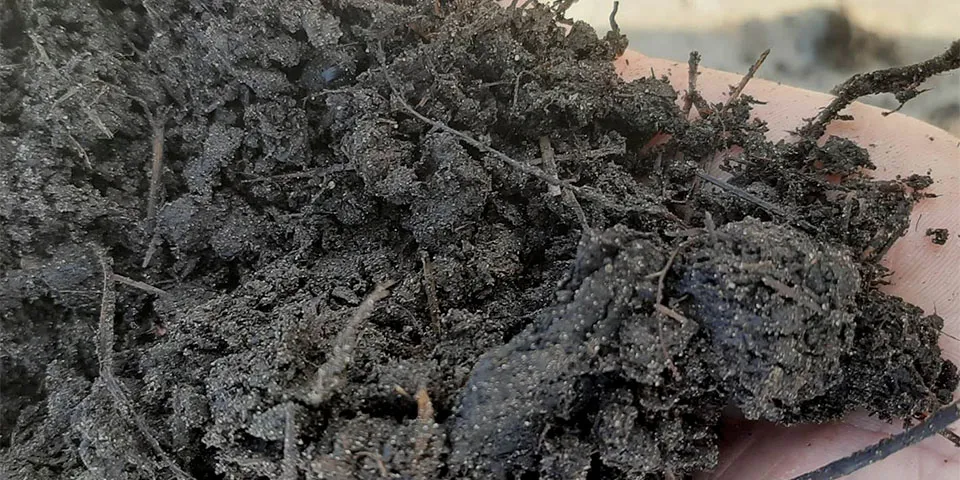
Soil structure with a soil improver.
The importance of good soil preparation
Soil quality is important for plant establishment and the subsequent quality of the planting. Good soil fertility means that plants are less dependent on watering and fertilisation, particularly during periods of stress such as prolonged drought.
The chemical, physical and biological properties of soil interact and need to be optimised to achieve good soil fertility. For example, all soil organisms in the soil food web (= biological properties) need food (= chemical properties), space, water, oxygen and undisturbed conditions (= physical properties) to survive. Limiting the use of plant protection products and soil cultivation can make a significant contribution, alongside the addition of organic matter.
The main differences between the products relate chiefly to the percentage of organic matter and the presence or absence of different groups of micro-organisms. The study investigated whether products that add both organic matter and micro-organisms to the soil offer added value compared with products that add only organic matter, in terms of microbial life, plant growth, weed pressure and nutrient release. The cost of the different products was also taken into account each time.
Impact on soil fertility
Adding a high dose of carbon led to an increase in micro-organisms that break this carbon down into stable organic compounds and nutrients. However, these micro-organisms also need nitrogen to grow. If there is not enough nitrogen in the soil, the microbial biomass will naturally decline over time. The study also found that, after one year, soils treated with soil improvers containing fungi did indeed contain more fungi.
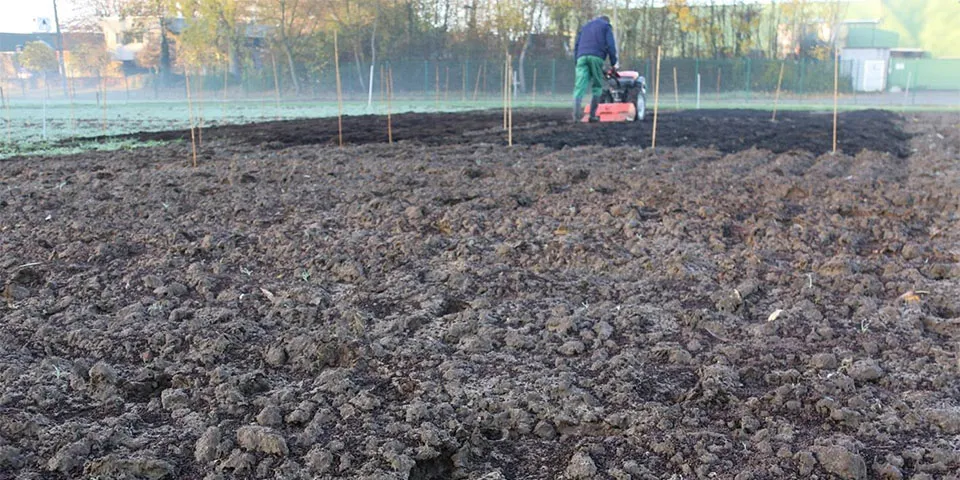
Incorporating the soil improver.
Impact on plant growth
Measurements clearly showed that plants receiving the low fertiliser dose had less chlorophyll and more stress hormone than those receiving the high dose. This effect was greatest with soil improvers containing a higher proportion of stable organic matter, and also resulted in differences in growth. This clearly shows that adding a large amount of carbon to the soil removes nutrients that are then no longer available to plants. Adjusting fertilisation can prevent reduced growth and plant quality.
Research conclusions
Using organic soil improvers in green space projects has many benefits: adding organic matter improves the physical structure of the soil and provides food for microbial life. However, the results of various trials by the Green Space Department at PCS clearly show that soil improvers can have a negative impact during the first year on plant growth and quality, as well as on soil life.
In previous trials on nursery crops, this effect had disappeared by the second year. Adjusting organic fertilisation can counteract this and help avoid potential problems during stressful conditions such as prolonged drought. The long-term effects on soil life and plant growth will be monitored in the coming years.
This research was supervised by Sandy Adriaenssens of PCS and carried out with support from the Department of Environment of the Flemish Government. Detailed results of the study, including a comparison of different brands and products, can be requested via sandy.adriaenssens@pcsierteelt.be
Research at PCS is supported by the Flemish Government, the Agency for Innovation and Entrepreneurship, the European Union, the Province of East Flanders, Boerenbond and AVBS, the ornamental horticulture and green federation.
Question about this story? Ask your question
Keep following this
Get an email when a new story is published. No account needed.
- ThemeSoil and water in balance
- SubjectGeneral







