









Put some soil in your mouth
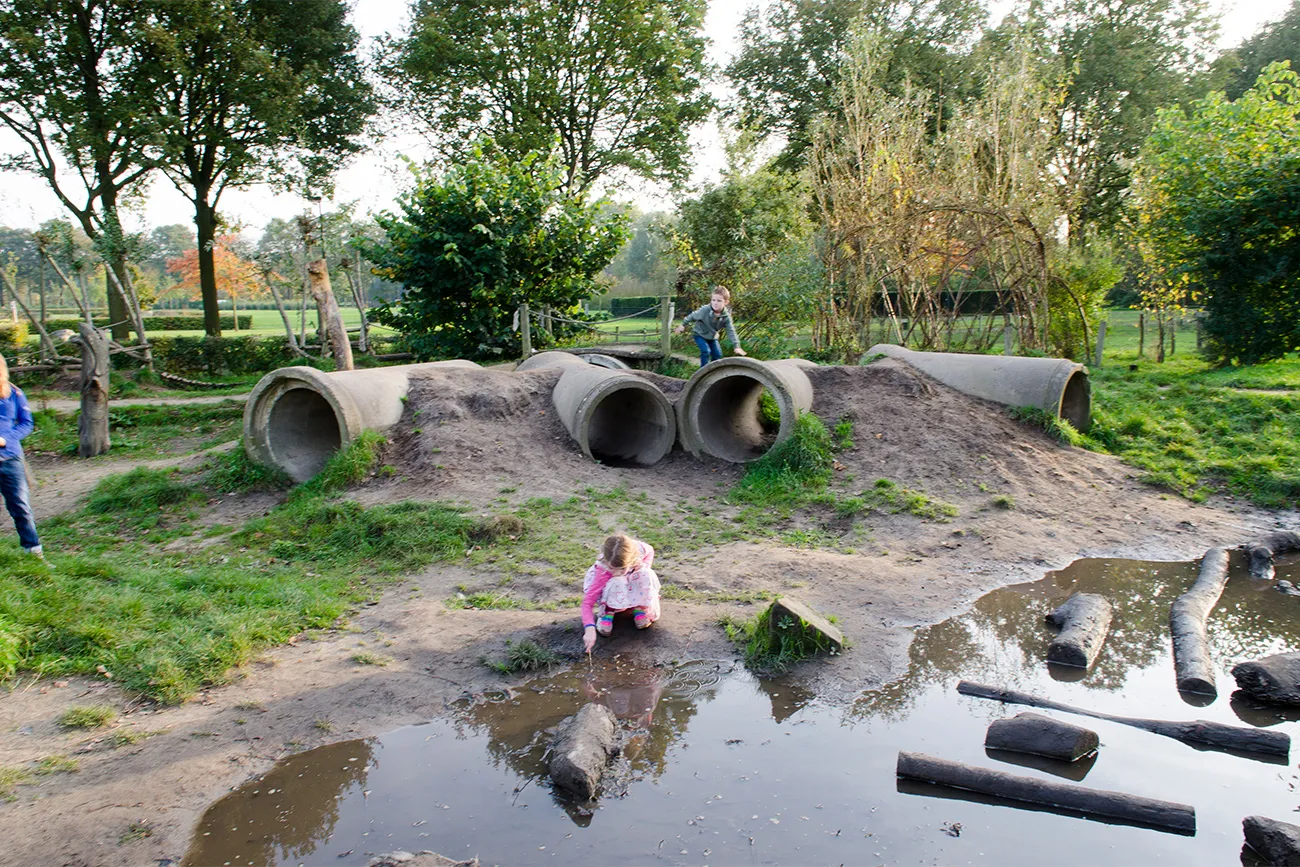
To keep our immune systems active, we need to feed them!
There is a compelling argument, a compelling argument, for creating much more greenery in outdoor spaces: the soil contains billions of bacteria that keep us healthy. Bac2nature has extensive knowledge of this: there is a direct connection between soil micro-organisms and the quality of our immune systems.
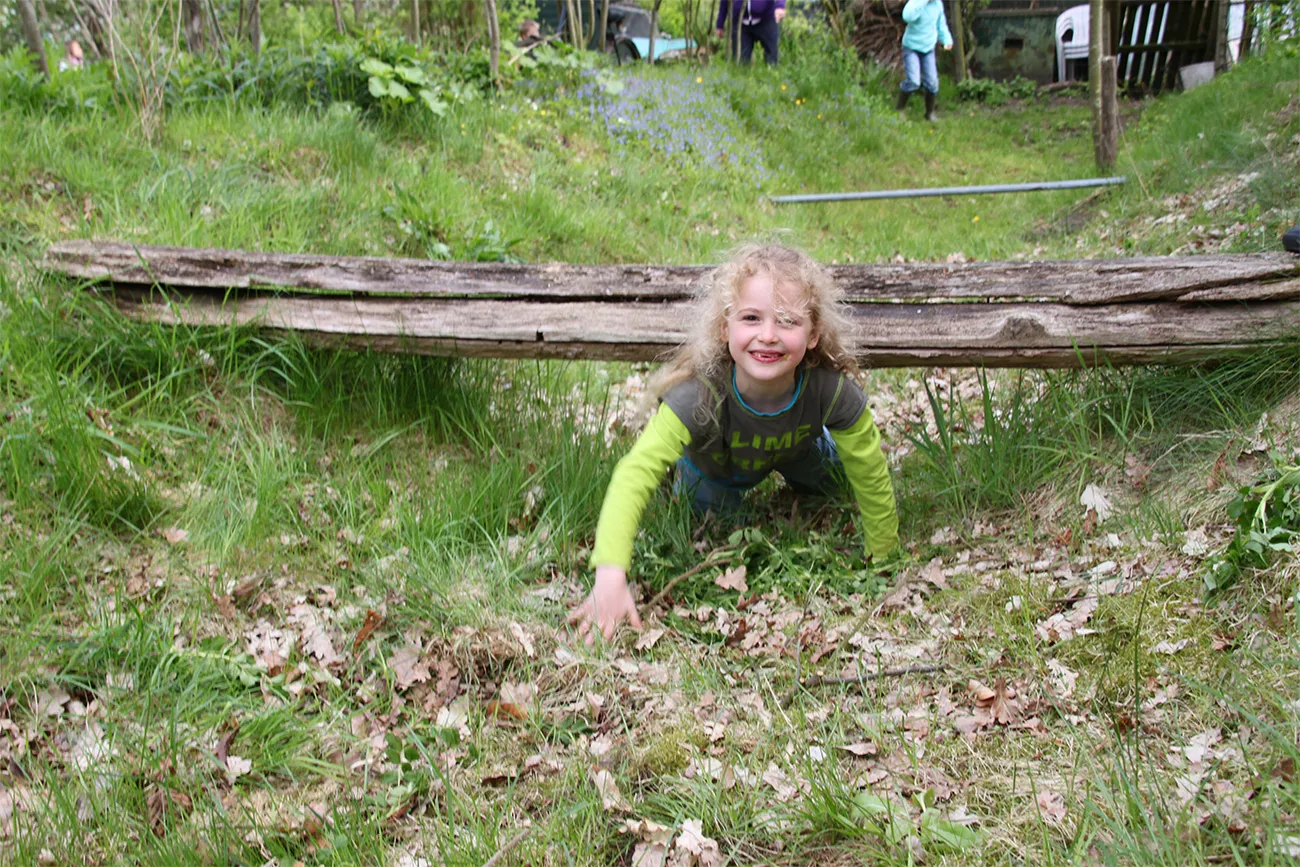
Being active, playing, exercising and socialising (BOSS) in public spaces is an opportunity. After all, play is fun, exercise is healthy and socialising is important. Climate change and declining biodiversity have made green outdoor spaces even more important. They help combat heat stress and reduce the impact of torrential downpours. Thanks to the expertise of Marco van Es, Advisor in healthy microbes at Bac2nature, there is now another argument for green outdoor spaces: they are also much better for our immune systems. Johan Oost of OBB Spelmakers + Ruimtedenkers: “The days when we were driven out with tar and feathers for proposing a green schoolyard and then wanting to open it up to the whole neighbourhood are behind us. If we can convince policymakers that this also benefits the health of individuals and society, we can really start making progress!”
Much more knowledge about micro-organisms
Van Es: “In recent years, we have rapidly discovered much more about the importance of micro-organisms to the functioning of, for example, our gut. In the past, you needed a microscope and Petri dishes to explore the world of bacteria. Since we have been able to look at DNA level, the possibilities for research have grown enormously. Among other things, this has shown us that there is a dizzying variety of micro-organisms on, for example, our skin and in our gut. By comparison, the types of bacteria that we are legally allowed to add to our food account for just four per cent of that.”
According to Van Es, we should not ignore the other 96 per cent. The question now is how we can take them in. And the answer is not complicated at all: we need to have more contact with nature, play more in the sand, have green parks in cities and plants in offices, and eat raw vegetables and fruit.
Johan Oost of OBB: “Bacteria should really become a utility!”
Van Es: “Because we have started living closer together, pathogens can be transmitted more easily. So keeping a distance of one and a half metres to prevent coronavirus transmission helps! And you also need to prevent salmonella. You should avoid high concentrations of pathogens. Hygiene helps to slow the spread.
But on the other hand, we must also take care not to lose contact with nature. It is an important source of the bacteria we need for our immune systems to work properly.”
Food and living environment
Van Es identifies two areas in which contact with micro-organisms can help develop the immune system optimally: our food and our living environment.
In the area of food, Bac2nature initiated research with Maastricht University, Vrije Universiteit and the Louis Bolk instituut into the positive health effects of eating fresh, raw vegetables and fruit grown in soil with a rich microbiome. The first question is whether crops grown in open ground contain a greater diversity of micro-organisms than those grown in substrate. The second question is to what extent these micro-organisms reach the small intestine. This research could be a first step towards possibly proving that crops grown in conditions with greater biodiversity contribute even more to our health.
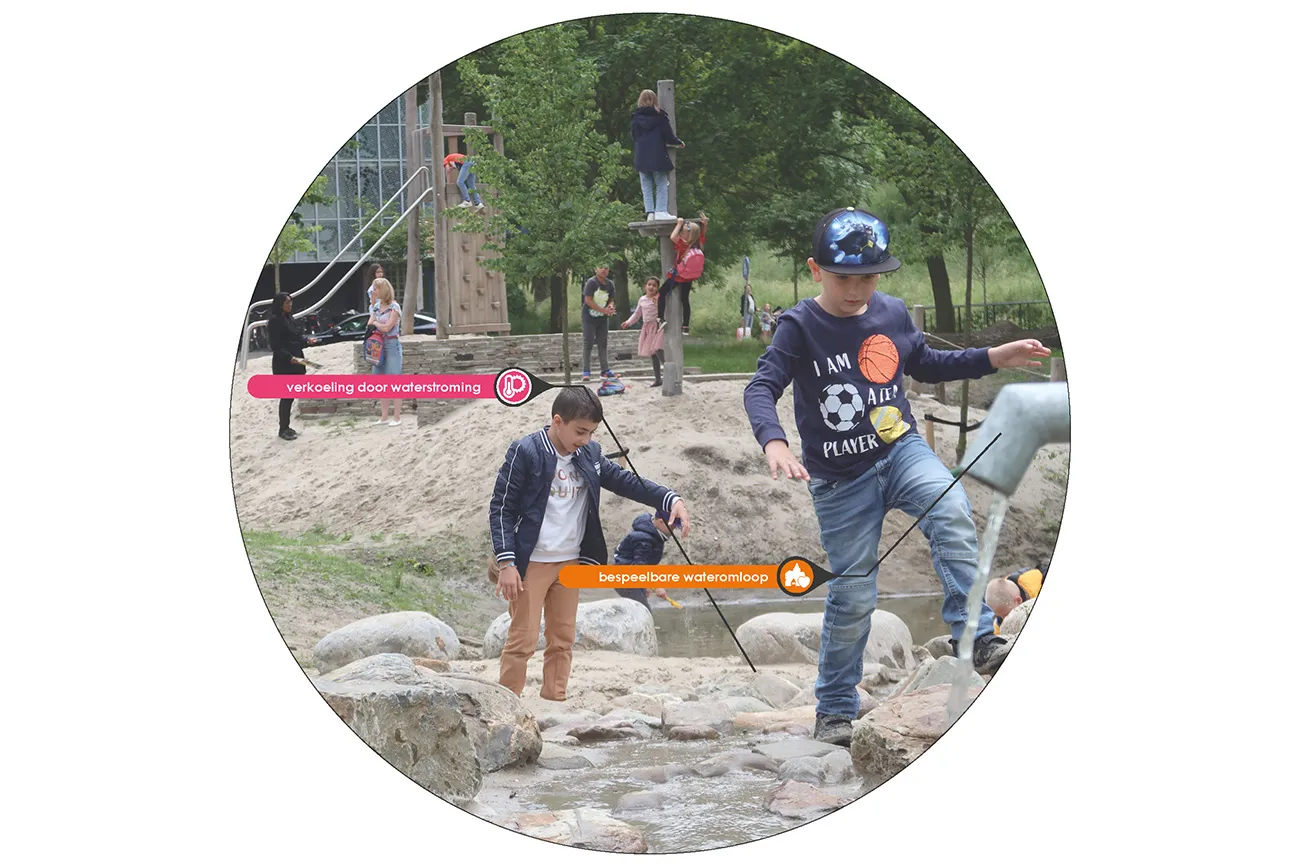
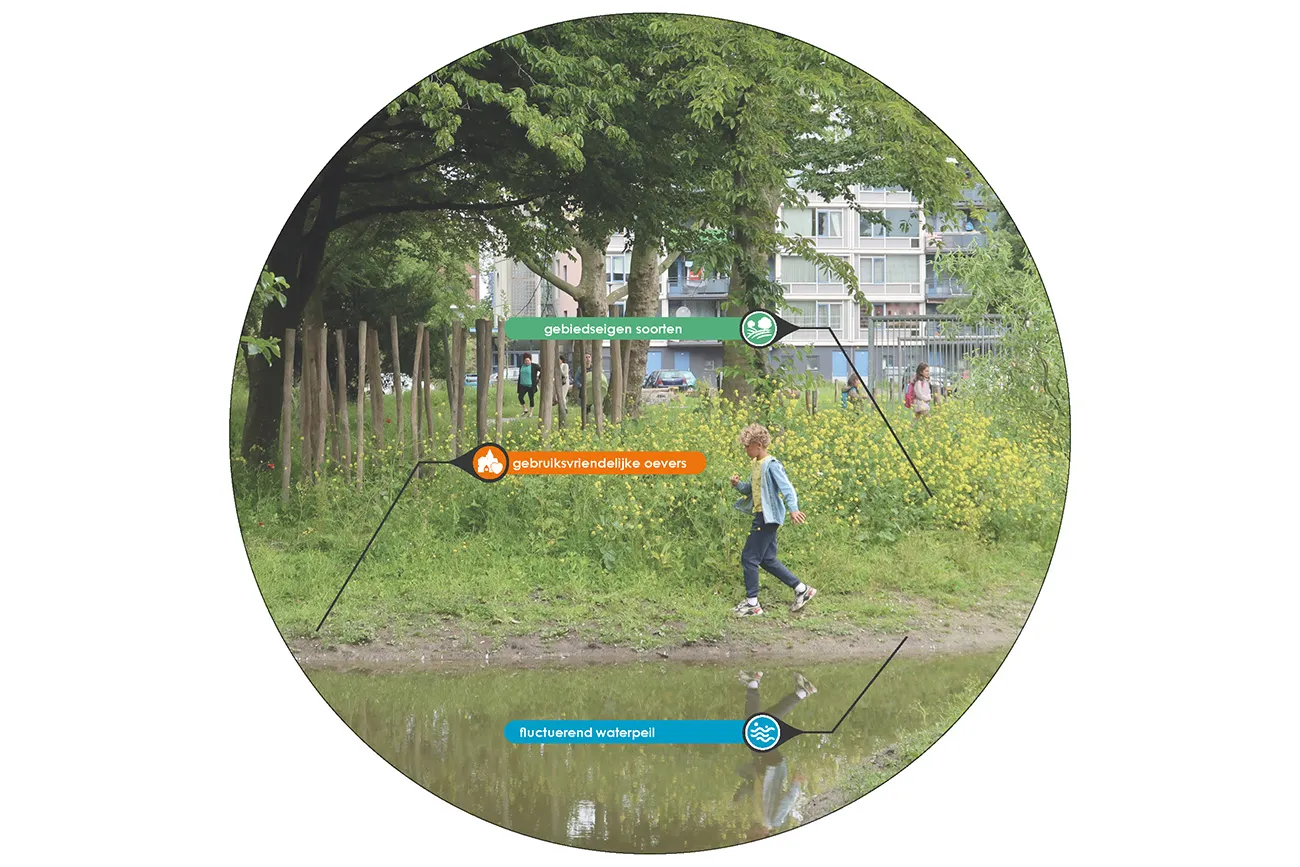
There has already been much more research into the living environment. The breast milk of women living in green surroundings contains a significantly greater diversity of prebiotics than that of young mothers who live further away from nature. If your desk in a call centre is close to a green, living plant wall, this can be reflected in your immune system. The same applies to outdoor play: children who often play in a more natural environment develop a better microbiome.
Get rid of rubber tiles and artificial grass
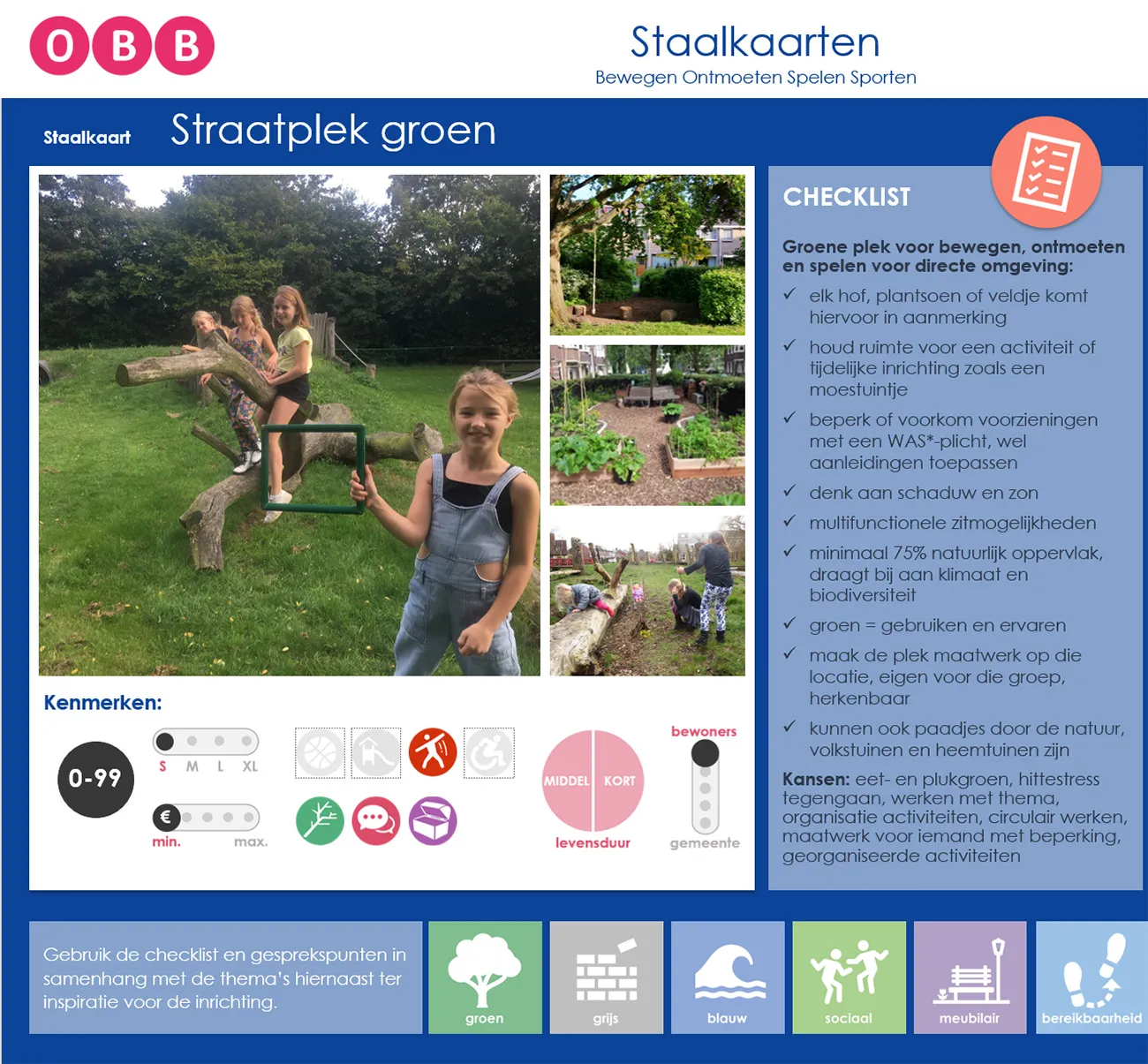
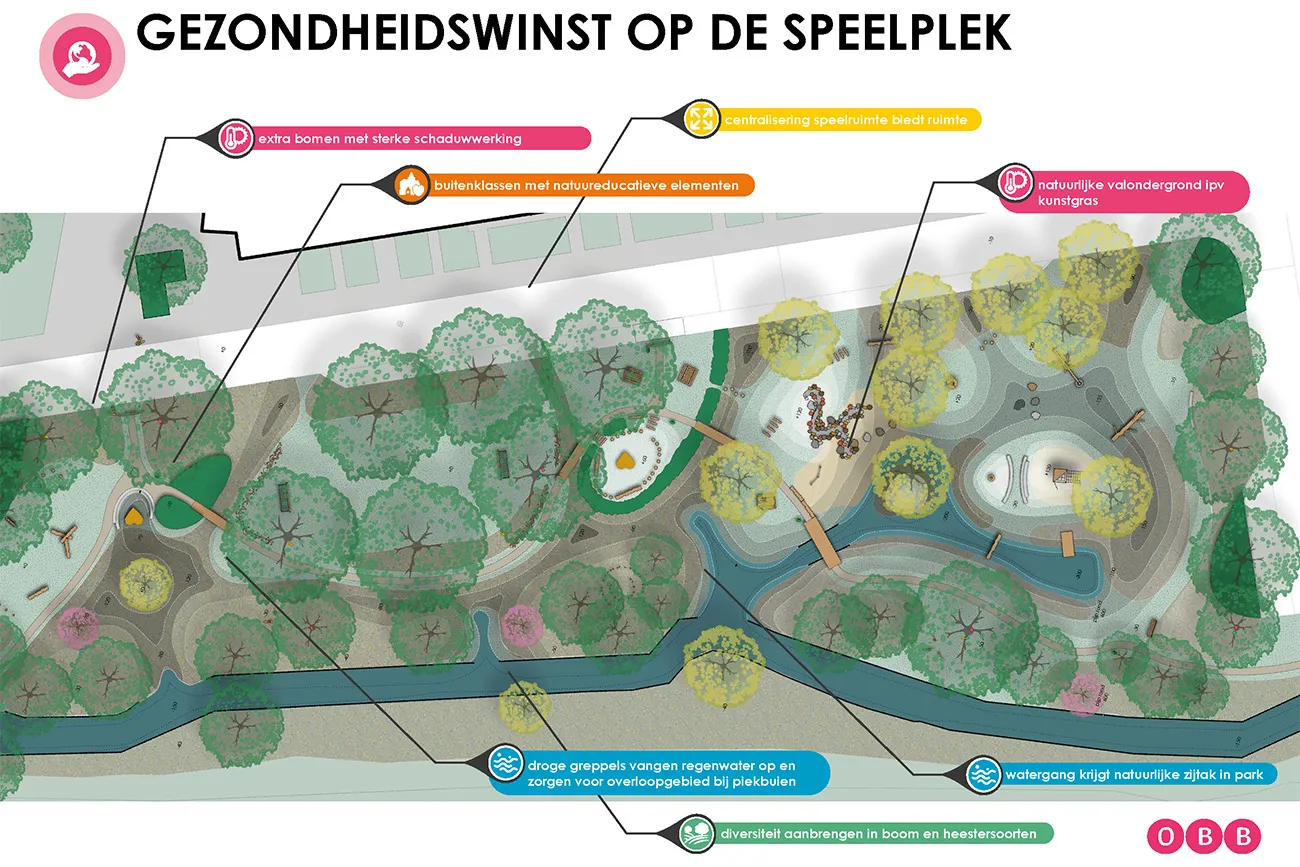
Policymakers therefore have an important role to play. The advice from OBB’s play and public-space experts: remove the rubber tiles under play equipment and simply put down impact-absorbing sand. It will cushion falls too, and sand cannot break, so it is healthier as well!
Madeleine Frelier of OBB: “The green spots in the city have always been my children’s favourites!”
Madeleine Frelier of OBB: “Nature is undervalued. Parking takes priority. But it is becoming increasingly clear that this is unjustified. We like being in green spaces. Greenery helps combat heat stress and extreme rainfall, both consequences of climate change. It is therefore good for our immune systems too! That may well be the catalyst for the greening process. Let’s start planting small woodland play areas instead of sacrificing green space. The green spots in the city have always been my children’s favourites!”
Johan Oost: “Artificial grass can go too. And if somewhere needs to be paved, always create a dip where water can collect. You’ll see, children will go and play right there in their little red boots! And community gardens in the park, so that green surroundings and healthy vegetables go hand in hand.”
Marco van Es of Bac2Nature: “There is very likely an evolutionary reason why children like putting soil in their mouths during their first 1000 days.”
Children like putting soil in their mouths
For Marco van Es, the quick win is for policymakers to at least understand the effect of soil micro-organisms on the quality of our immune systems. “When you put children back in nature, they automatically put soil in their mouths. As much as 20 to 30 grams a day! There is probably an evolutionary reason for this. If it is healthy soil, that means 1000 billion bacteria, 10 thousands of species. They all affect how our gut and breathing function, and can even have a positive effect on anxiety disorders and depression. Children at a school with a natural play area have significantly more types of bacteria in their gut and are therefore healthier!
So, in the familiar list of rest, routine and cleanliness, it is high time we changed how we think about cleanliness, on the way to healthier immune systems and a healthier, greener society.”
Marco van Es (Bac2nature) and Madeleine Frelier (OBB Spelmakers + Ruimtedenkers) will give a talk on this subject at the Nationale KlimaatExpo in Houten. The expo takes place on 19 and 20 April. The talk is on 20 April from 11.45 to 12.10 in the Innovatietheater.
Question about this story? Ask your question
Keep following this
Get an email when a new story is published. No account needed.
- SubjectGeneral







