









Quality of life is central to every Mecanoo project
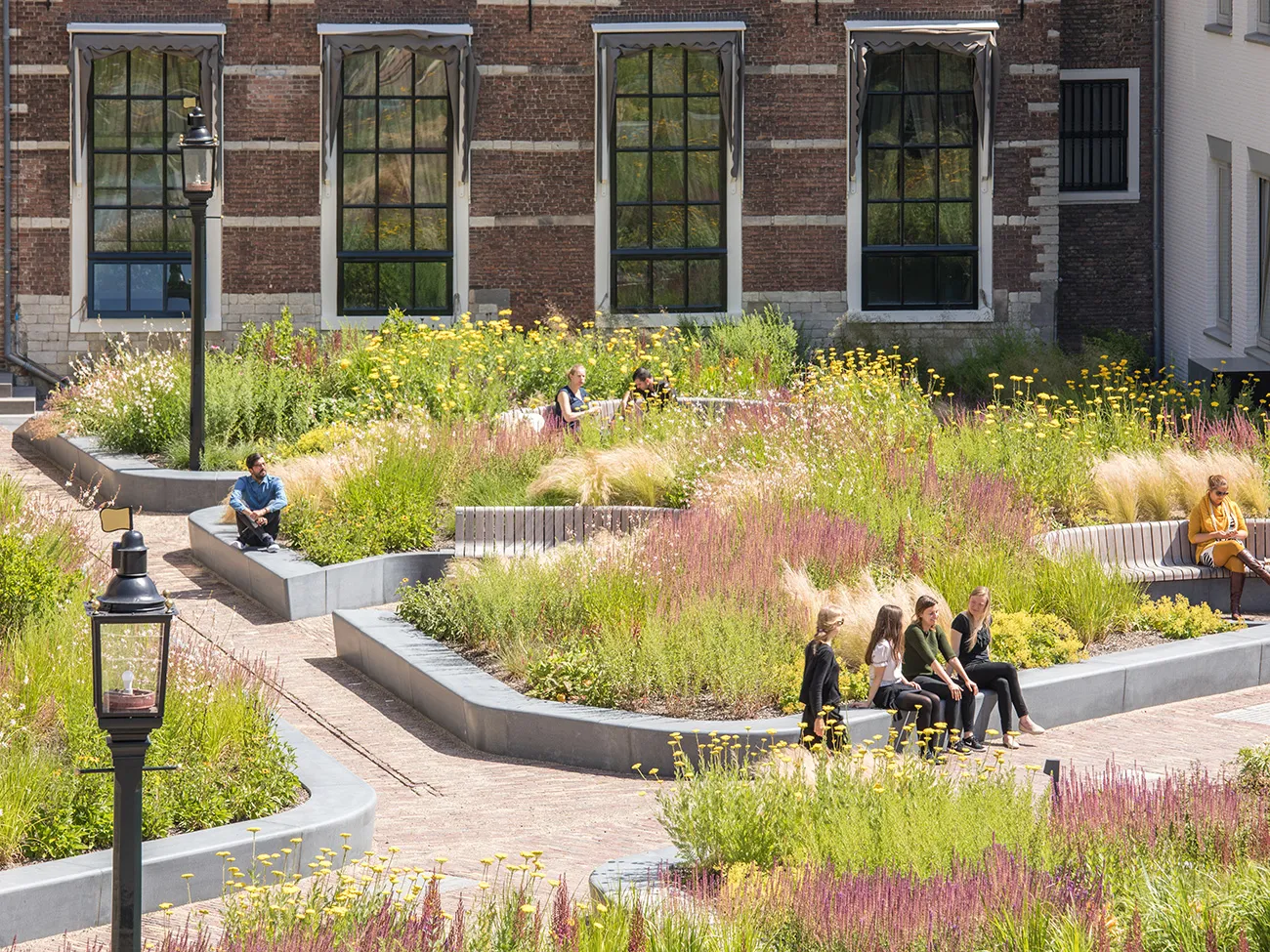
Architecture and landscape architecture practice Mecanoo is a leading player in integrated design, which brings together different disciplines. Associate partner Pieter Hoen and landscape architect Anne-Marie van der Weide, both with years of experience in interdisciplinary design, discuss the latest developments in sustainability and greening.
Collaboration takes green design to a demonstrably higher level
Interdisciplinary working is attracting a great deal of attention these days. But at international practice Mecanoo, with more than 130 employees across three offices worldwide, architects and landscape architects have been sharing knowledge and working together as standard practice for decades. They do so at every scale, from very large projects to small objects.
Trend: more focus on green spaces
Hoen and Van der Weide confirm that around twenty years ago, the market was more heavily driven by developers. ‘Clients, particularly public authorities, now give noticeably more thought to the quality of life in public spaces. Housing and flats are still being built, but there is a greater focus on green spaces,’ they say.
Greener spaces for everyone
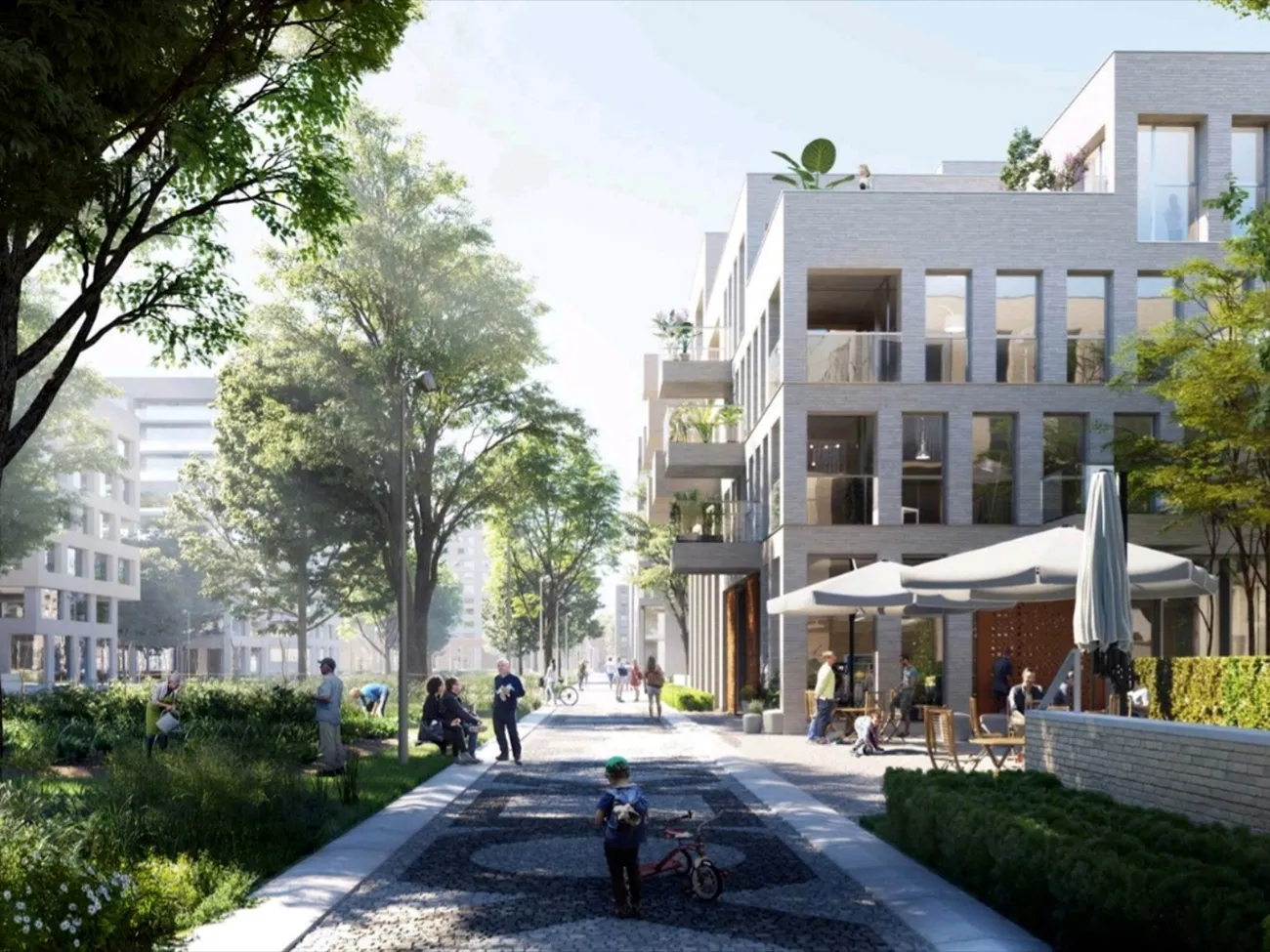
In all Mecanoo projects, the quality of life of people, flora and fauna is central. Van der Weide outlines the key features using a rooftop garden project with an underground car park, commissioned by the Hoogheemraadschap. ‘The client wants the forecourt to invite passers-by to find out more about the Water Board. The ornamental garden and nature garden behind it are intended for employees. They can have lunch, work or get some fresh air there.’
Greening with purpose
A decade ago, a trend seemed to be emerging for ‘greening for the sake of greening’, with as many façades and roofs as possible being planted. Clients are now giving more thought to the value of green spaces for their users. In other words, the focus is on greenery that benefits the end user. Van der Weide: ‘As professionals, we had long been thinking about how greenery and buildings could reinforce each other to best effect, bringing together biodiversity, integration with the surroundings and the needs of users. But clients are now putting end users much more at the centre, too.’
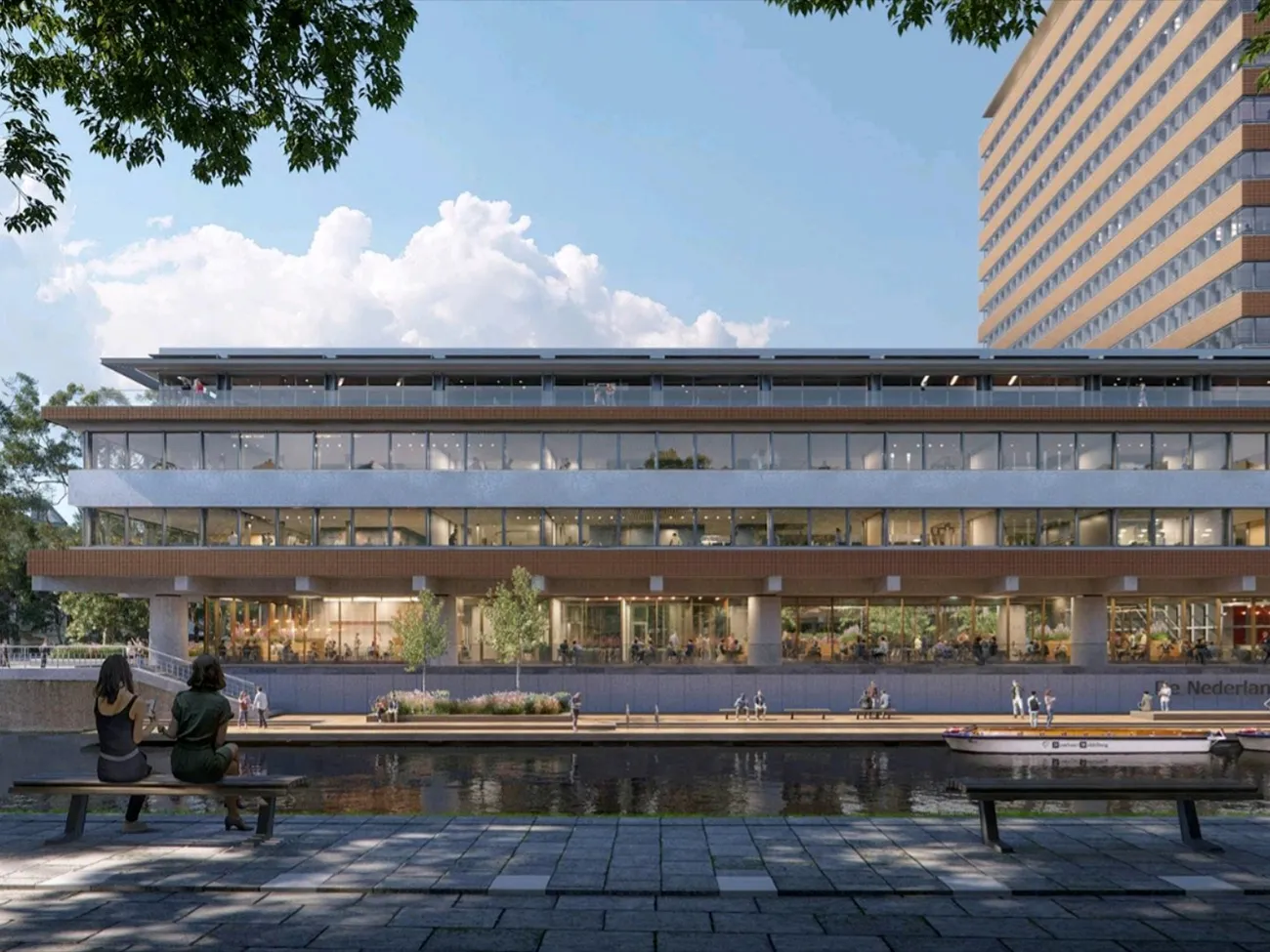
Hoen illustrates this development with a recent Mecanoo project: the renovation of De Nederlandsche Bank’s (DNB) premises on Frederiksplein in Amsterdam. The brief was to make the building and its surrounding outdoor spaces much greener and more biodiverse, and therefore more ecologically valuable. The building will also become much more welcoming. ‘The existing patios, a rooftop garden and the immediate surroundings of the building will be greened, and the accessible quay will be better connected to the city’s public spaces. One unique aspect of the building is that dismantling the round tower in the west patio, the satellite, left a supporting structure beneath the courtyard garden. The tower has been rebuilt elsewhere. DNB challenged us to look at how each specific space could be greened to the greatest extent, in collaboration with ecologists, local residents and others, with edible planting among the requirements.’
Hoen also points to the Carthesiusdriehoek project in Utrecht, where Mecanoo designed three-dimensional ecological corridors. ‘The designers and ecologist were involved from the outset. This early involvement of architects and landscape architects working together with ecologists shows just how central purposeful greening has become,’ says Hoen. ‘We also engage with clients early on at regional scale, at political level. This then leads to various projects.’
Considering every aspect
Mecanoo takes the pressure off clients by considering every possible aspect of a pleasant living environment. Green spaces are an essential part of this, contributing to sustainability and biodiversity, and creating places that encourage people to relax and boost their health. Social aspects such as safety and connection also play a role. Van der Weide gives an example of fostering connection with a project in Rotterdam-Zuid, by the Port of Rotterdam: ‘A new perspective for Rotterdam-Zuid’. Mecanoo designed a park on a dike embankment, with green fingers extending into the neighbourhood. Van der Weide: ‘A vision was developed for this location to promote socio-economic progress. The park will connect the neighbourhood with the port, and therefore with employment opportunities. At the same time, it will help create a pleasant living environment for residents.’
Extensive network
Mecanoo has an extensive network, with which it maintains close, long-term relationships. ‘We believe in working together. It is also necessary for innovation and large-scale developments,’ says Hoen. For international projects, Mecanoo works with local partners. Where specific questions arise, the practice draws on specialist expertise and/or research institutes such as Wageningen Research Centre, TU Delft and Utrecht University.
Collaboration is more firmly embedded than ever in the various new forms of contract used for tendering. Mecanoo has clearly seen that construction teams and consortia have become standard practice. Hoen and Van der Weide conclude: ‘Working together increases the opportunities for all parties. It is a win-win situation for clients, market players and end users. And it takes green design to a demonstrably higher level.
Question about this story? Ask your question
Keep following this
Get an email when a new story is published. No account needed.
- SubjectGeneral







