









Resilient grass for challenging conditions
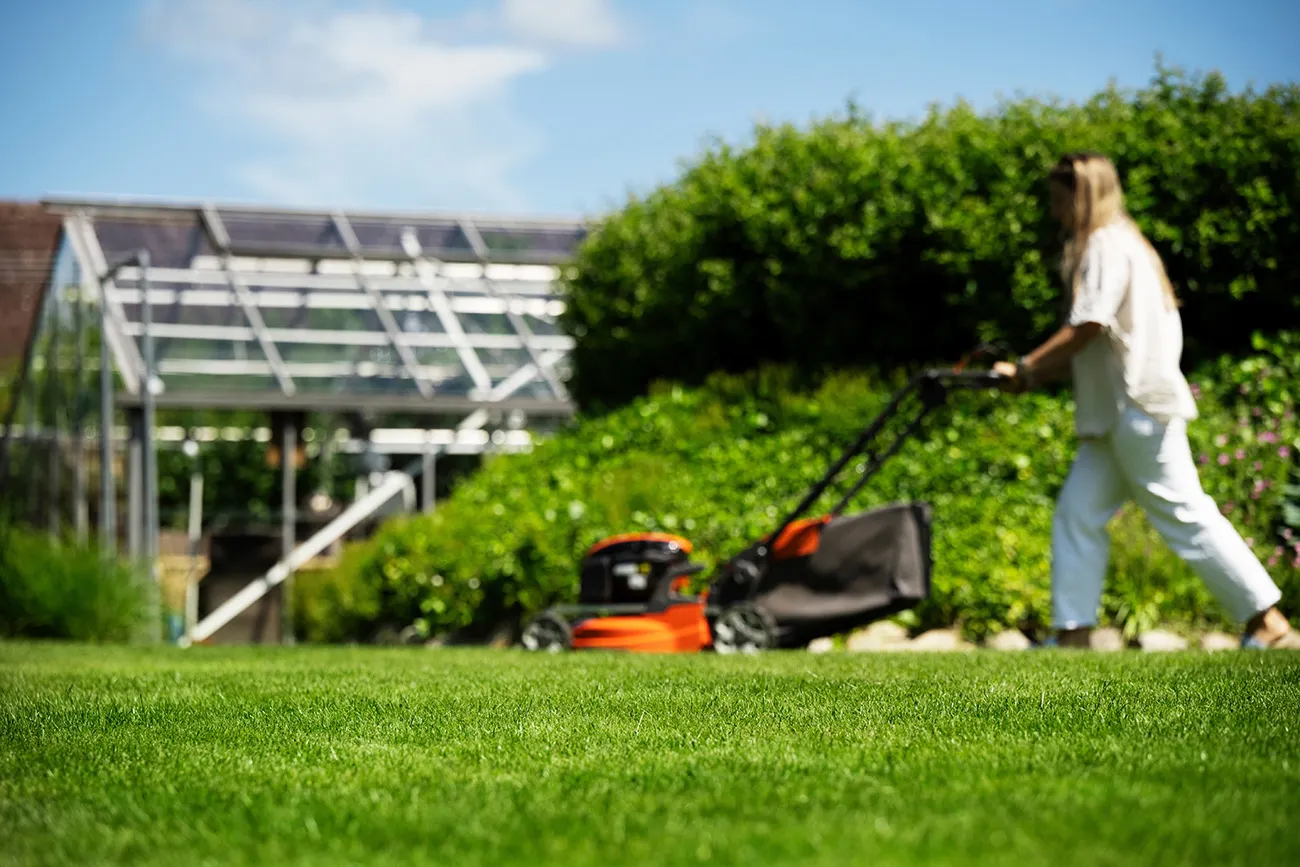
There is no need to explain that grass is under increasing pressure today. We all remember the yellowed, scorched verges and lawns of recent summers. Since extra maintenance takes considerable effort, additional watering is often not an option, and climate change cannot simply be switched off, DLF has spent recent decades focusing primarily on solutions at source. That is why the latest generation of 4turf® ryegrasses feature in several DLF Masterline grass seed mixtures.
Perennial ryegrass creates a stronger sward
“We have been breeding our tetraploid perennial ryegrass 4turf® for decades,” says Thomas van Tetering, DLF product & marketing manager for the Benelux. “It has twice as many chromosomes as traditional diploid perennial ryegrass, giving it a number of important advantages. For a long time, however, this came at the cost of a coarser, less attractive appearance. Fortunately, continued advances in breeding have now overcome that drawback too, with the result that this powerhouse is now a standard component of many Masterline grass seed mixtures for sports grounds, parks and lawns.”
Unafraid of extremes
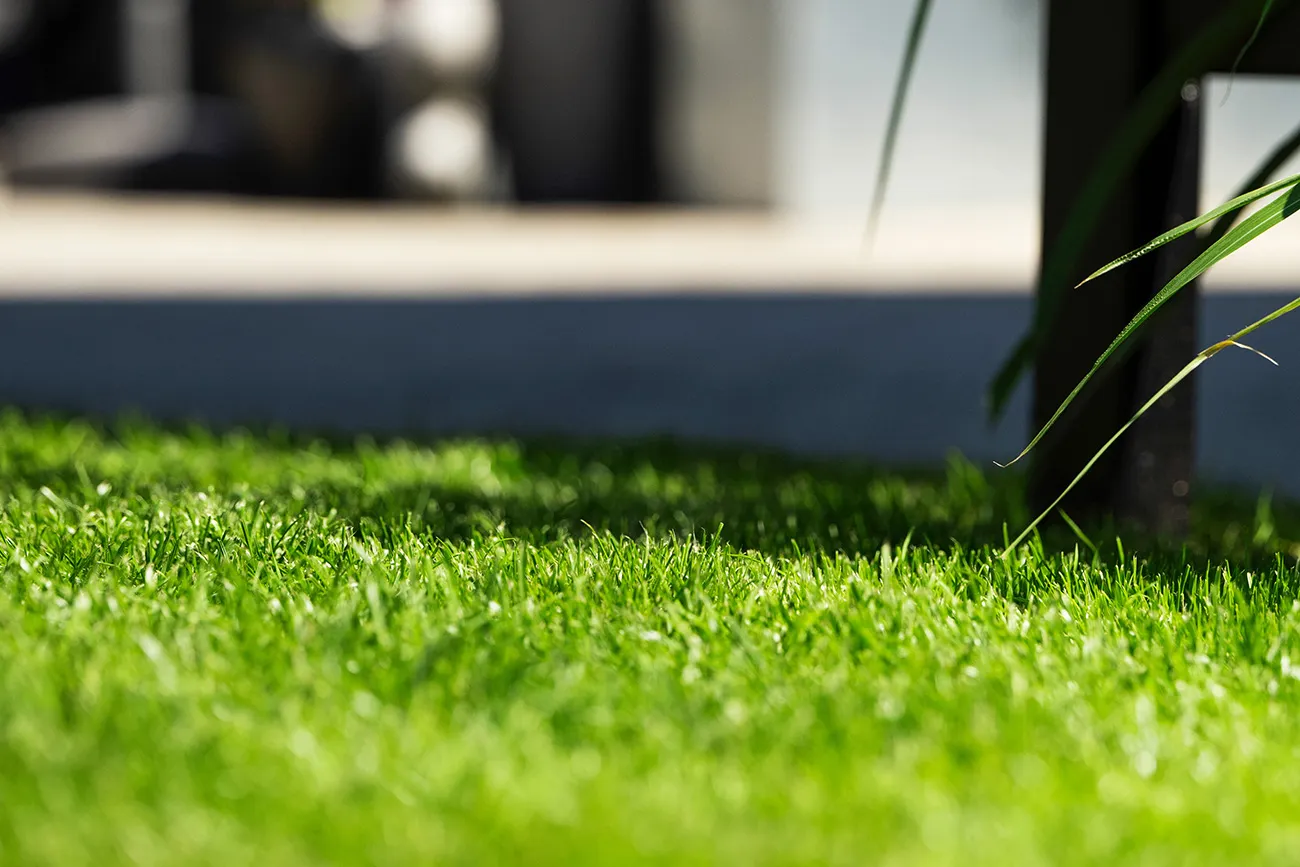
As the climate becomes increasingly extreme, even in the traditionally temperate Low Countries, it is important for grass to adapt too.
“In this respect, tetraploid perennial ryegrass combines two very important advantages,” says Van Tetering. “First, tetraploid seeds contain greater energy reserves than diploid seeds, and the grass germinates at temperatures as low as 4°C. This is much earlier than other grass species, meaning that the sowing season can be extended at both ends. It also improves winter performance and, for example, allows the grass to recover more quickly.
“Second, thanks in part to its rapid germination, tetraploid perennial ryegrass develops better roots and therefore a deeper root system. This enables it to store more water naturally, increasing drought tolerance. The deep root system also enables the plants to make better use of minerals in the soil, reducing the need for fertiliser. This in turn reduces both environmental impact and maintenance costs.”

Low-maintenance
Van Tetering describes tetraploid perennial ryegrass above all as “a plant that can look after itself”. The plant is highly resistant not only to extreme weather conditions, but also to diseases and wear, for example.
“With fewer fertilisers and plant protection products being permitted, high disease resistance is becoming increasingly important. In addition, 4turf® has exceptional recovery capacity. As long as the damage to the sward is limited, for example, caused by children playing or a pet digging around in the grass for a while, it will recover on its own. More serious damage, meanwhile, can be repaired quickly using a 100% 4turf® renovation mixture.”
In other words, because tetraploid perennial ryegrass stays greener and healthier even in difficult conditions, it reduces the maintenance burden. “This also applies in coastal areas and other regions where salinity is a problem. Research shows that 4turf® is also more tolerant of salinity in groundwater, so it stays green for longer.”
Independent research
To verify the performance of 4turf® under all possible conditions, DLF tested the grass species in Scandinavia and France, among other places. Following independent research by Wageningen University, tetraploid perennial ryegrass was also included in the Dutch Grass Guide last year, where it immediately secured a place on the podium. “It is wonderful that we have not only succeeded in developing a new grass species, but that it has also been included in the ‘bible’ of grass species and achieved an excellent score,” says Van Tetering with justifiable pride.
The right mixture
Since a healthy sward is never a ‘one-man show’, 4turf® is primarily used in a range of Masterline grass seed mixtures. “There is a renovation mixture containing 100% tetraploid perennial ryegrass, but for establishing and overseeding both public green spaces and private lawns, our RecreaMaster grass seed mixture is the main choice. It combines diploid and tetraploid perennial ryegrass, as well as red fescues and smooth-stalked meadow grass, for reliable, versatile use.”
Question about this story? Ask your question
Companies in this story
Keep following this
Get an email when a new story is published. No account needed.
- ThemeKeeping sports pitches and lawns in condition
- SubjectGeneral
- CompanyDLF







