









Stop creating token play areas and build genuinely challenging outdoor spaces
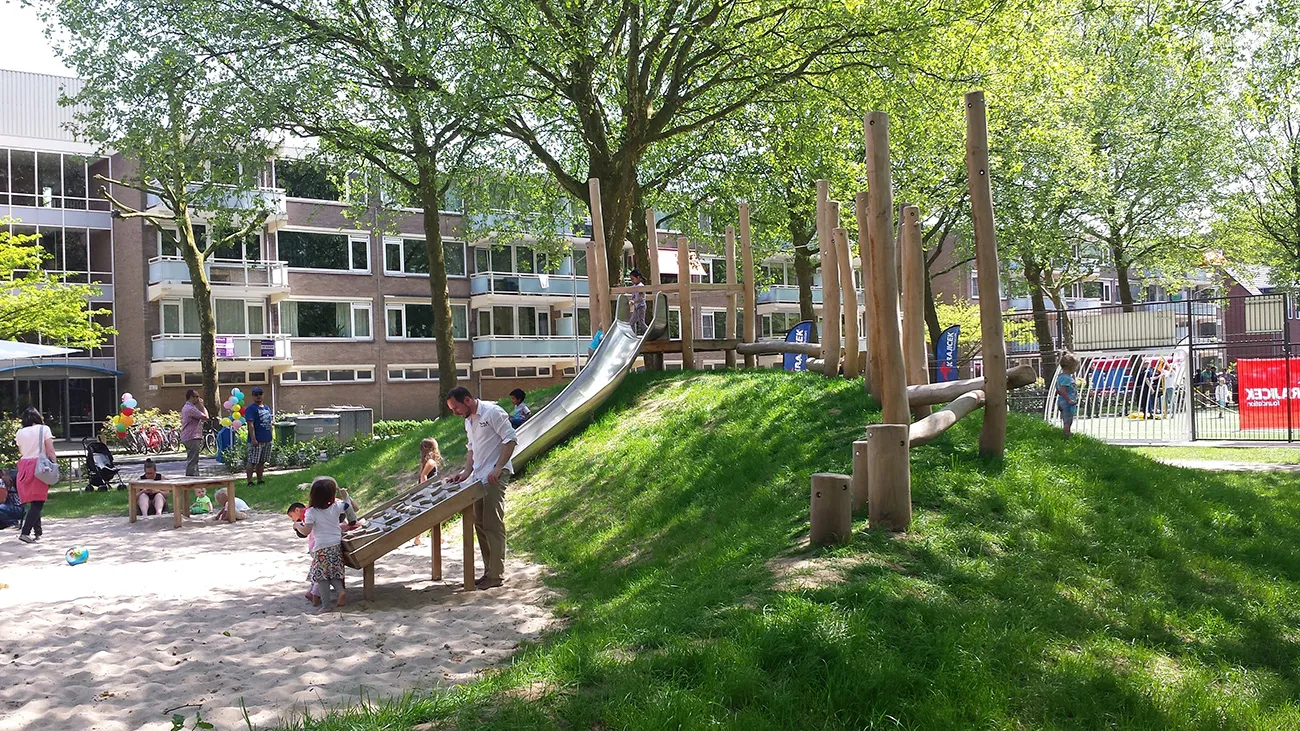
Claiming public space for physical activity, meeting others, play and sport
‘Children, go outside and play.’ In the TV programme Het Klokhuis, for example, Erik Scherder explained why children should play outside. “Playing outside is more important than an extra maths lesson.” The key words are: trying new things, being challenged and having to make an effort.
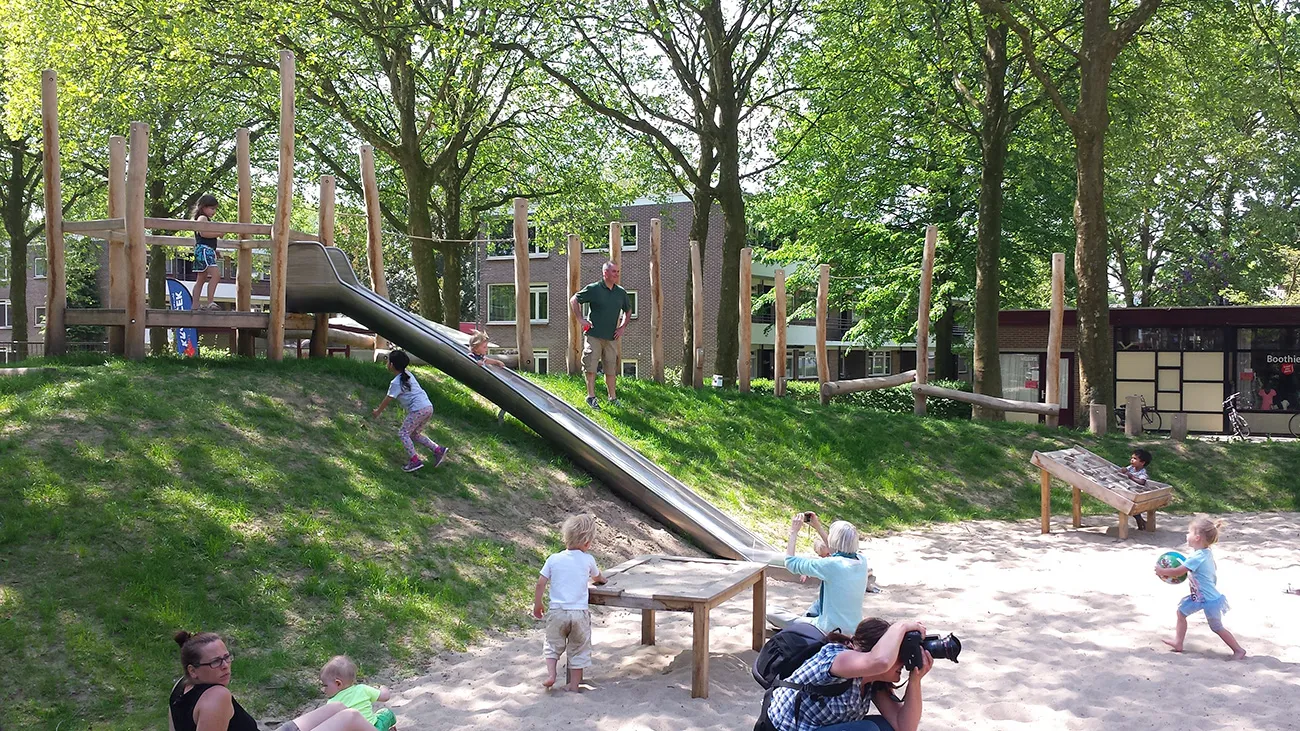
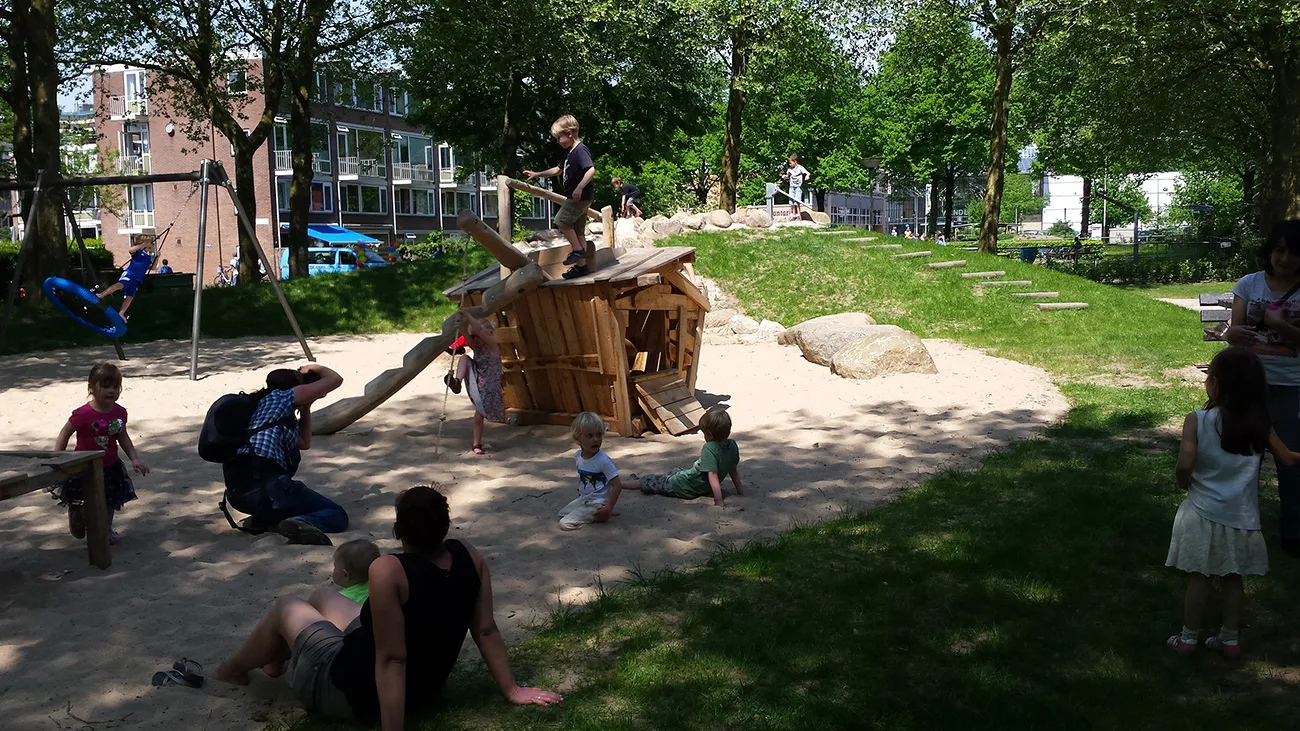
This means investing in genuinely challenging, high-impact play spaces that matter, with equipment children never tire of, places where they can and dare to go higher, further and faster every time, loose materials whose properties and potential they can discover anew, and nature that changes with every season. It also means playing with other children of the same age, with different limitations from your own, and learning from people of different ages. So we must also put an end to segregation. Why, for example, are skate parks often tucked away? How great would it be to show off your tricks to parents bringing their children to the play area? And if you look closely, you can see how experienced skaters, sometimes 10 years older, help the younger ones master their tricks. Why are exercise stations now being installed in places other than larger play areas?
Zip lines
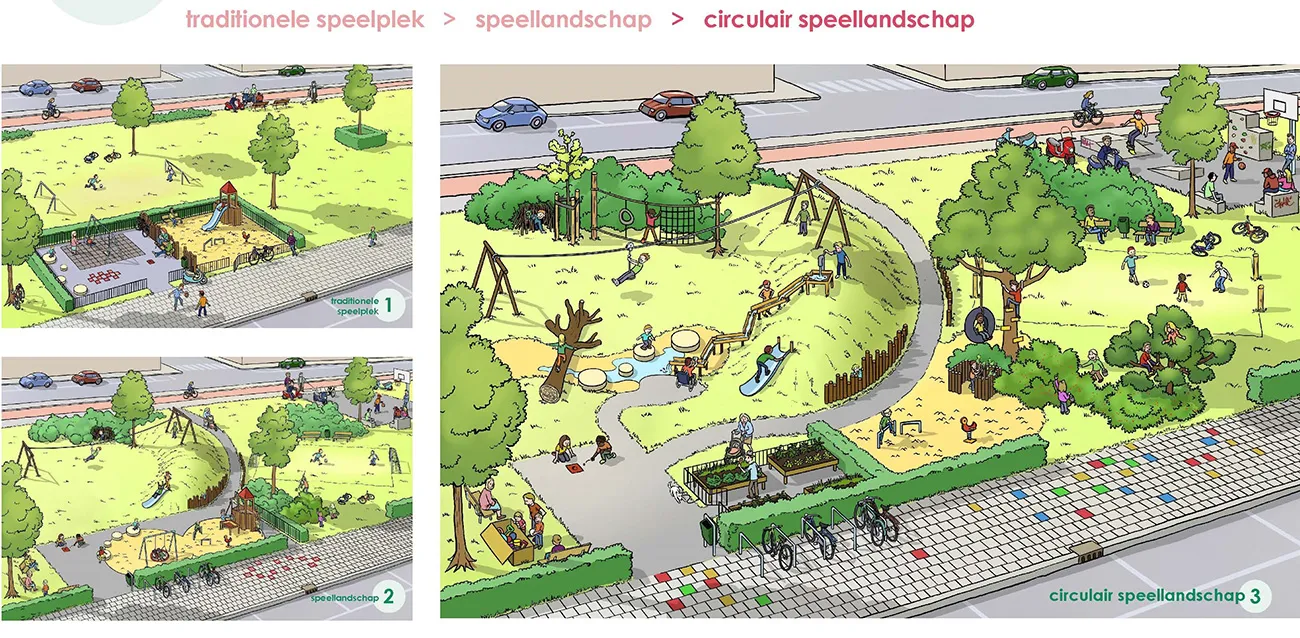
This means centralising facilities, with at least one high-impact play space in every neighbourhood where there is really something to do: zip lines and extra-tall rope pyramids, places worth walking an extra 5 minutes to reach, with or without your child or grandchild. That may mean we have to stop building those insignificant little play areas between homes where fewer than 20 children live. Let it be. The return per euro spent, measured in hours of play at such places, is shamefully low. In areas where many children still live, ‘stepping-stone sites’ are a good addition to a life-course-friendly network that uses public space for physical activity, meeting others, play and sport (BOSS).
This is also a call to invest in vibrant playground associations with an open vision for the whole neighbourhood.
Plenty of opportunities
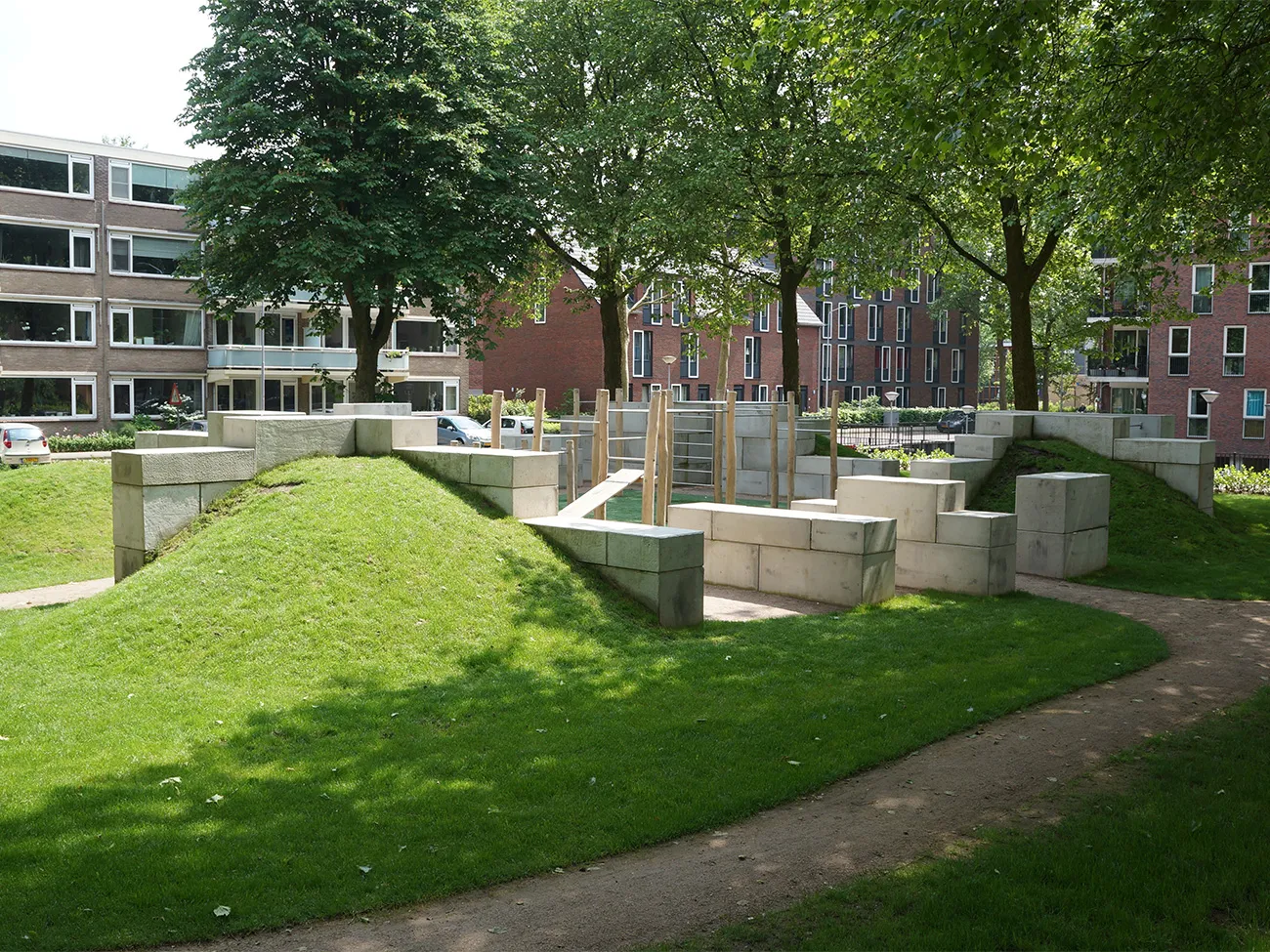
Adapt school playgrounds and their wider surroundings. So let’s claim space, make behaviour and teaching methods more active, and change parents and neighbourhoods. Let’s claim the green spaces, roads, pavements and even waterways around schools as play areas.
The standard for school playground space is 3 square metres per child (0.12 m2/kg); for a free-range chicken, it is 4 square metres per bird (1.82 m2/kg).
It is up to us to make the right choices now.
To do that, we need to think beyond the gates, including during breaks. Why are older primary pupils often not allowed to go to the football pitch around the corner during a break? It works very well to agree with these young people that they will be back on time, and that otherwise they will not be allowed to go the next day.
But parents also need educating. We will have to support school management teams in introducing a rule that children who can reach school with a 5-minute walk or a 15-minute cycle ride must not be brought by car. Meeting the physical activity guidelines is not difficult. But parents, let your child travel to school independently as early as possible. Of course, it takes time to teach children and let them go. Not only because this helps children’s brains develop better, as Erik Scherder explains; it also builds your child’s confidence and gives them the chance to discover their surroundings independently. And not having to stand at the school gates every day in the not-too-distant future is an added bonus (the author’s opinion, as they were never keen on waiting by the school playground; ed.).
Make an hour outdoors compulsory
Sjoerd van Rossem of playground equipment supplier Kompan advocates requiring children to spend 1 hour outdoors every school day, in addition to break times. This would also fit neatly with the idea of claiming the school environment. Schools can decide for themselves what children do during that time, whether making a herbarium, learning, playing, doing practical tasks or taking part in sport.
Municipalities, you are missing huge opportunities to make school environments/IKC, for example, the heart of the neighbourhood! Come up with bold plans to rethink the entire traffic system in neighbourhoods and create liveable areas with a heart of their own. Show that you have a heart for the children, young people and adolescents for whom you, as a municipality, have a duty of care.
Sports complexes
Why are so many sports complexes in the middle of neighbourhoods surrounded by high fences?
Why can’t people kick a ball around there on a day off, or fly a kite at the only place in the neighbourhood where they could do so? And why has the woodland around and between these sites been cleared of every last child? Why don’t clubs see the opportunity to run taster sessions for non-members who would love to practise shooting at goal on the artificial turf after school on a free afternoon?
An unexpected opportunity may lie in industrial estates. When we think of walking, the green countryside naturally comes to mind first. But why not do more to involve office parks and industrial estates in physical activity, meeting others, play and sport? There are so many opportunities to tempt people out of their neighbourhood for a walk, a boot camp session or a mini-marathon. Industrial estates could play a part too, if only they were more interesting and better connected. Think of better footpaths and cycle paths alongside the roads. We should also encourage people to cycle to work and design the route accordingly, following the principle set out by Marco te Brömmelstroet, Professor in Urban Mobility Futures at University of Amsterdam: “Design a street for how you want people to travel, not for how they travel now.”
And of course, we should also make lunchtime walks more interesting, perhaps with activity signs from Stichting Vrij.
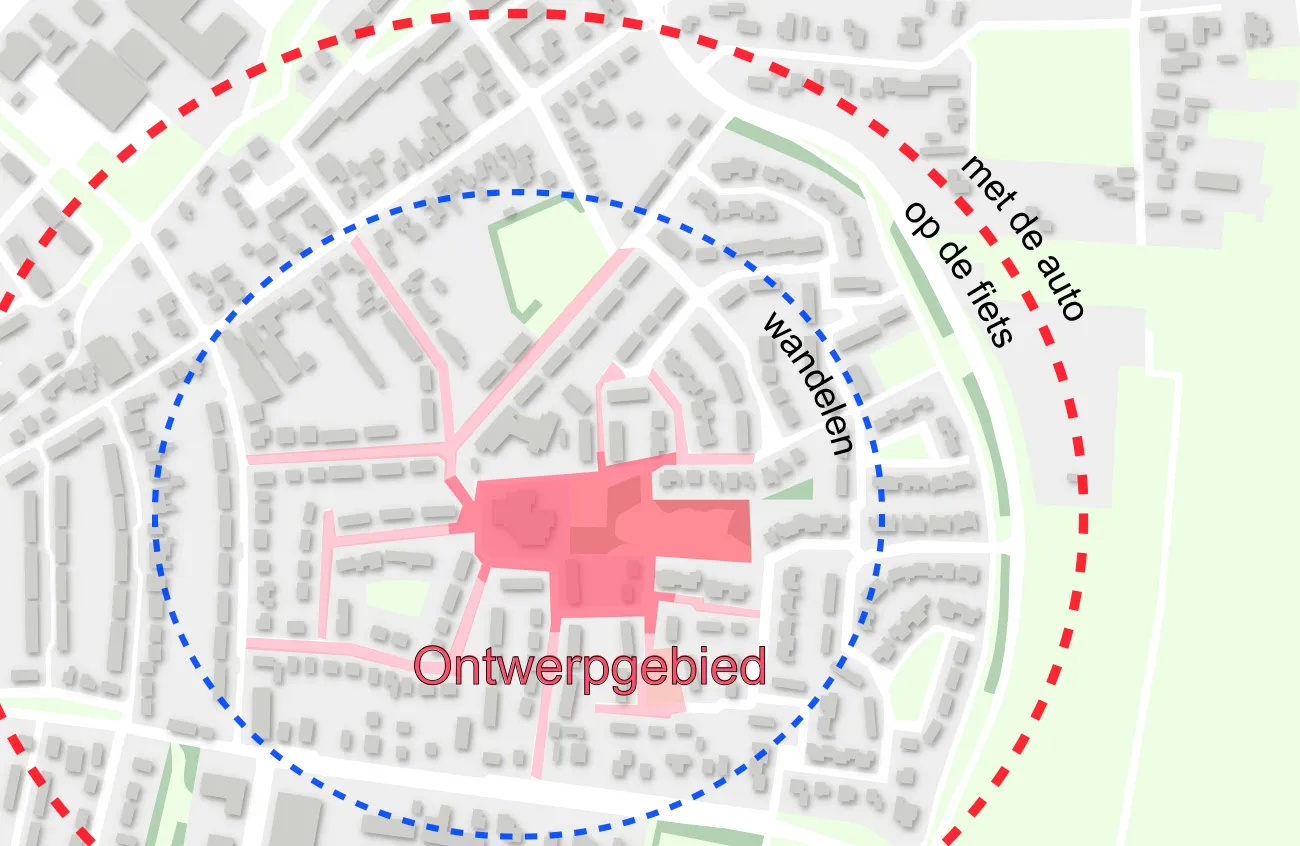
How great would it be for young people to roam around industrial estates too?! Perhaps they could be invited to see what is still made in the Netherlands, become interested in a technical career, or even ask for building materials from skips to build a den.
Of course there are objections, but surely the cost of clearing away a den from time to time and the risk of occasionally getting hurt are outweighed by the benefits: healthier children who acquire material knowledge early in life that they will never forget, learn physical principles without opening a book, build resilience without needing a vaccine, get fit and burn fat without a gym, learn to work together without project-based learning, and learn to build tangible, non-digital cities from branches and planks … Claiming public space for physical activity, meeting others, play and sport surely isn’t a utopia!
Question about this story? Ask your question
Keep following this
Get an email when a new story is published. No account needed.
- SubjectGeneral







