Green and sustainable school playgrounds: between ambition and reality
Text Armand LandmanImage j2o Architectuur
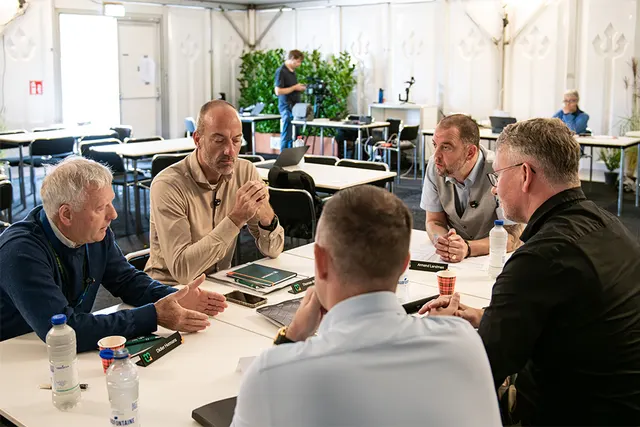
Landscape architect Timo Cents and architect Joost Hillen
Greening and making school playgrounds more sustainable is on the rise, but it is far from easy. That is clear from a conversation with architect Joost Hillen and landscape architect Timo Cents. What began as a chance meeting in the playground at their children’s school in Utrecht quickly grew into an intensive and fruitful collaboration. They are now jointly involved in a wide range of education projects across the Netherlands, from nurseries to primary and secondary schools.
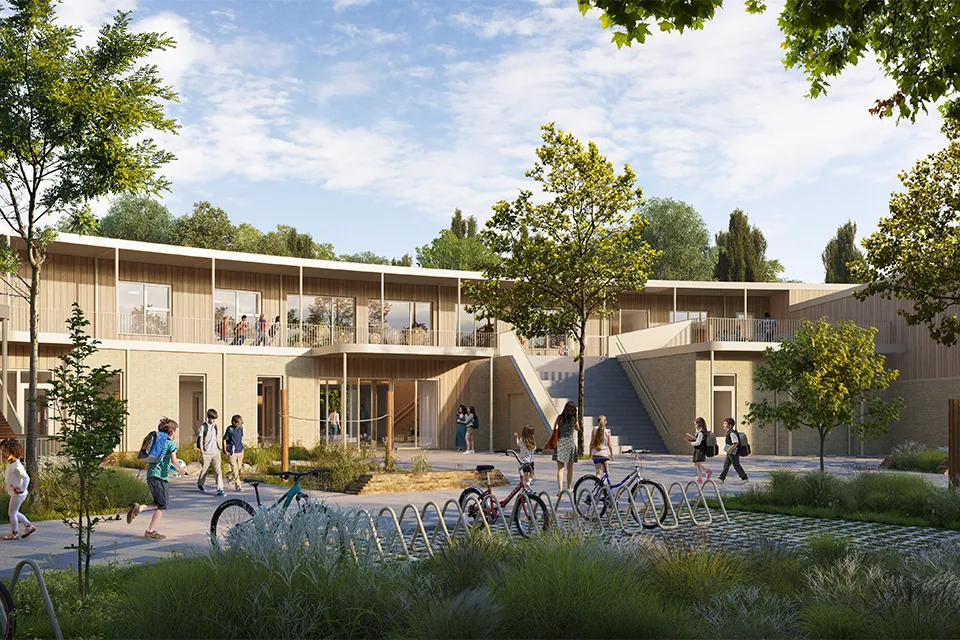
“We saw how much hard surfacing there was in our children’s playgrounds,” says Cents. “A few red lines, some flaking paint, and otherwise mostly paving. Not a tree or shrub in sight, let alone space for adventure or experiencing nature.” That observation prompted them to pool their strengths. Hillen, co-founder of j2o Architectuur, has extensive experience in educational building design. As a landscape architect, Cents brings a wealth of experience in outdoor spaces and greening. Together, they aim to create integrated designs in which the building and outdoor space complement one another.
From ambition to implementation
There is widespread demand for green school playgrounds, among school boards, parents, local authorities and, of course, children. But putting plans into practice is far from straightforward. “The outdoor space is often the last thing considered in the construction process,” says Hillen. “Once the budget has run out, there is little left for the playground.” Cents adds: “And even when the space is made green, maintenance is often overlooked. Before long, it has been played to pieces.”
The pair say there is a clear divide between ambition and reality. Greening, climate resilience and play quality are receiving more attention, but these priorities often clash with tight budgets, strict regulations and limited space. “Do you choose a tree costing ten thousand euros or a climbing frame for the same amount? We have to make that choice all the time,” says Cents. What is more, maintenance is rarely included as a permanent part of operating budgets.
Dutch play culture
In the Netherlands, muddy shoes and wet clothes are frowned upon. “Children are not allowed to get dirty, even though that is essential for their development,” says Cents. The contrast with countries such as Scandinavia is stark, where playing outdoors in nature is taken for granted. In the Netherlands, caution prevails. “From a height difference of one metre, you get a little fence every sixty centimetres,” says Hillen with a smile.
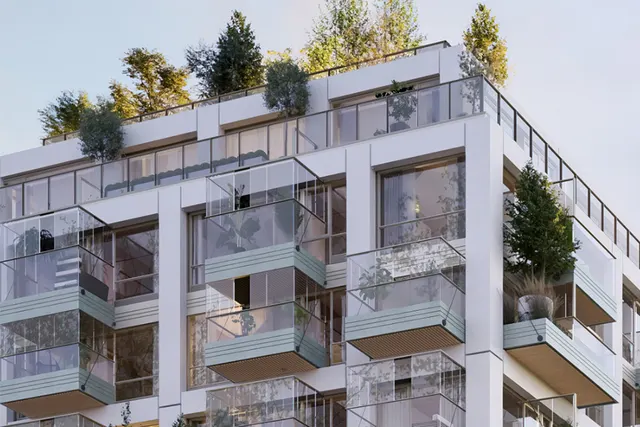
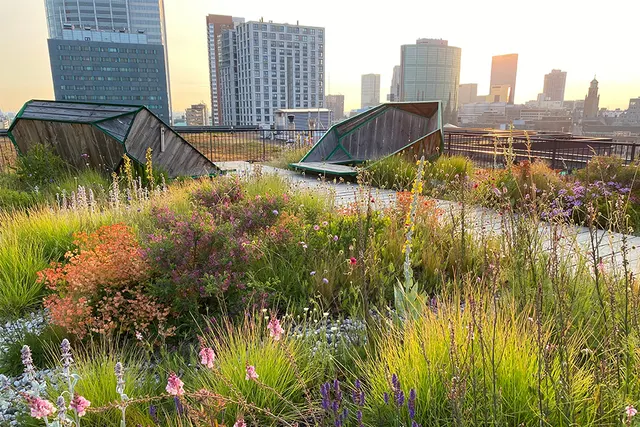
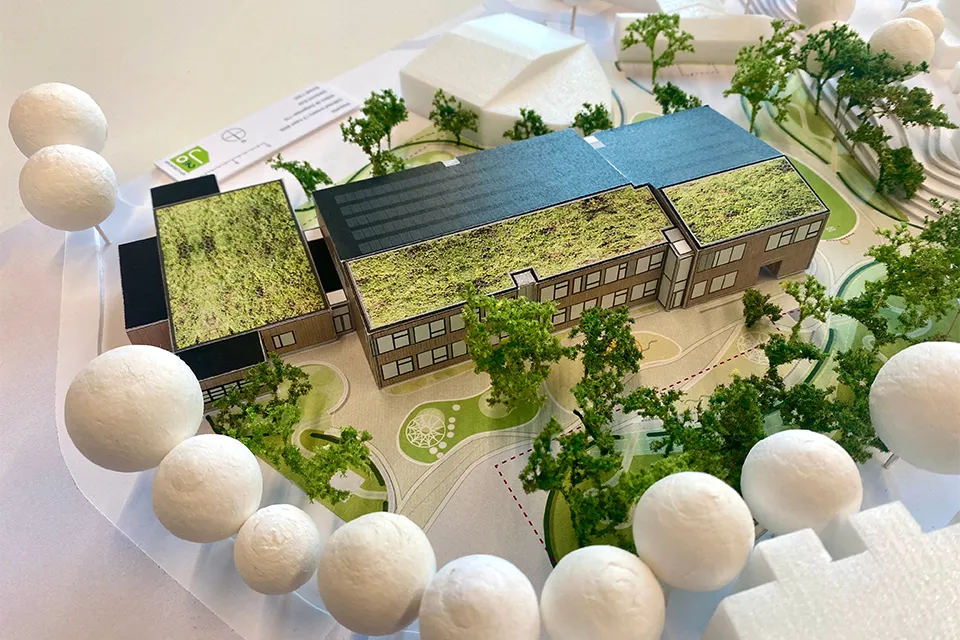
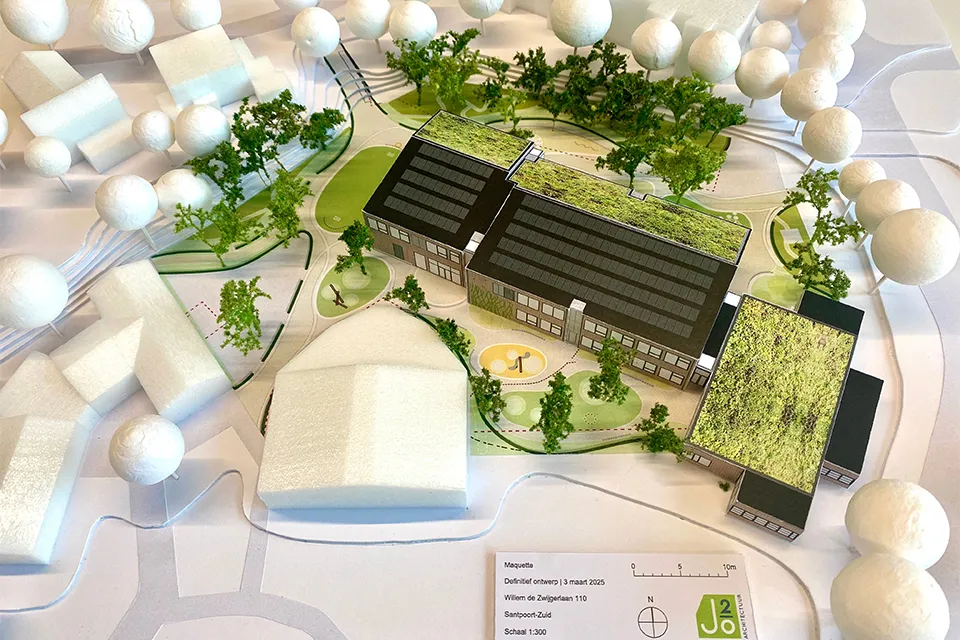
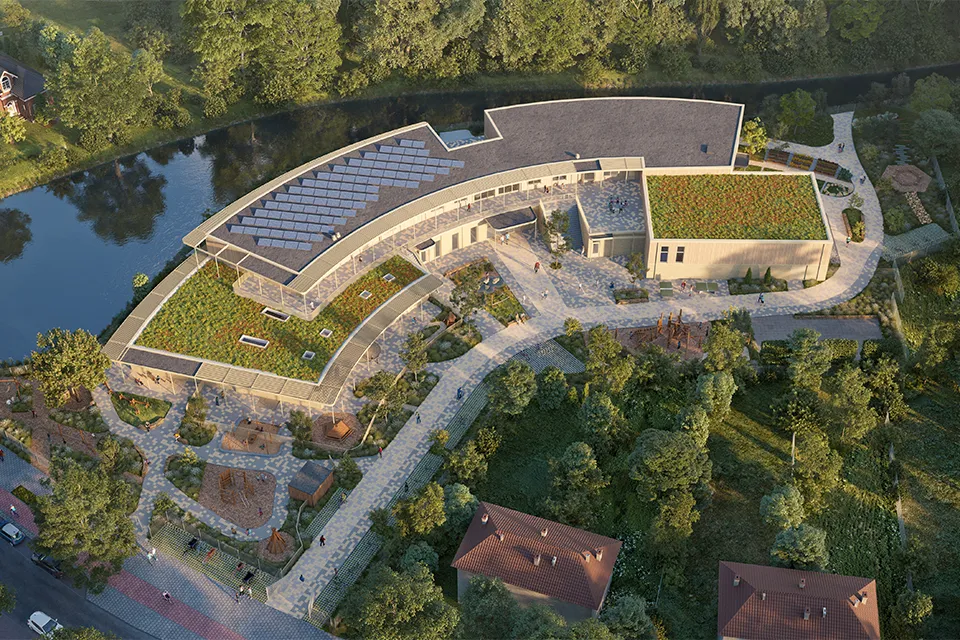
There are positive developments, though. New schools are increasingly incorporating ‘indoor-outdoor spaces’, with classrooms providing direct access to an outdoor area. Green roofs, nesting sites for birds and rainwater infiltration zones are also being included in designs. “We want trees for shade, not parasols,” says Cents. They also consider biodiversity, natural play features and the impact of the playground on social behaviour and sensory development.
Integrated design and making smart use of space
One of the biggest challenges is space. Green school playgrounds need more square metres, while schools often have to make do with small sites. On top of that, schools, particularly in inner-city areas, have to accommodate a wide range of functions: cycle parking, rubbish bins, kiss & ride zones and more. “And that is before we even get to water storage, heat stress and accessibility regulations,” Hillen adds.
“It is a puzzle at every level,” says Hillen. “That is why it is important to include landscape architecture in the design from the outset. Not as a final step, but as the starting point.”
Green ambitions need broad support
Cents and Hillen stress that green school playgrounds are not just the responsibility of designers and school boards. Maintenance is crucial. “If the enthusiastic group of parents falls away, the garden plan falls apart,” says Cents. Local authorities, schools and residents therefore need to work together. Professional support is often also needed to ensure quality and continuity.
Finally, the two call for a realistic approach. “We cannot create Scandinavian natural paradises everywhere,” says Hillen. “But with creativity, collaboration and vision, we can certainly make school playgrounds greener, more sustainable and more enjoyable. And perhaps, just perhaps, they will become a little more magical too.”
Question about this story? Ask your question
Keep following this
Get an email when a new story is published. No account needed.
- SubjectSustainability