









The basics of an extensive green roof
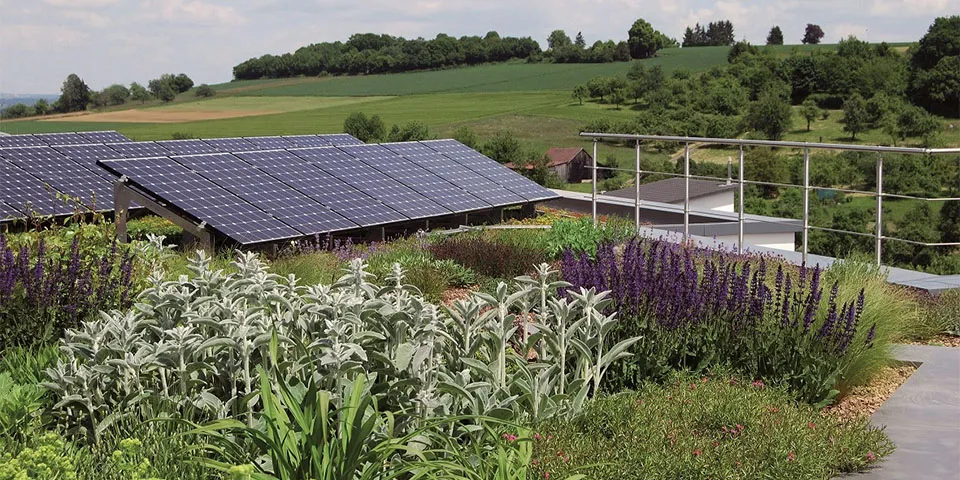
More and more roofs are turning green. As a provider of green roof system solutions, ZinCo can only welcome this trend. However, the pioneer has found that there are still some misconceptions about installation and maintenance.
Discover the benefits and avoid the pitfalls
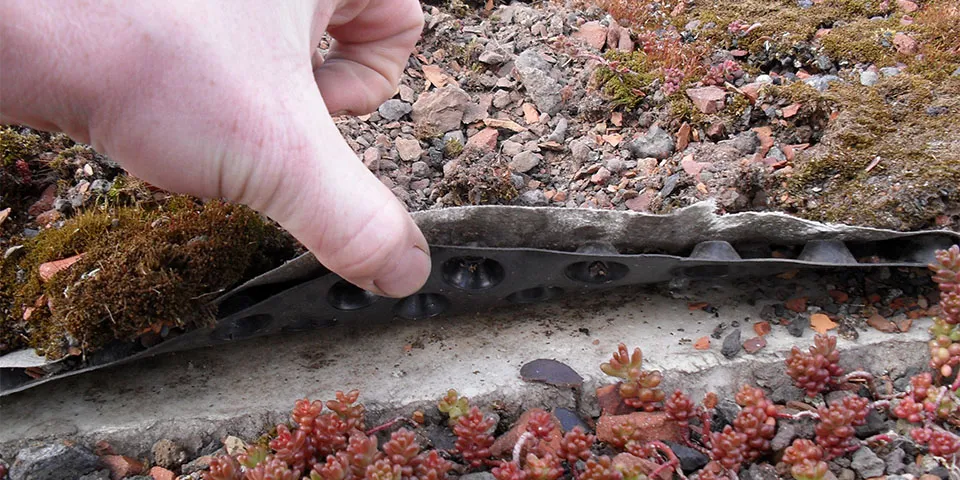
Common mistakes in green roof build-ups include a drainage layer that is too thin, no water reservoir and insufficient substrate.
Why install a green roof?
By capturing fine dust, introducing biodiversity and slowing the run-off of rainwater, a green roof offers environmental benefits first and foremost. Visually, it provides a welcome spot of calm, and some cities offer subsidies. An extensive green roof also provides sound insulation, extends the lifespan of the roof covering and can have a positive effect on the performance of solar panels. However, contrary to what is sometimes thought, it does not provide additional thermal insulation.
Extensive green roofs are generally planted with sedum and require little maintenance, unlike intensive green roofs.
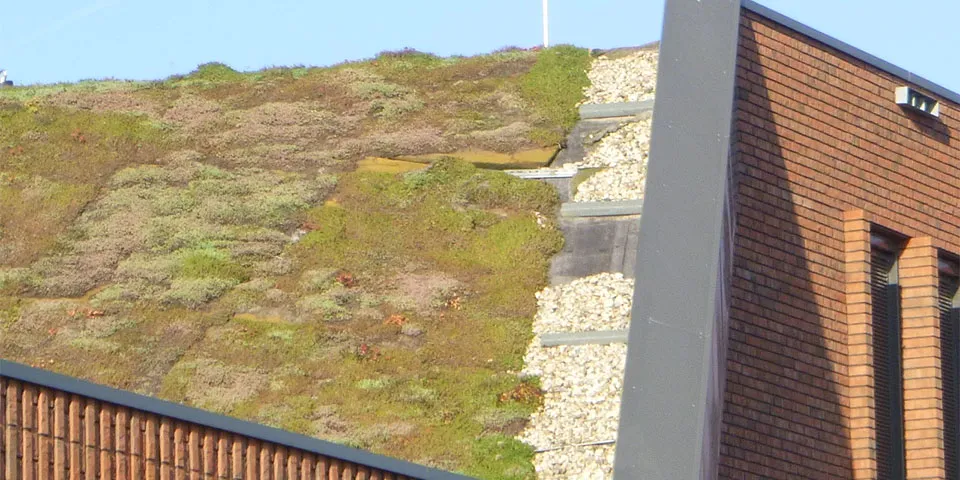
On pitched roofs, an unsuitable system can cause the entire green roof to slide off.
A solid foundation
Because the height and weight of the system build-up are limited, extensive green roofs are suitable for many types of roof. The possibilities are not endless, of course. For a well-functioning green roof, allow for a standard weight of
100 kg/m2.
Before installation, the roof’s load-bearing capacity must be checked, as well as the watertightness and root resistance of the roof covering. Only then can the system build-up begin, starting with protection for the waterproofing, followed by a drainage system with a water reservoir, filter, specialist substrate layer and, finally, the plants.
A lack of maintenance allows unwanted plants to proliferate.
The right drainage system
A good drainage system involves more than drainage alone. A water reservoir is essential, yet it is often overlooked. This common mistake is easy to avoid. ZinCo combines all the essential components of a good drainage system in a single product: Fixodrain XD20, suitable for roofs with a pitch of between 1,5% and 15%. Another advantage? The rolls simply clip together, preventing unwanted root growth.
System build-ups must also be suited to the roof pitch. The wrong (drainage) system can leave the substrate constantly waterlogged, causing the plants to die. On pitched roofs, it can even cause the entire
green roof to slide off.
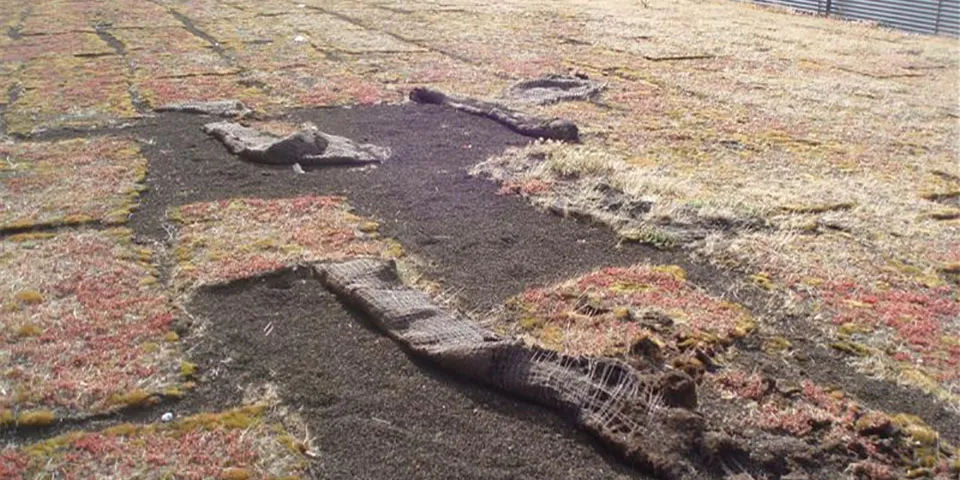
A lack of maintenance allows unwanted plants to proliferate. The wrong (drainage) system leads to water stagnation, leaving the substrate layer constantly saturated and eventually causing the plants to die.
The right substrate
Substrate is selected according to factors including the plants, water management and aeration. Unsuitable or contaminated substrate can cause the original plants to disappear or unwanted plants to take hold. Sand, for example, is not permitted, while mineral wool is also less suitable. The German FLL guidelines (Forschungsgesellschaft Landschaftsentwicklung Landschaftsbau) provide an excellent guide to making the right choice.
Once again, layer depth is a crucial consideration. Both too much substrate and a layer that is too shallow, at 3 à 4 cm, can have negative consequences. The substrate should therefore be at least 6 cm deep after settlement.
It goes without saying that the system build-up must not cover the roof outlets.
More than sedum
Although sedum planting is standard on extensive green roofs, other options are certainly available. Using pre-grown plants (Multitops), an extensive green roof can also support rich biodiversity and a long, colourful flowering period, provided the substrate layer is slightly deeper, at around 8 cm. Not all plants are suitable for a green roof, of course, but ZinCo is happy to advise and also offers a range of proven mixes, including Bijen en Vlinder Multitops.
Where sedum is introduced by sowing cuttings or using pre-grown mats, Multitops are planted individually. In all cases, it is essential to water the plants sufficiently after installation.
Contrary to what is often thought, installing gravel strips is only a recommendation from the WTCB (Wetenschappelijk en Technisch Centrum voor het Bouwbedrijf), not an absolute requirement. The client can, of course, specify them.
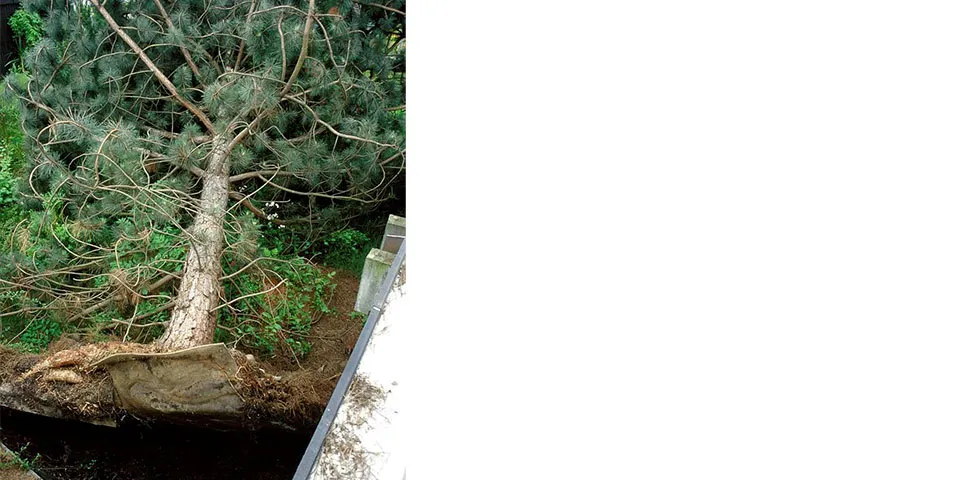
Choosing the wrong plants can have disastrous consequences.
Maintenance
Although an extensive green roof is largely self-sustaining, that does not mean it needs no attention. Limited maintenance is essential, especially during the first year: removing unwanted plants, reseeding or replanting, and applying fertiliser if necessary. The waterproofing around junctions and roof edges must also be checked, as must the outlets and gutters, which should be cleared. Extensive green roofs with Multitops need a little more maintenance, including mowing twice a year.
Finally, with climate change, the plants may need a little extra watering from time to time. Remember that they are exposed to even more extreme conditions on the roof than their counterparts at ground level!
Question about this story? Ask your question
Keep following this
Get an email when a new story is published. No account needed.
- ThemeSpace for urban green
- SubjectGeneral







