









The challenges facing tree growers
From ecological growing to automation
Dutch and Belgian tree nurseries weathered the coronavirus crisis well. Lockdown measures drove a sharp increase in demand for greenery. Today, however, new challenges are emerging. Labour shortages, soaring energy prices, the rising cost of living and scarce raw materials are just some of them. Not to mention automation and digitalisation, sustainable business practices and the need to anticipate weather conditions that seem increasingly erratic. How are business owners dealing with these challenges?
We asked four industry professionals for their views: Marian Maenhoudt (owner of Laurica-Plants), Franky Vandeputte (PR manager at Boomkwekerij Udenhout), Lucas De Nolf (owner of Boomkwekerij Willy De Nolf) and Paul Vermeulen (owner of Janeko).
Looking back at the coronavirus period
The outbreak of the coronavirus crisis and the accompanying lockdown measures initially left growers struggling to catch their breath. “Because our professional customers, including garden centres, had to close their doors or operate at a slower pace, it was not easy to deliver our products according to schedule,” says Vandeputte. “Fortunately, this uncertain period lasted only a few weeks, so we were able to quickly return to our usual pace,” adds Maenhoudt. “And of course, we took every possible safety measure at our nursery to protect our employees as well as we could,” says De Nolf. “A colleague was occasionally off sick, but all in all, the impact was limited.”
During the subsequent waves of coronavirus, uncertainty gave way to a sharp upturn in business. “More and more people discovered the joys of gardening. As a result, the order books of our end customers, landscapers, garden centres and fellow nurseries, quickly filled up. This obviously had a positive effect on our turnover,” says Vermeulen. His colleagues nod in agreement, although Vandeputte also sees a downside: “Unfortunately, it was virtually impossible for any of us to meet our customers in person. Personal advice about trees and plants is very important in our sector. Providing advice remotely was not easy.”
Brexit and the Russia-Ukraine conflict
The experts also cite Brexit as a challenge that should not be underestimated. “The United Kingdom is an important export market for laurel,” confirms Maenhoudt. “Thankfully, order numbers remained stable, but we have had to take on a lot of extra administrative work. This has led to higher costs. Fortunately, we were well prepared for the measure.” De Nolf agrees: “We had also made the necessary preparations. Even so, we too are facing more complex administration and supply chains. We pass on the additional costs in our prices.”
It goes without saying that the conflict between Russia and Ukraine is also having far-reaching consequences for the nursery sector. The impact is clearly felt both directly and indirectly. “The war has created a great deal of uncertainty,” says De Nolf. “Disrupted supply lines, shortages of raw materials and the loss of export markets are putting pressure on the sector. Since our sector follows the construction industry, where projects are at risk of grinding to a halt, we will have to wait and see how things develop.”
Vermeulen adds: “I have a feeling that the war, combined with the rising cost of living, is putting landscaping investments on hold. I hope my gut feeling is wrong...”
Sustainability and ecology
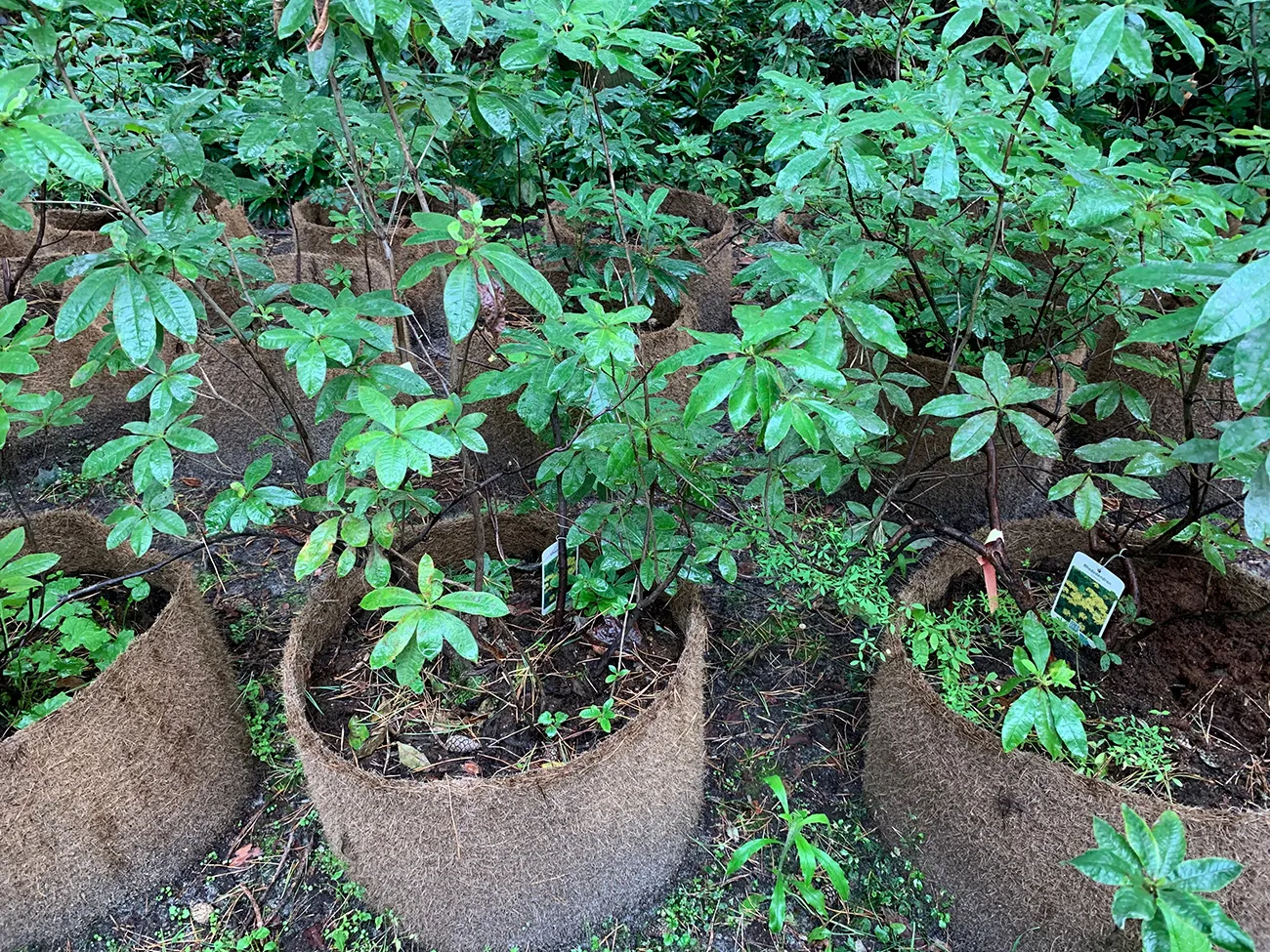
Sustainable and ecological growing is an important issue for all growers. They are investing heavily in techniques for growing crops in an environmentally and climate-friendly way. Vermeulen is taking the greenest possible approach to growing his rhododendrons: “We grow our plants in a forest. This natural setting makes our work quite challenging, but it also means our rhododendrons literally grow into strong plants. They have to find water and nutrients for themselves. We use as few pesticides and fertilisers as possible. The mown weeds are left in place, along with leaves and needles. We also keep watering with rainwater to a minimum, partly because this is difficult to manage in practical terms in a forest.”
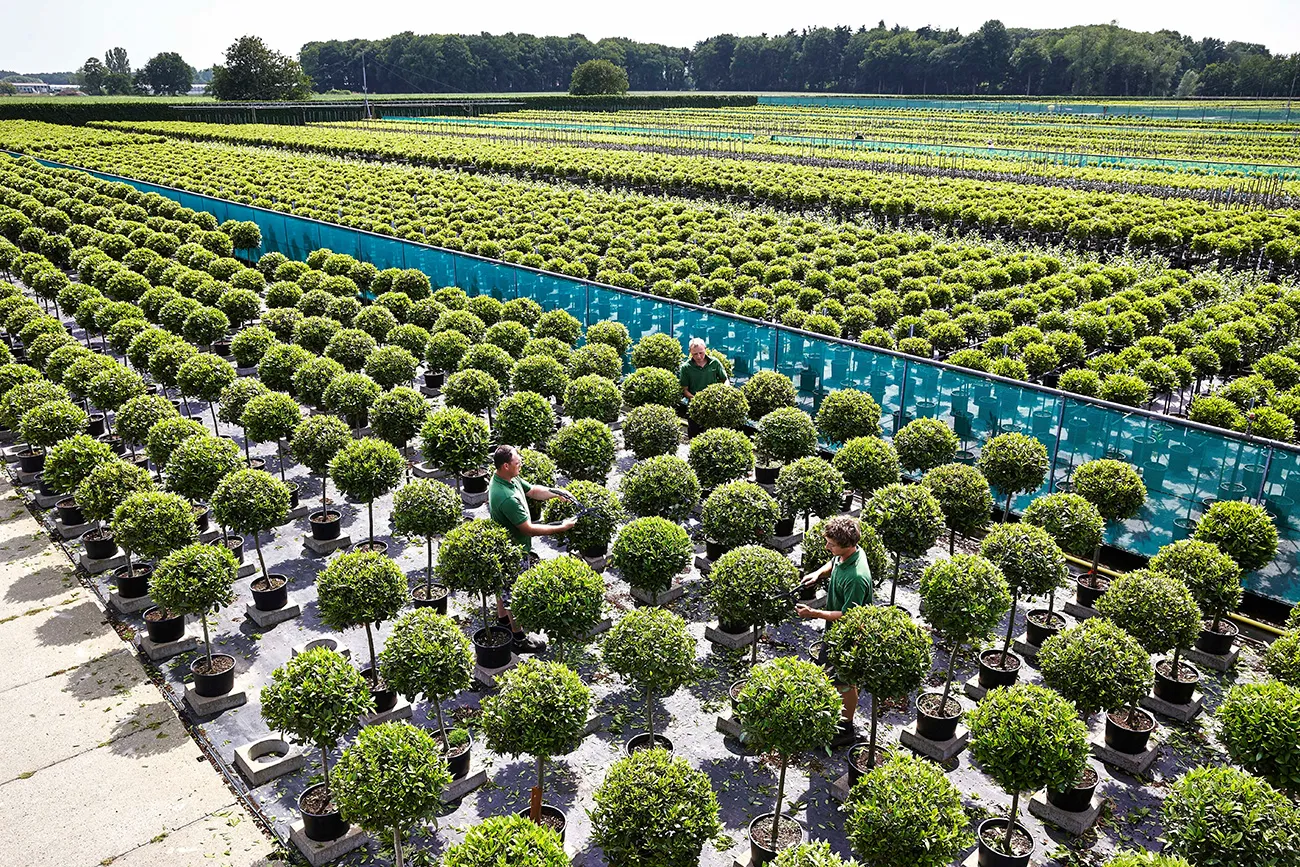
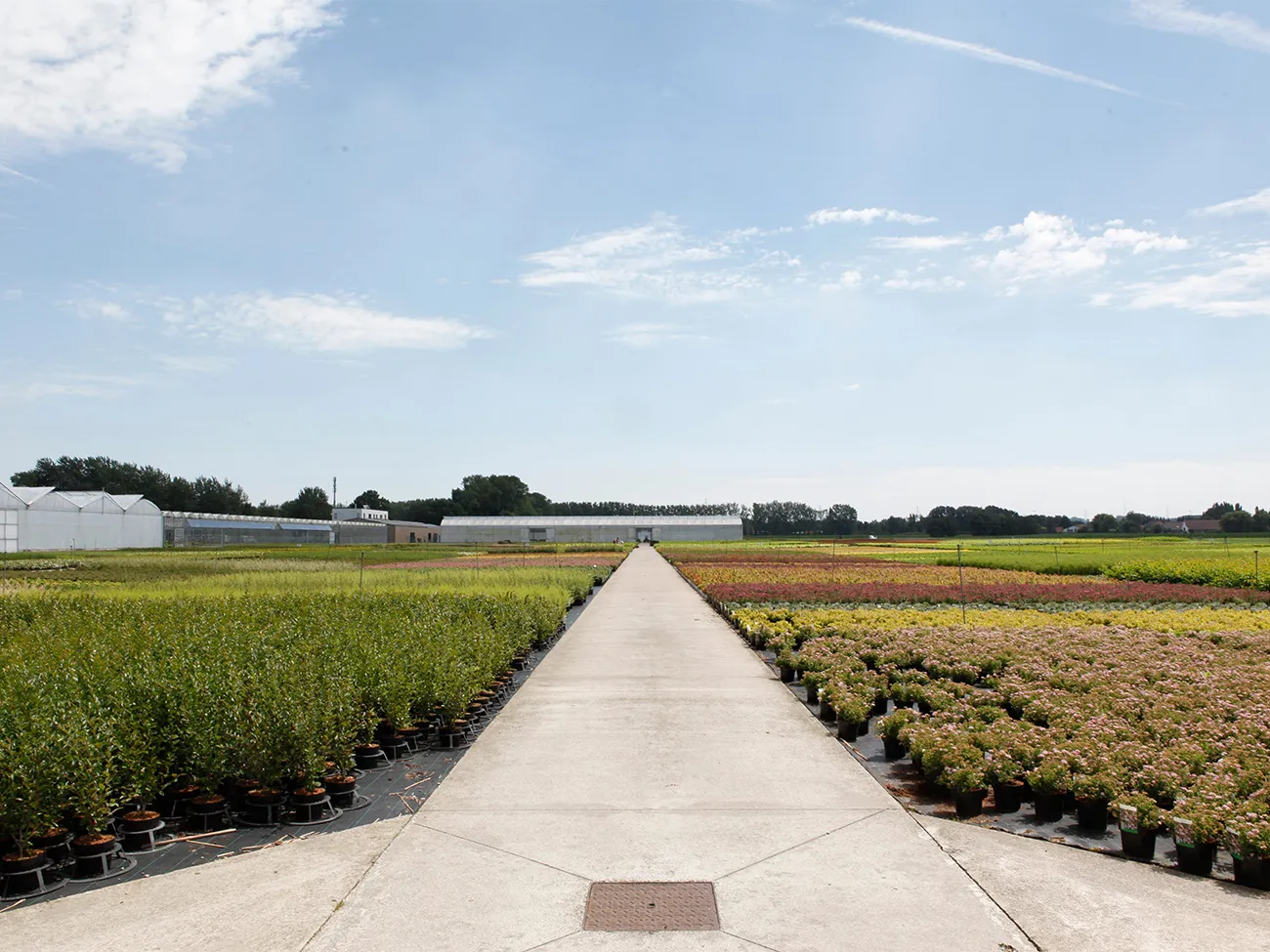
How does Maenhoudt’s team approach this? “For the past few years, we have been laying mats on the potting soil of our young laurel plants. This limits weed growth and, consequently, the use of sprays, although it also calls for a different approach to things such as fertilisation. We also have to use water ever more sparingly. That is why we continue to invest in new container fields, ensure that water is directed as precisely as possible onto the plants, and collect all surplus water in a 4-million-litre reservoir. The water is filtered and then reused.”
A shared responsibility
Boomkwekerij Willy De Nolf is also sparing no expense or effort in this area. De Nolf explains: “We control weeds manually only, not chemically. We do use chemical treatments against plant diseases, but always a mix of products that work in the short term and are therefore traceable on our plants for only a few weeks at most. We also use only cold, slow-release fertilisers, which we dose as carefully as possible for each plant. As a result, there is virtually no leaching into our recycled water.”
“Boomkwekerij Udenhout takes a similar approach,” says Vandeputte. “We are constantly looking for alternative methods and materials to grow better-quality plants in a greener way. This often also helps us tackle the problem of items that are scarce or out of stock. Meeting the highest environmental standards has become part of our company DNA. We believe local authorities, who are important customers for us, should buy as sustainably as possible. With sound business management and a carefully considered production method, we can offer trees that are not much more expensive.”
Energy efficiency
The four nurseries are models of energy-efficient management. “At Boomkwekerij Udenhout, we are currently installing 4,000 m² of solar panels, which will produce almost one megawatt per year,” says Vandeputte proudly. “Our next goal is to produce our own hydrogen for our machinery. A large part of our vehicle fleet is already electric, too.”
What is Boomkwekerij Willy De Nolf doing in this area? “At present, we do not yet have our own solar panels. Unfortunately, our plan to install our own 150-metre-high wind turbine cannot go ahead. The vast majority of our extensive vehicle fleet is electric. We recently bought a new electric vehicle.”
As mentioned above, Laurica-Plants is already making impressive efforts to use water as sparingly as possible. “We are also making these efforts to generate electricity,” says Maenhoudt. “Our own solar panels allow us to operate our watering vehicles more sustainably. Having an MPS-A label is proof that we are on the right track!”
Investing in automation
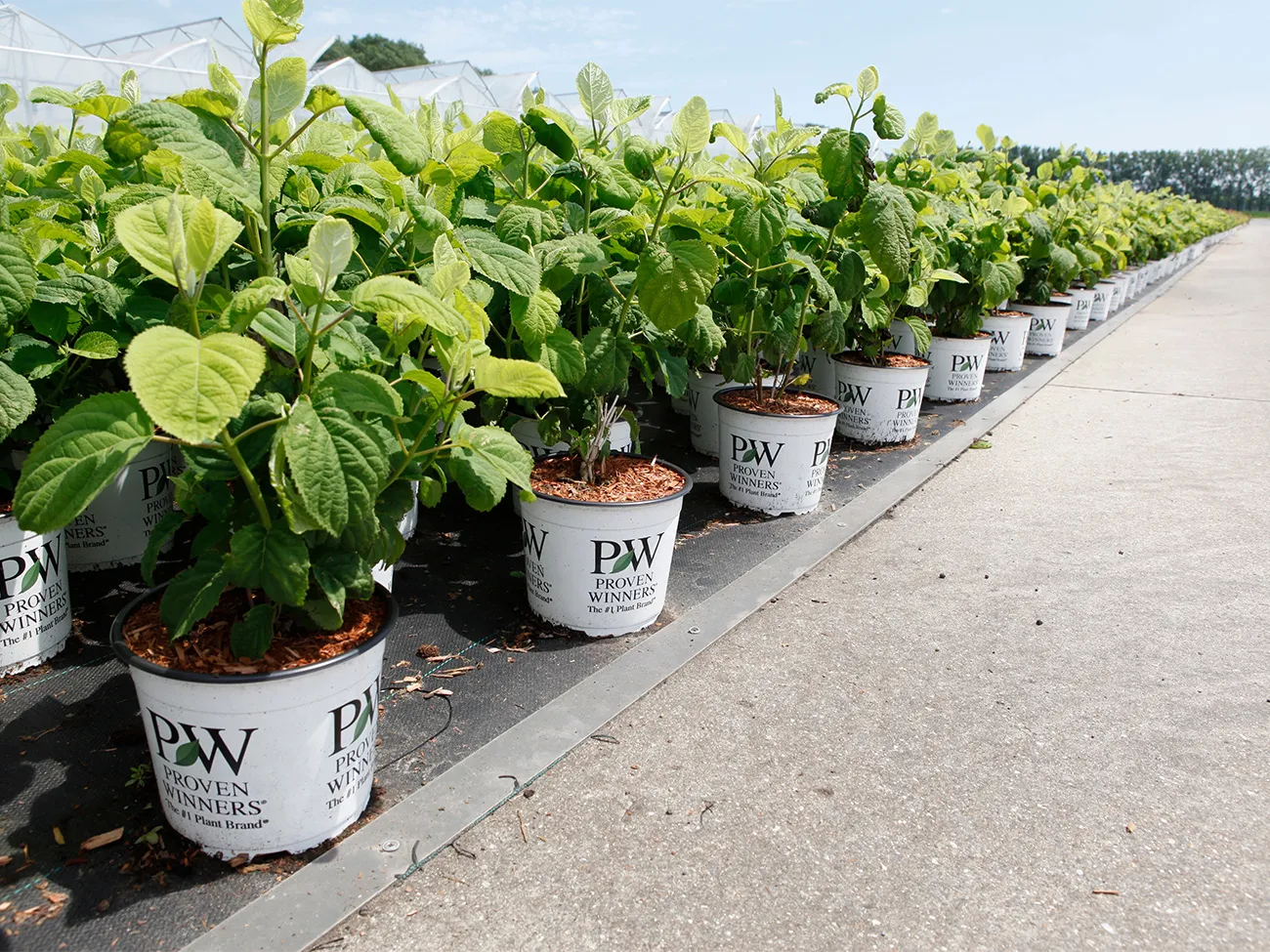
Sustainable and ecological growing is not the only essential issue for the sector. Automation and digitalisation are essential too, and our panel can point to some impressive achievements in this area. Vandeputte gets the ball rolling: “We are going all in on automation. All our trees are planted using GPS. We are testing the next steps, including driving through the entire nursery once a month with a tree calliper. The robot measures the trees’ growth in girth, allowing us to monitor their progress in real time and keep an accurate overview of our stock. We are then moving on to digital tagging. Each sales colleague has an iPad with a GPS connection, allowing them to tag every tree digitally in the nursery. When an order is placed, the lifting team follows up and attaches an RFID tag to the tree as it is lifted. From then on, we can track the trees digitally throughout the post-lifting process.”
De Nolf is just as enthusiastic about the opportunities automation offers in 2022. “Automation and robotics are essential for our company too, because we grow more than 1.5 million plants. We are bringing out all the stops, particularly for smaller pot sizes. Smaller pots are moved manually only during order picking. Before that, they are moved using plant forks, among other things.”
Maenhoudt has the final word: “At Laurica-Plants, plant forks have become an indispensable means of transport. Buffer and conveyor belts are also proving their worth. They allow our employees to work at height in safe and ergonomic conditions. The mechanical element of growing and pruning laurel is relatively limited. The plant’s value lies in the ornamental quality of its leaves. If you prune mechanically, you cut those very leaves in half, losing an important aesthetic feature. For this reason, our plants are pruned mechanically only to a very limited extent, and shaping has always been done by hand in recent years.”
Question about this story? Ask your question
Keep following this
Get an email when a new story is published. No account needed.
- ThemeTrees and plants for tomorrow
- SubjectGeneral







