









‘The green-space professional of the future needs more knowledge’
Text Nolanda KlunderImage IPC Groene Ruimte
Future-focused Green-Space Professional training course
“At policy level, more and more value is being placed on green space, but green-space professionals do not always know why they carry out tasks in a particular way,” say the trainers on IPC Groene Ruimte’s new Future-focused Green-Space Professional training course. The course gives frontline workers more knowledge of biodiversity and climate adaptation. “We want to restore professional pride.”
Nick van Oort, a trainer at IPC Groene Ruimte, explains: “In our courses, we noticed that green-space professionals do not always fully understand why they carry out certain tasks. Why should you prune a hedge? Why might you choose not to hoe, and to leave ‘weeds’ standing? We do not call them weeds, they are herbs. Why might it be important to mow less? That is why we have developed a new course that focuses more on ecological principles, rather than solely on practical tasks.”
Joris van Gorp, also a trainer, adds: “At policy level, more and more value is being placed on green space and biodiversity. With this new course, we want to bridge the gap between policy and the people who put it into practice every day. When frontline workers better understand the reasons behind their work, you see green-space policy change for the better.”
Theory and practice
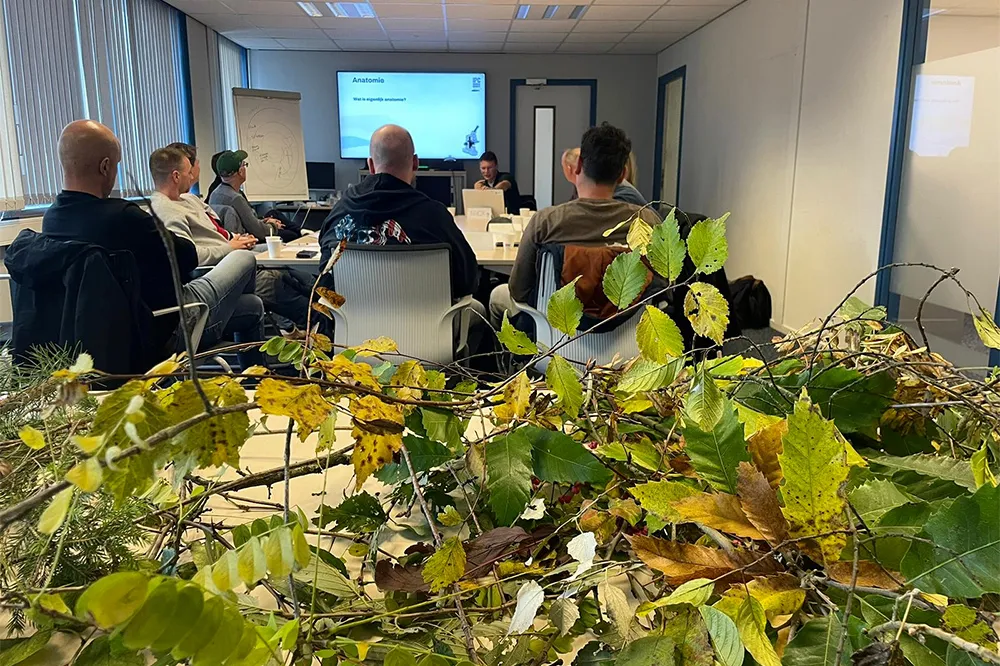
The course is intended for people already working in green-space management or those entering the sector from another field. Van Gorp says: “We build on their basic knowledge with information about biodiversity and climate adaptation: what changes are coming in the future, and how can we start putting them into practice in green spaces now? The course also covers communication and awareness. The green-space professional of the future understands what is happening and can explain to passers-by, residents and clients why they do or do not carry out certain tasks. It is about observing and reporting, because those working outdoors are the eyes and ears of our green spaces. It covers management and maintenance, as well as installation. Field professionals must be able to explain to the architect why a particular design is not sustainable or feasible. That takes professional skill and knowledge.” The course lasts 12.5 days. Van Gorp says: “Mornings focus on theory, and in the afternoons we go outside to put it into practice or visit sites to see how things have been done there.”
Professional skill
“The participants are already good at practical tasks, but now we focus on the theory behind them,” says Van Oort. “A thorough understanding of what you do gives you more passion for your work. You are not just someone who prunes or hoes.” Van Gorp adds: “People too often say: ‘If you can’t do anything else, you can always work in green-space management.’ Yes, anyone can hold a hoe. But it is a profession all the same. It requires specialist knowledge, including knowledge of soil and plants. We want to restore professional pride, so that green-space professionals can once again take pride in their work.” Van Oort says: “In the face of today’s challenges, green space is becoming increasingly important. That is why we need to have the confidence to give frontline workers the importance they deserve. Give green-space professionals the knowledge and skills to represent their profession with pride.”
Question about this story? Ask your question
Keep following this
Get an email when a new story is published. No account needed.
- ThemeNature-friendly green space management
- SubjectGeneral







