









The Kress Voyager shows how capacity, staffing and costs are fundamentally changing
Text and images Kress
The new standard in grounds maintenance
The sector is at a clear turning point. Organisations are under increasing pressure from staff shortages, rising labour costs and more stringent sustainability and quality requirements. In this context, it is not just how work is carried out that is changing, but above all how it is organised.
The Kress Voyager is no longer an experimental concept, but a system that can be deployed in modern grounds maintenance today. It shows how autonomous mowing is becoming a practical solution. The focus is shifting from execution to management: from “how do we get the work done?” to “how do we organise capacity more efficiently?”
From mowing to management
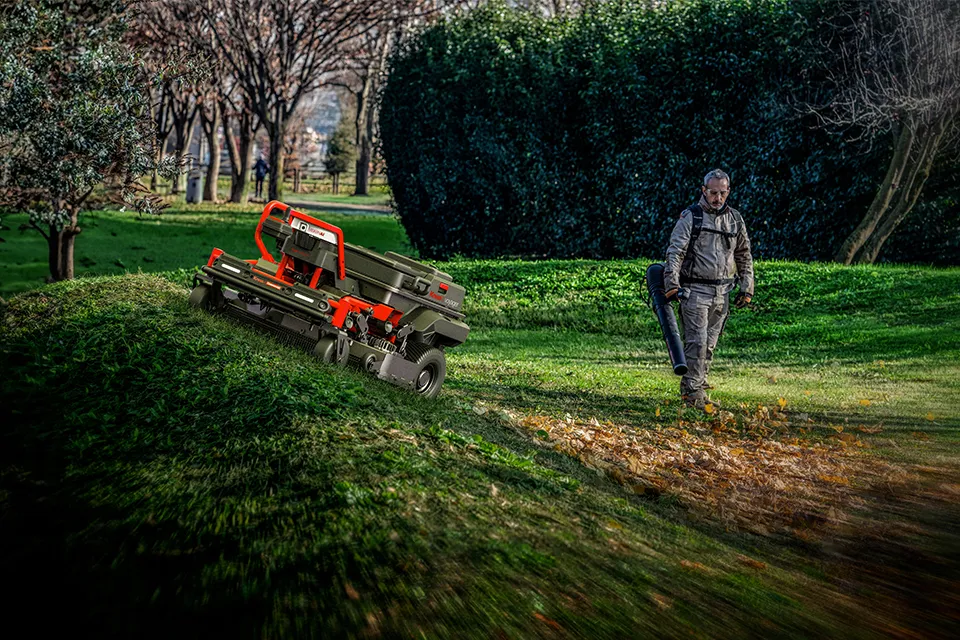
Traditional grounds maintenance still revolves around one decisive factor: staff availability. Crew scheduling, sickness absence, seasonal peaks and a tight labour market all have a major impact on whether specifications and maintenance contracts can be delivered. The Kress Voyager completely overturns this model. After the site has been mapped once, the machine operates fully autonomously. Thanks to RTK positioning, LiDAR technology and vision AI, the Voyager mows independently. This changes not only how the work is carried out, but also how it is organised. One operator can monitor several processes while the machine carries out mowing autonomously within pre-set zones or routes. The role shifts from operative to capacity manager.
In practice
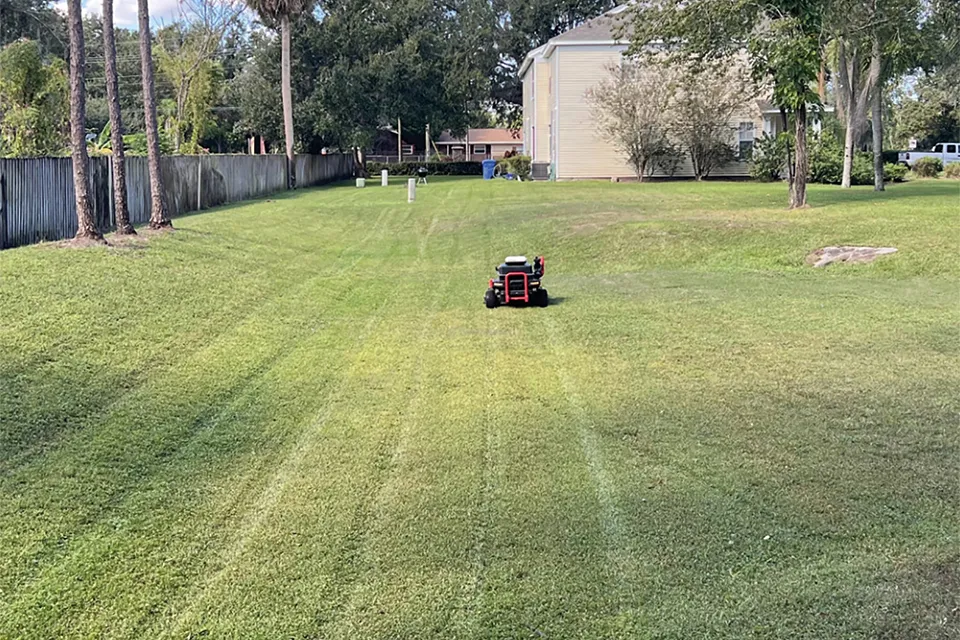
In the Benelux, autonomous mowing technology is increasingly being used in route-based maintenance models: organisations whose teams maintain several sites a day. This approach is giving rise to a new operating model: one operator can manage several sites or machines; repetitive mowing tasks are automated; teams focus more on specialist maintenance and quality control; and a physical presence at every site becomes less necessary. The result is not the replacement of teams, but a redistribution of work. The organisation stays the same, but how people are deployed changes fundamentally. This creates a key advantage: the same workforce can do more work without additional pressure on staffing.
Sustainability as an operational advantage
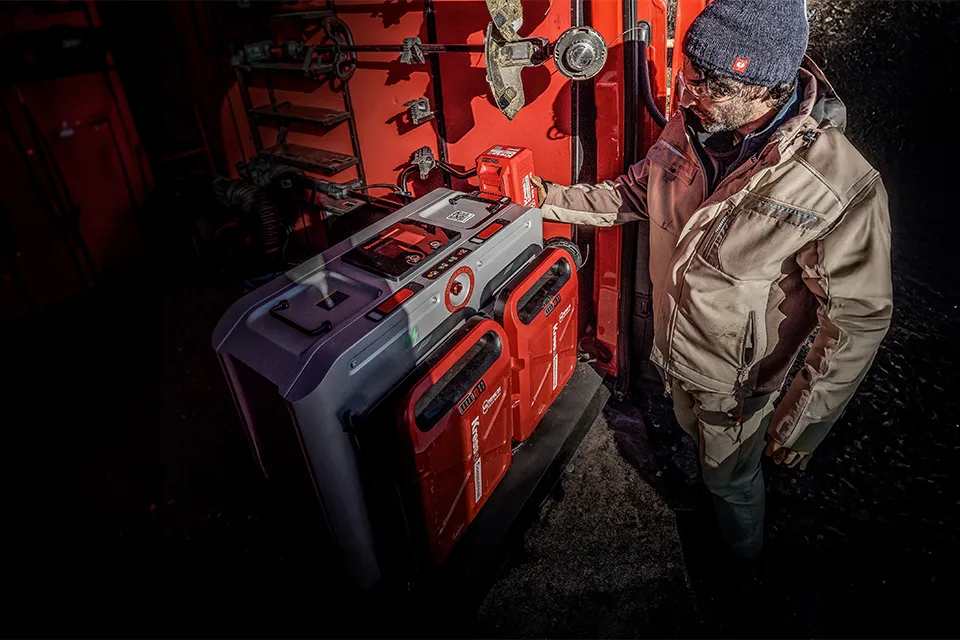
Sustainability is no longer an added benefit in tenders, but a firm selection criterion. The Kress Voyager directly meets this need as part of the Kress Commercial Cybersystem, which fully integrates machinery and energy management.
The machine is designed for extended use and can mow autonomously for up to around 8 hours on a single battery charge, making it possible to work a full day across multiple sites without interrupting operations. Using an additional quick-change battery can extend operating time even further, making it possible to work a full day across multiple sites without interrupting operations. Importantly, the Voyager is part of Kress Commercial. This means batteries are interchangeable across the entire range, so power units are not tied to a specific machine, but can be deployed flexibly. This offers the following benefits:
• lower battery investment
• less downtime through smart energy management
The system can also be connected to the Kress Cybertank, enabling centralised energy management and smart charging without access to a power supply on site.
The result is emission-free mowing, maximum operating time and controlled energy logistics within a single platform. This brings an additional benefit: the ability to work at times when conventional machines cannot operate.
The real innovation lies in capacity
Technologically, the Voyager combines RTK navigation, LiDAR and vision AI for accurate autonomous operation without physical boundaries. But the biggest shift is in the economic model. The cost structure of grounds maintenance is changing fundamentally:
• less dependence on staff availability
• lower costs per hectare
• higher output per team
• less seasonal variation in planning
While traditional models scale with the number of people, this system scales with deployable capacity. Strategic impact: tenders are changing faster than organisations
Local authorities, sports organisations and grounds maintenance contractors are facing the same reality: higher requirements in specifications, fewer skilled workers, stricter sustainability criteria and rising operating costs.
A new way of working
The Kress Voyager is not a vision of the future, but a working system that shows how large-scale grounds maintenance can be reorganised. Not as a replacement for skilled workers, but as a redefinition of capacity. The focus is shifting from people-dependent work to system-managed deployment.
GroenTechniek Holland
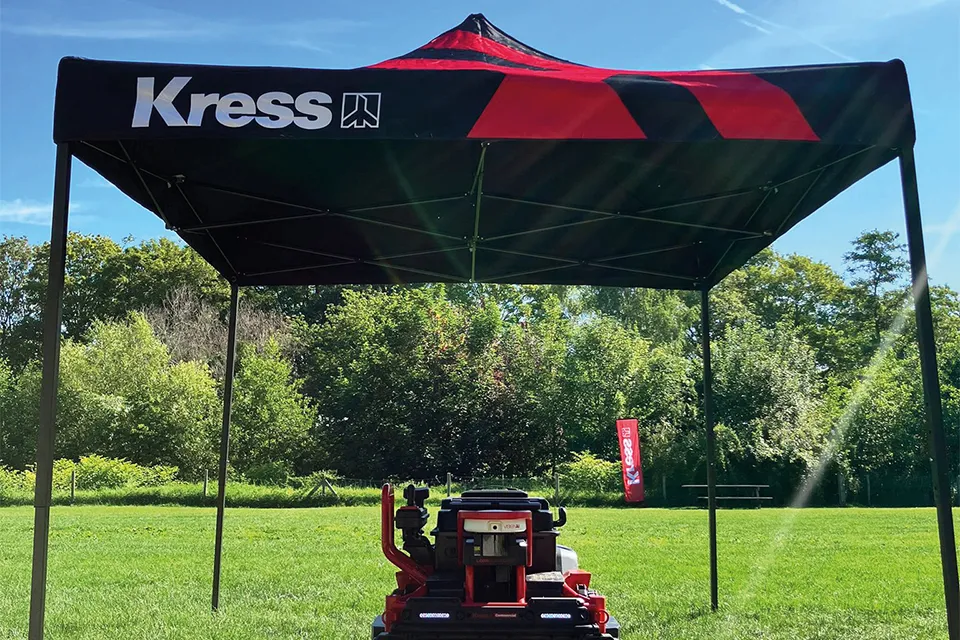
The Kress Voyager will be presented to the general public in the Benelux at GroenTechniek Holland. Visitors can see the Voyager in action at our stand.
A business enquiry for Positec Benelux | Kress? Get in touch
Companies in this story
Keep following this
Get an email when a new story is published. No account needed.
- SubjectGeneral
- CompanyPositec Benelux | Kress







