









The year 2050 has already begun
The government’s ambition is for the Netherlands to be circular by 2050. Given that play areas are designed for the long term (25-30 years), this means that, in practical terms, the year 2050 has already begun today. Anyone designing a piece of play equipment or a play area must already be considering the requirement for play spaces to be circular too. ‘And that is still rarely the case,’ conclude Elske Oost-Mulder and Arjan Vreugdenhil of OBB, specialists in play space.
Circular thinking also requires a long-term vision for play spaces
A striking analogy. Last year, KLM’s Boeing 747 made its final flight. The aircraft has reached the end of its lifecycle. Given all the technological advances of recent decades, it is almost hard to imagine that it was designed in the 1950s and 1960s. The aircraft was therefore in service for more than fifty years, and was designed at a time when CAD/CAM did not exist, computers were rare and aerodynamics was still in its infancy. This is true of many products. Designs literally have to last a lifetime. Play equipment and play areas are no exception. Anyone designing a new piece of equipment now is doing so for the long term. The equipment design itself, or the series that follow, are based on a prototype now on the drawing board. A play area, too, will remain in the same place for a long time. For both equipment and play areas, the long term must therefore be considered now, and circularity will play a crucial role. Yet Elske Oost-Mulder concludes that the play sector is still barely thinking about this. “Yes, people are thinking about sustainability. Yes, manufacturers are looking at whether they can produce in a more environmentally friendly way. Yes, local authority officers are increasingly being challenged by residents about liveable neighbourhoods. But that is still a long way from genuinely thinking circularly. And that is often still something that feels remote. Anyone thinking about play in the future should really start by thinking as if it were already 2050.”
Government
Specifically, what does the government say? Demand for raw materials for food, electrical appliances, clothing and play facilities, for example, is rising sharply worldwide. That is why the government is working with businesses, research institutes, nature and environmental organisations, public authorities, trade unions, financial institutions and other civil society organisations to use raw materials more sparingly and intelligently. The goal: a fully circular Netherlands by 2050. The government has set three objectives to make the Dutch economy circular as quickly as possible:
Make existing production processes more efficient in their use of raw materials, so that fewer are needed.
When new raw materials are needed, make as much use as possible of sustainably produced, renewable (inexhaustible) and widely available resources, such as biomass, which is derived from plants, trees and food waste. This makes the Netherlands less dependent on fossil resources and is better for the environment.
Develop new production methods and design new products for circularity.
The government is also allocating €40 million to accelerate and scale up the circular economy. The money will go, among other things, to practical circular initiatives by SMEs, but experience shows that demand for subsidies soon outstrips the funding available.
At the bottom of the R-ladder
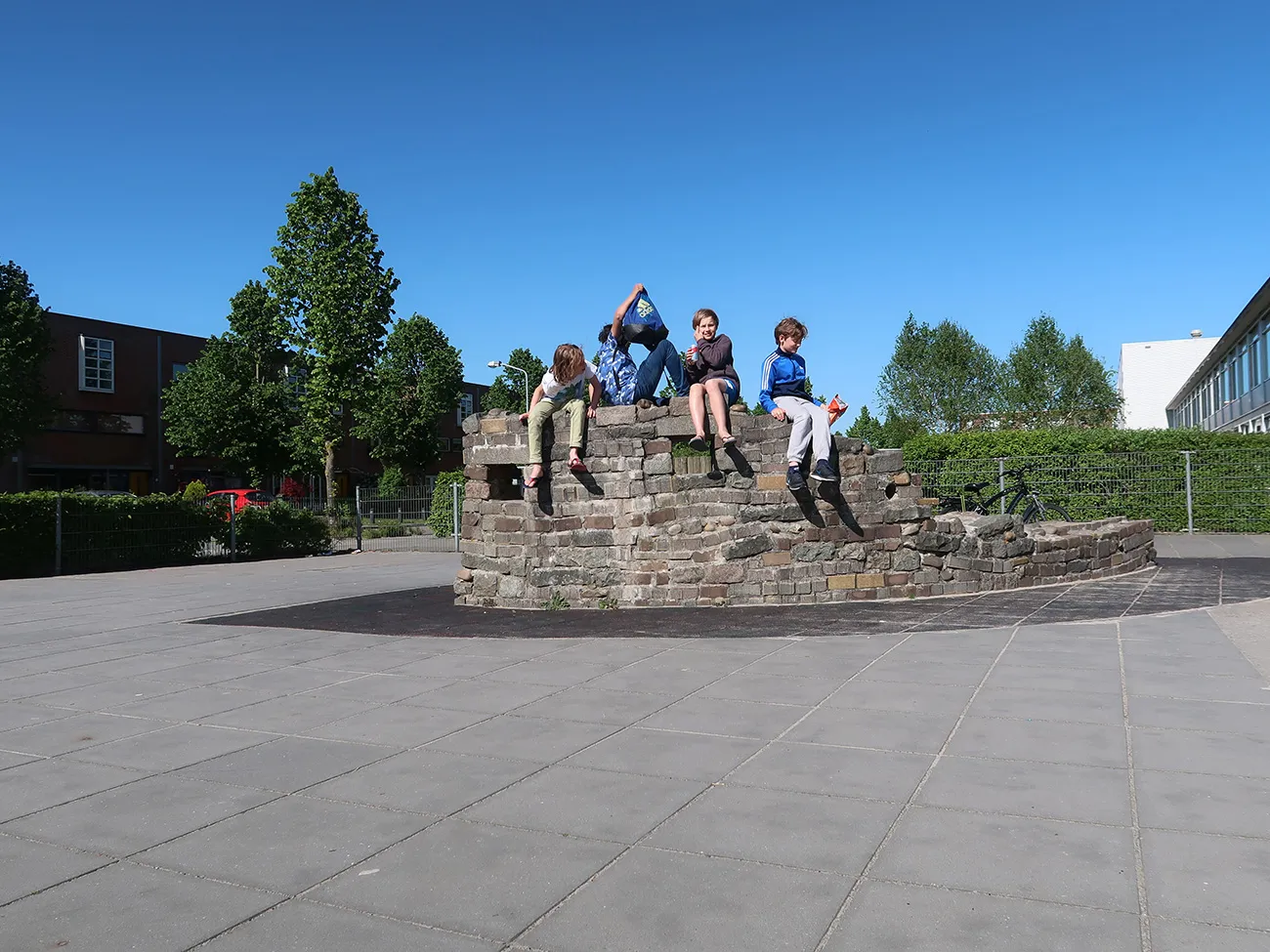
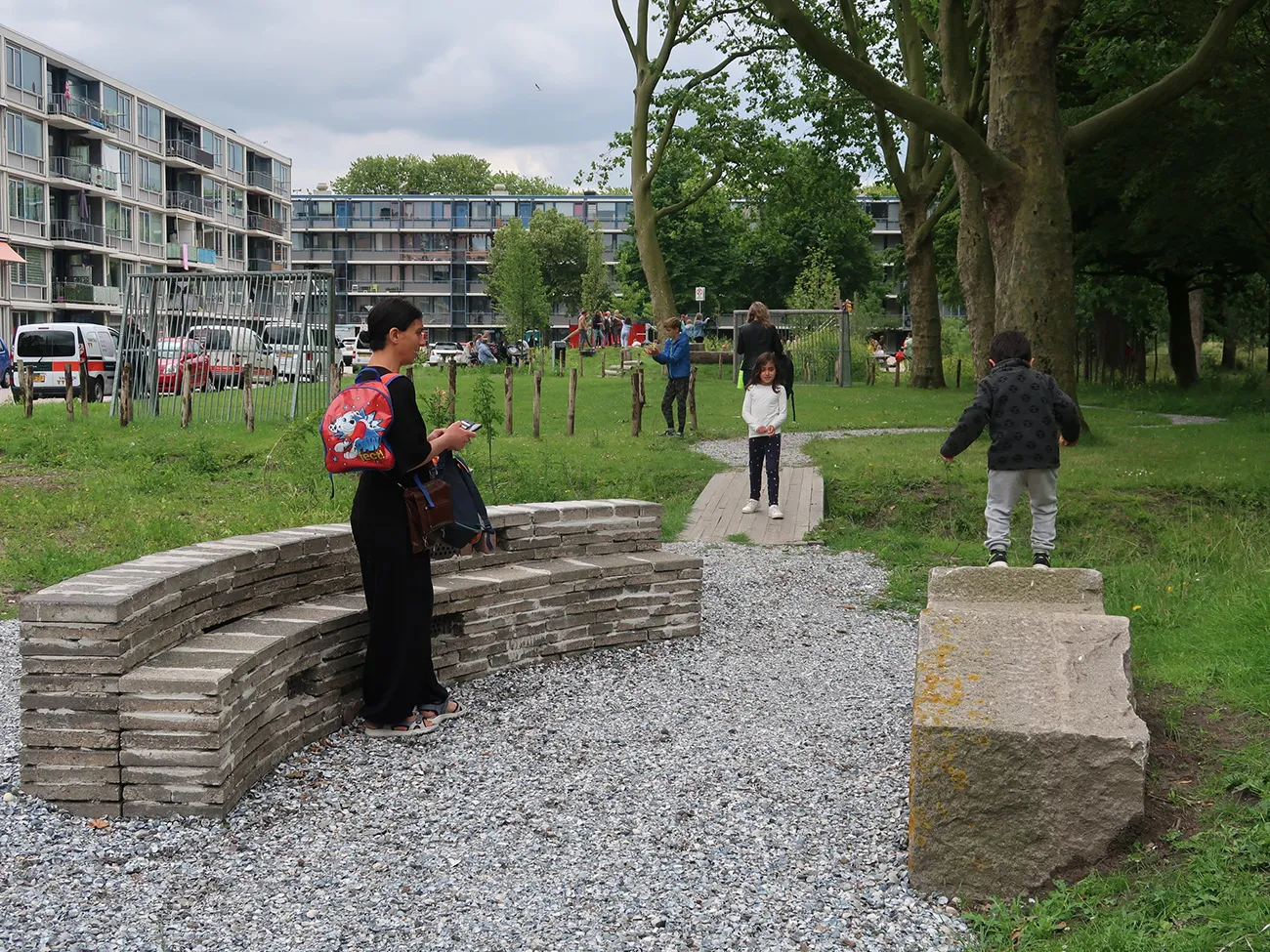
The so-called R-ladder is often used in the world of circularity, ranging from refuse and rethink to repair and recycle. At the top of the ladder are reducing consumption and production, and making products smarter to design and use. The middle is about extending the life of products and components. At the bottom is making useful use of materials that would otherwise be sent to landfill. Arjan Vreugdenhil: “If our play sector is thinking circularly at all, it is often still at the bottom of the R-ladder. Of course, some things are happening, but there is still a great deal, a very great deal, to be done before we reach the top. Burning wood in a biomass plant to generate energy is really quite different from the kind of circular thinking the government means.” According to Arjan Vreugdenhil, a good example of how this could work is to use materials from other cycles to make play facilities. Turn old paved surfaces into play equipment. Or, conversely, turn a decommissioned steel play structure into a road sign. That adds value and reduces demand for natural resources, which really will run out one day. We can already see various countries fighting wars over resources.’ It often takes out-of-the-box thinking, says Arjan Vreugdenhil. ‘Of course, you can make a plastic or metal climbing frame, but why not go to a nursery as a local authority and say: I’d like a few climbing trees from you? You achieve the same play objectives (children climbing) and it is good for the climate.
We need to do much more on climate adaptation and keep an eye on biological cycles. We need to recognise that resources are finite and that we want our children to inherit a world in which we close the loop. Ultimately, it is about the future of our children. They want to live in a sustainable world.’
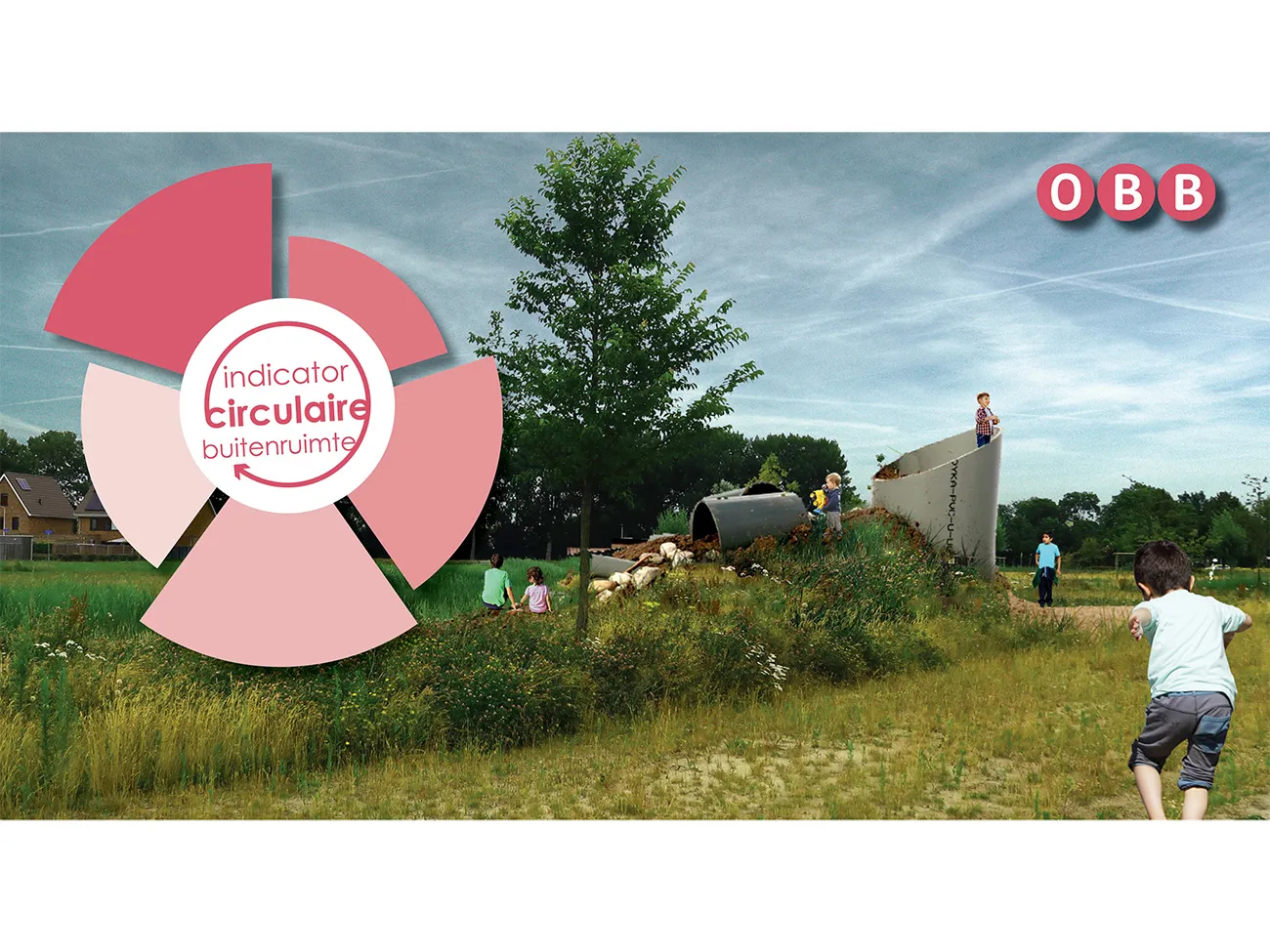
Raising awareness with the Indicator Circulaire speelruimte©
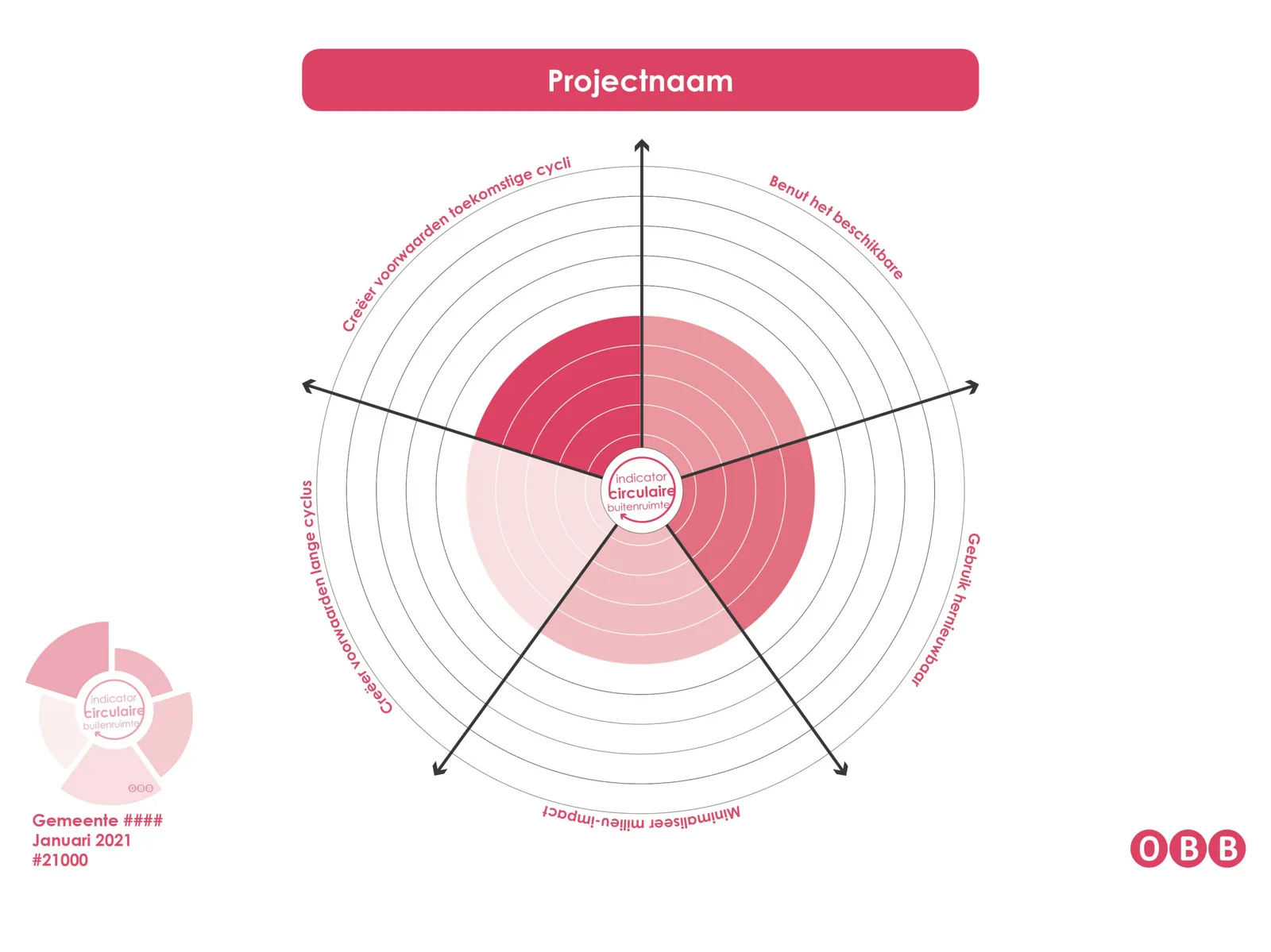
In discussions with local authority play officers, Oost-Mulder also sees a shift towards circular thinking and sustainable operations. “At public meetings about a new play area, local residents really do express a desire for sustainability. Awareness is growing. Equipment manufacturers are working on it too. But awareness is growing slowly, and expectations are not always realistic. In practice, the R-ladder is not a very useful tool for this. Many social aspects and maintenance-related issues are left out of the picture. Many local authorities have no idea where they stand.” Oost-Mulder helps them gain that insight with the Indicator Circulaire speelruimte©, further developed by OBB. It covers 50 aspects that give people involved in play an indication of how circular their thinking is: how close are we really to thinking in terms of 2050? Are we making use of what is available? Are we using renewable resources?
A giant leap is needed
Elske Oost-Mulder: “We have now held a few discussions with policy officers responsible for play, using the indicator as a guide. The conclusion is always twofold. Steps are certainly being taken, but in reality, a giant leap is needed. Those involved are often shocked when they see where they need to get to and how circular they really are. Most are genuinely well-intentioned, but do not really know what circular thinking entails. It is often an eye-opener. Only when they complete the indicator does it become clear how circularity works and how close 2050 already is. If you think about how a new play area should be designed now, and how it can be reused once it has reached the end of its life, you can only reach one conclusion: the year 2050 has already begun.” The good thing about the government’s 2050 target is that policy officers have something concrete to take to aldermen to make sustainability tangible. Arjan Vreugdenhil: “This is not an employee’s personal hobby. It is urgent policy. If you take that to an alderman, they will have to take action.”
Question about this story? Ask your question
Keep following this
Get an email when a new story is published. No account needed.
- SubjectGeneral







