









Three misconceptions about flower meadows
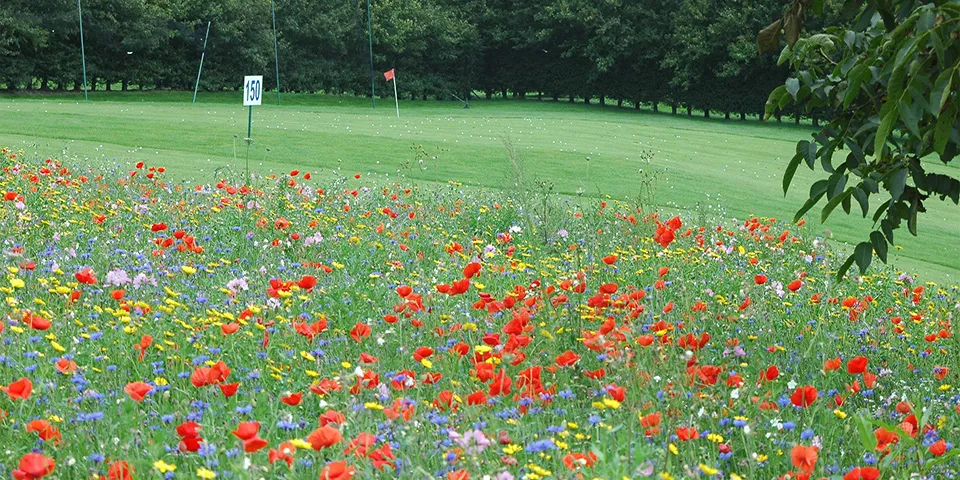
“A flower meadow is both difficult and easy”, says Bart Kersschot of Ecoflora. The ecological nursery has been an advocate for flower meadows in private and public green spaces for 25 years, but still regularly encounters myths and misconceptions.
The more colourful, the better
Flower meadows bring life and colour to the streetscape. That much is certain. But they also serve an important ecological function, and the two do not always go hand in hand. Kersschot says: “Some mixes contain species, often non-native cultivars, that flower for a long time and look very colourful, but actually contain little pollen or nectar. They do not add value for biodiversity. That is why we always choose native seeds, and preferably seeds of local origin, whose interaction with the surrounding wildlife has already been proven. This allows us to create mixes tailored to specific conditions. By selecting species with successive flowering periods, they also provide a long-lasting display.”
A flower meadow is short-lived
A flower meadow does not necessarily have to be sown again every year. “There are mixes containing annuals,” says Kersschot, “but most flower meadows are intended to last longer. All you need to do is mow once or twice a year.”
However, perennial mixes can be divided into those with and without grasses. “Grasses will eventually start to grow in every flower meadow. In a meadow containing flowers only, this will lead to a decline in species diversity after a few years, particularly on fertile soil, which may make overseeding necessary. Ironically, a mix containing grass seed can prevent this. By adding the desired grasses from the outset, you create a balance that can last for years.”

Sow now, see results straight away
People often expect a flower meadow to deliver immediate results. “Perennial mixes, however, produce very little bloom in the first year,” Kersschot explains. “Fortunately, adding a few annual species quickly solves that problem, but there are other points to consider. Good preparation is more than half the battle when establishing a flower meadow. The soil must be completely free of grass and weeds. Otherwise, unwanted growth is guaranteed.” Fertilising the flowers to give them a helping hand is no more effective. “Flower meadows do best on poor soil. Fertiliser will once again mainly give weeds a boost.” The flowers do need moisture, though. “In principle, flower meadows can be sown at any time of year, but prolonged dry spells are harmful to them too. It is therefore best to avoid summer.”
Good preparation, clear communication and providing good information. According to Kersschot, these are essential conditions for flower meadows that offer both aesthetic and ecological value. Ecoflora therefore regularly organises courses on establishing and maintaining flower meadows, and makes various publications on the subject available. The Ecoflora specialists will also be happy to offer tips and advice during the spring open weekend on 3, 4 and 5 April.
Question about this story? Ask your question
Keep following this
Get an email when a new story is published. No account needed.
- SubjectGeneral







