









‘Turn leaf litter into a valuable soil improver’
Text and images NL Greenlabel en Agriton
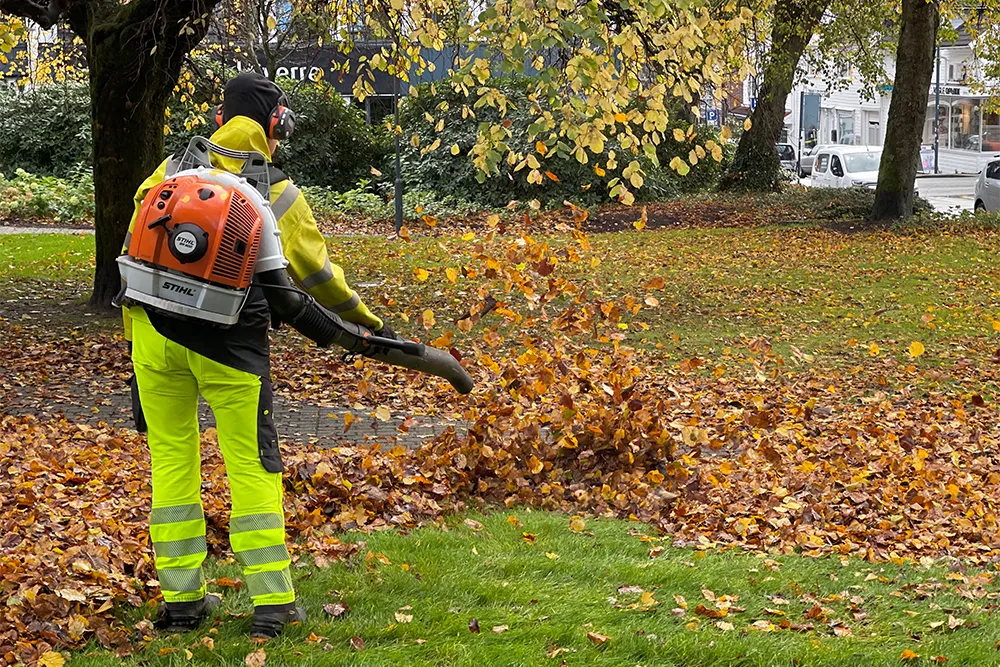
Nationwide trial explores how to make better use of fallen leaves
Trees play a central role in a nature-inclusive environment. They provide habitat, shelter and nesting sites for birds, mammals and insects. For people, trees provide shade and cooling, dampen noise and purify the air. The more tree cover in a residential area, the better. But that also means a lot of leaves fall in autumn. Where the leaves cannot be left in place, they are collected and taken away. What can local authorities do with all this leaf litter? Make Bokashi!
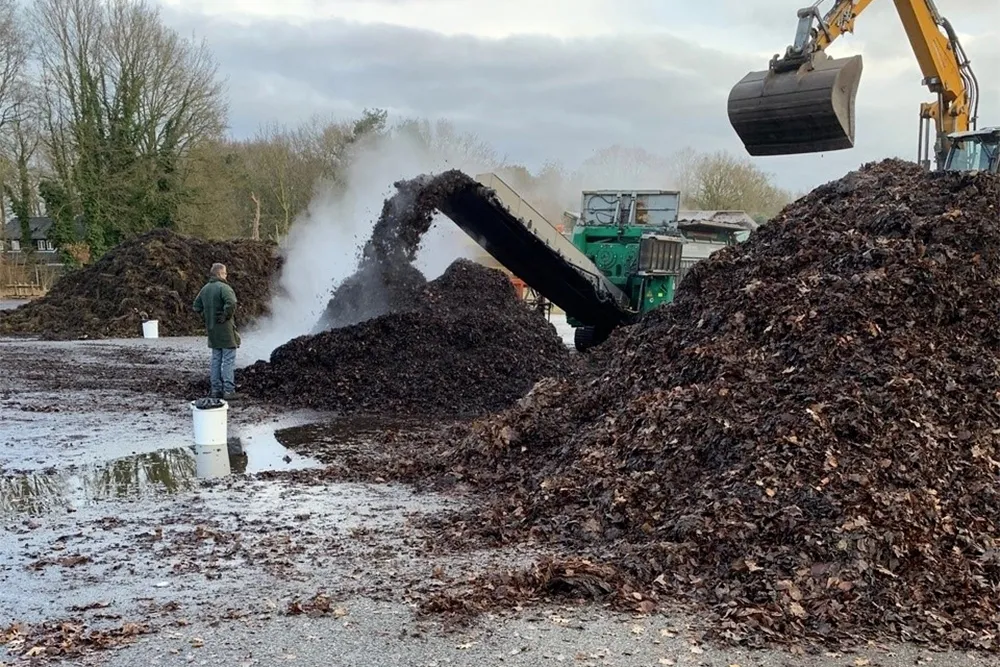
The term ‘Bokashi’ comes from Japanese and means ‘fermented organic material’. It is produced by fermenting plant residues and contains many nutrients that benefit soil life. Bokashi can be made from any type of fresh organic material: pruning waste, grass, reeds, leaves, etc. Unlike composting, in which the material heats up and breaks down under the influence of oxygen and organisms, fermentation takes place at a low temperature and without oxygen. The addition of effective micro-organisms is essential for the process to succeed. After a few months, fermentation produces a valuable soil improver, rich in organic matter and microbial diversity.
Nationwide trial
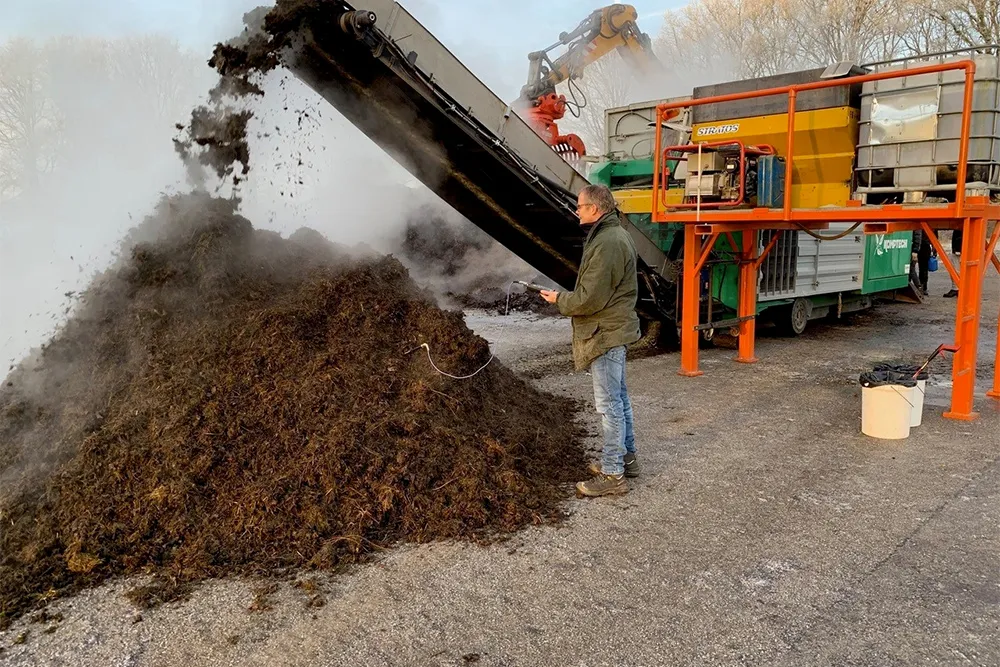
The Gelderland municipality of Bronckhorst is taking part in a nationwide trial to make Bokashi from leaf litter in autumn and return it as a soil improver to municipal green spaces in spring. Wilko Pelgrom, alderman for sustainability in the municipality of Bronckhorst: “We would rather turn leaf litter and roadside grass cuttings into a useful product than dispose of them as waste. This way, we return the nutrients to plants and trees, keeping the natural cycle intact.” The three-year trial is being carried out in collaboration with Wageningen University and Stichting Milieukeur. Its aim is to learn more about Bokashi and develop legislation and regulations for making Bokashi from organic residual material such as grass cuttings and leaves.
A win-win situation
André Schieven works for Agriton, a company specialising in fermentation products used in applications ranging from agriculture to the home and garden. Agriton is involved in the trial and supplies the materials added to the leaf litter to stimulate fermentation. André believes that changing the law would be a good thing: “Under current environmental regulations, local authorities are technically not yet allowed to use Bokashi. But more and more towns and villages want to embrace nature inclusivity and circularity. Bokashi offers an especially sustainable way to process autumn leaves in a circular way and return them to the cycle. Another advantage is that Bokashi does not produce CO2 emissions, unlike composting. It really is a win-win situation. That is why the government needs to provide guidance on how to make Bokashi, along with information on what it can and cannot be used for. We have a lot of experience and are happy to share our knowledge.”
Dos and don’ts
Although making Bokashi is not complicated (see box) and does not involve high costs, things can still go wrong. Another Bokashi trial in North Holland was halted after the municipality failed to separate litter from the leaves and grass cuttings. When the Bokashi was spread, a lot of plastic and other waste ended up in public spaces. This caused considerable annoyance among residents and local organisations. Some residents also complained about the smell.
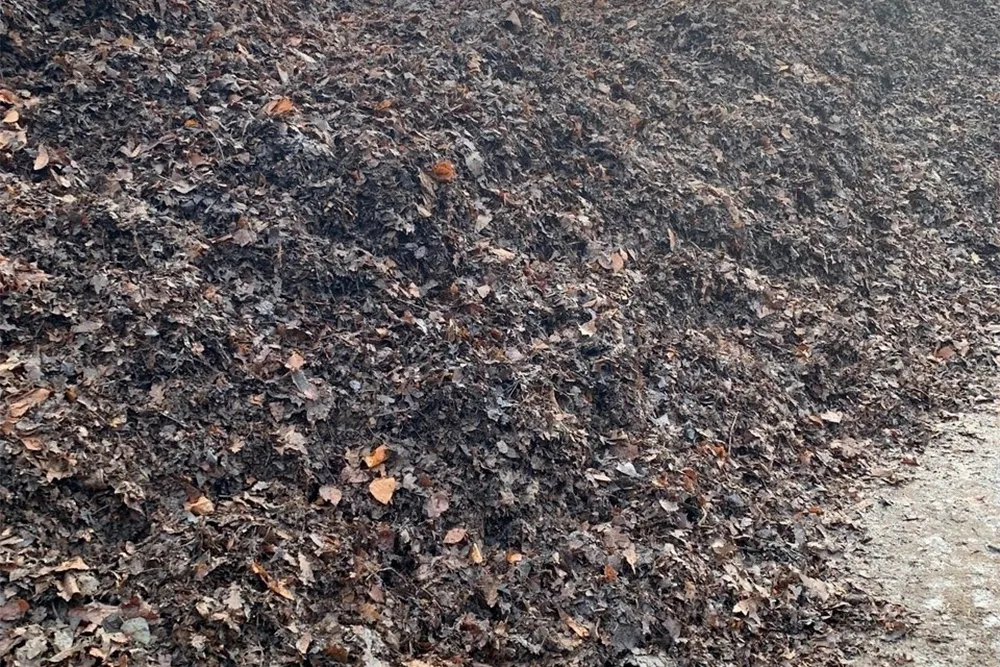
André Schieven: “Bokashi made from leaves and roadside grass cuttings naturally has a slightly sour smell, similar to sauerkraut. You may sometimes notice it when the material is exposed to the open air, but the smell disappears almost immediately. However, if fermentation does not proceed properly, the leaf litter can start to rot. This produces an unpleasant smell. So it is important for local authorities to know the dos and don’ts of Bokashi. We work with various partners who have experience in making Bokashi. This helps ensure its quality. Our experience in Bronckhorst and other municipalities is that residents generally really appreciate their local authority doing something with the leaf litter. They are happy to put up with the occasional smell.
Climate adaptation
The expectation is that the trial will generate enough knowledge for local authorities to use leaf Bokashi on a larger scale. In addition to the cost and environmental benefits, Bokashi offers local authorities further advantages, says André Schieven. “Using Bokashi as a soil improver stimulates the growth of pruned and newly planted vegetation. Bokashi made from leaves is applied as a mulch layer, suppressing weed growth and reducing the need for hoeing. This also saves the local authority money. In addition, it helps the soil retain moisture, so less frequent irrigation is needed during dry periods. That is another welcome benefit in terms of climate adaptation.”
How the municipality of Bronckhorst makes Bokashi
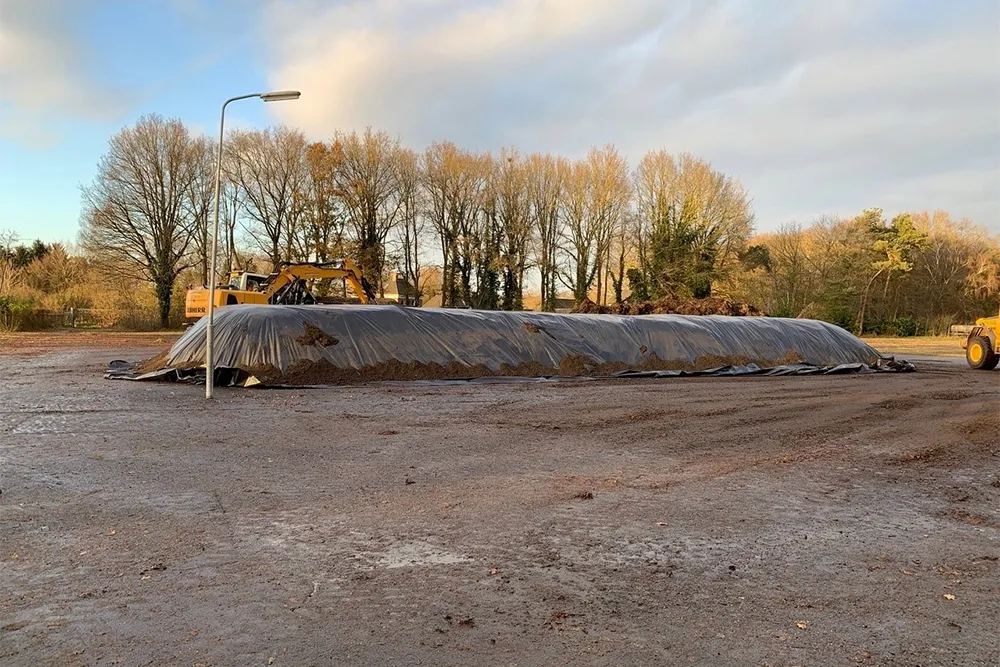
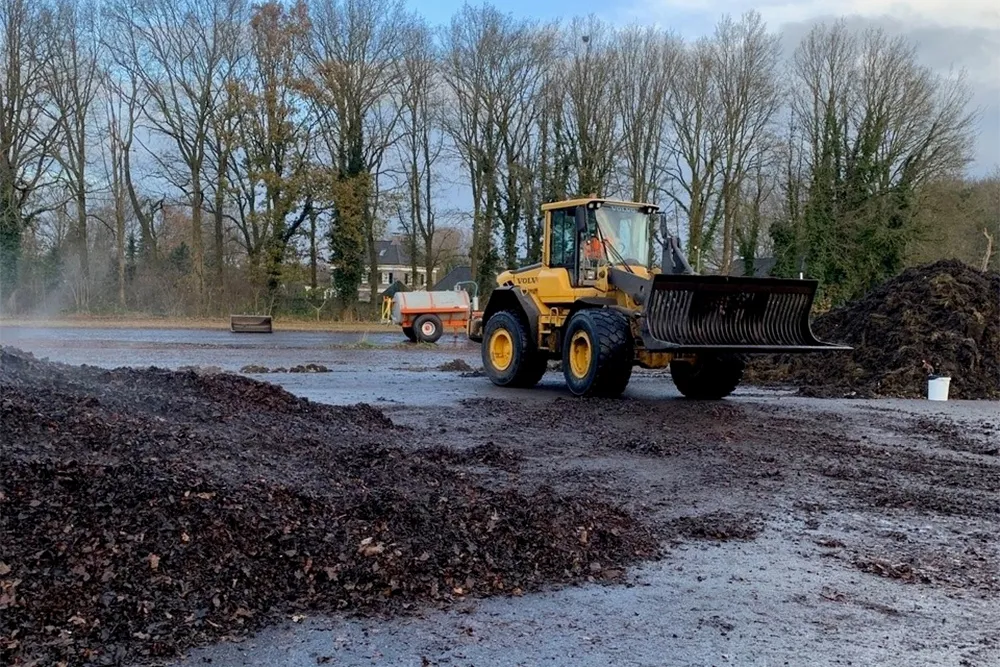
In autumn 2021, the municipality of Bronckhorst began collecting fallen leaves and roadside grass cuttings. The plant residues are shredded and collected in two heaps of 200,000 kilos each. Agriton adds effective micro-organisms (beneficial bacteria and yeasts), seashell lime and clay minerals to these heaps, fermenting the green waste. The heaps are covered with plastic to make them airtight. In spring, the Bokashi heaps are opened, assessed and applied as a mulch layer in green spaces.
The nature-inclusive environment of NL Greenlabel
Agriton is part of the NL Greenlabel partner network, which promotes nature-inclusive environments. NL Greenlabel aims to give nature a permanent place in the (built) environment. Its scientifically validated methodology makes nature inclusivity measurable and tangible. The NL Greenlabel partner network consists of (infrastructure) companies, suppliers, manufacturers, green-space contractors, area developers and knowledge institutes. Together, they help public authorities, area developers and businesses achieve and report on their sustainability goals. Interested in becoming a partner? Visit nlgreenlabel.nl.
Een zakelijke vraag aan NL Greenlabel? Get in touch
Companies in this story

Keep following this
Get an email when a new story is published. No account needed.
- ThemeSoil and water in balance
- SubjectGeneral
- CompanyNL Greenlabel







