









Water storage with biodiversity in mind. A fully climate-adaptive solution for urban sites
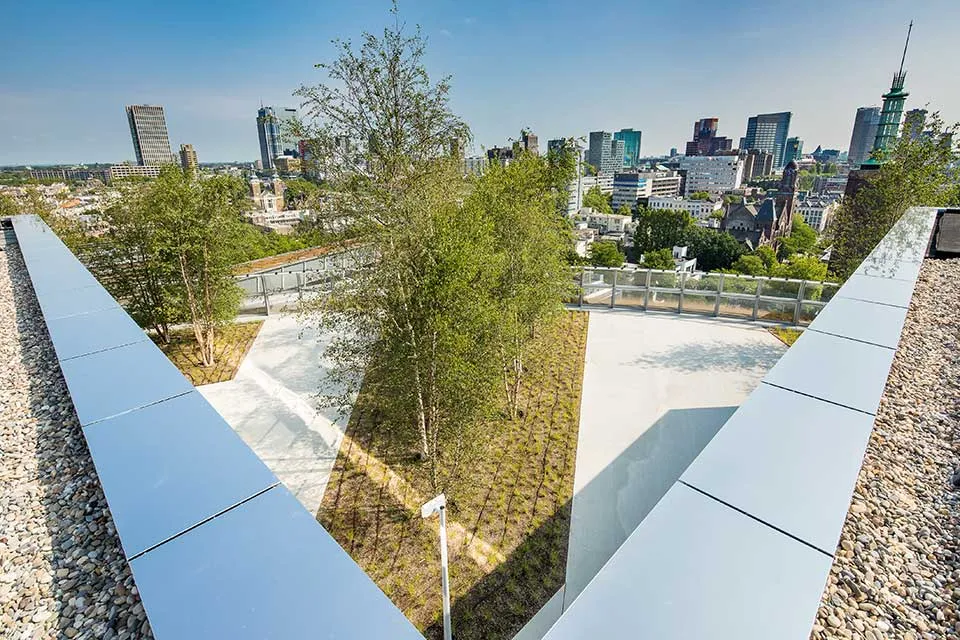
Research shows that rainwater nuisance in the Netherlands is set to increase, that plant and animal diversity is under pressure, and that greenery in the workplace boosts performance and reduces sickness absence.
Client manager Casper Korteweg of Van der Tol bv: “We want to reduce vulnerability to climate change and make buildings in urban areas climate-adaptive.”
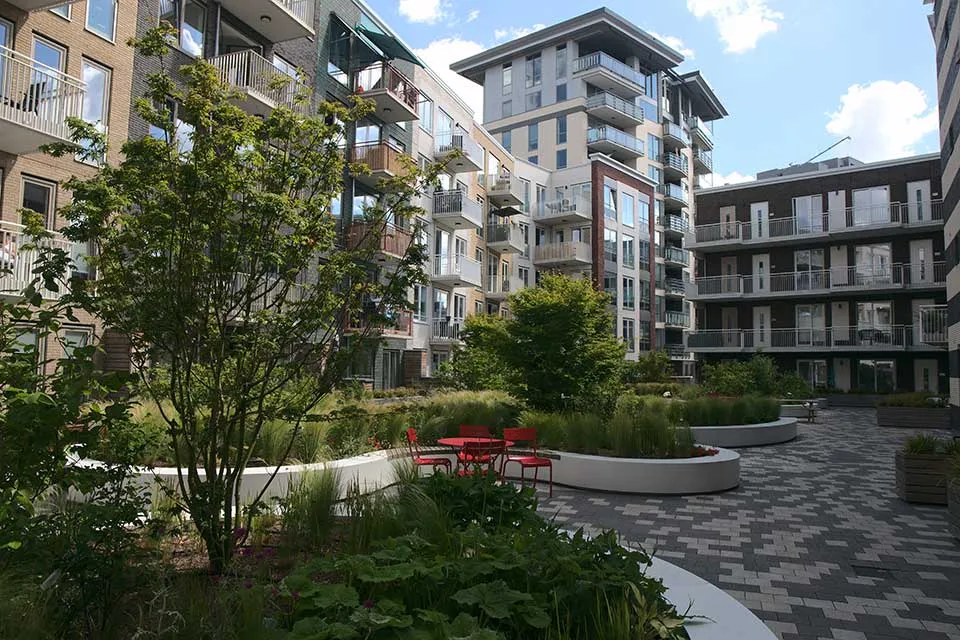
Van der Tol bv is ambitious about making buildings and the grounds of apartment complexes, offices and hospitals, as well as housing association properties and their surroundings, climate-adaptive. Korteweg: “Space is scarce in the Netherlands, especially in the Randstad. That is why we manage rainwater falling on roofs wisely and integrate the garden at the same time. We offer a solution for the entire site: we devise, design, build and maintain it. We do this in a way that achieves the climate adaptation objectives.”
The Eco-city concept
“We recently completed a number of projects for the municipality that comply with the new water regulations. In practical terms, this means not only ensuring the effective and efficient storage of rainwater, but also working to improve biodiversity. You can, of course, choose plants that are very attractive, or ones that also contribute something more.”
Van der Tol began working on the Eco-city concept seven years ago, guided by this vision. “A city designed and built with the greatest possible regard for the environment. This is the foundation of all our projects, through which we have developed some great ideas. Examples include projects in Rotterdam, such as on the roof of the Boijmans Van Beuningen museum and at the De Peperklip residential building, home to Europe’s largest nature roof. The building is more than thirty years old, and the housing association had set aside a budget to green the roof and enhance biodiversity. In Amsterdam-Sloterdijk, we are now preparing for the Vertical project: two twenty-storey residential towers. All the rainwater that falls there will be stored and reused. These are a number of iconic projects in which we apply our technical knowledge and skills to deliver green solutions.”
The solution is not always just on the roof or just at ground level around the building. Sometimes it is a combination of the two. “We can approach this in various ways, particularly when it comes to engineering, where accurate calculations are essential: how much space is needed, and what can a building support? Within those parameters, we create the best solution. We are increasingly creating Rainprooftuinen in Amsterdam and Rotterdam, where we disconnect roof drainage systems and design the garden so that water can infiltrate the soil.”
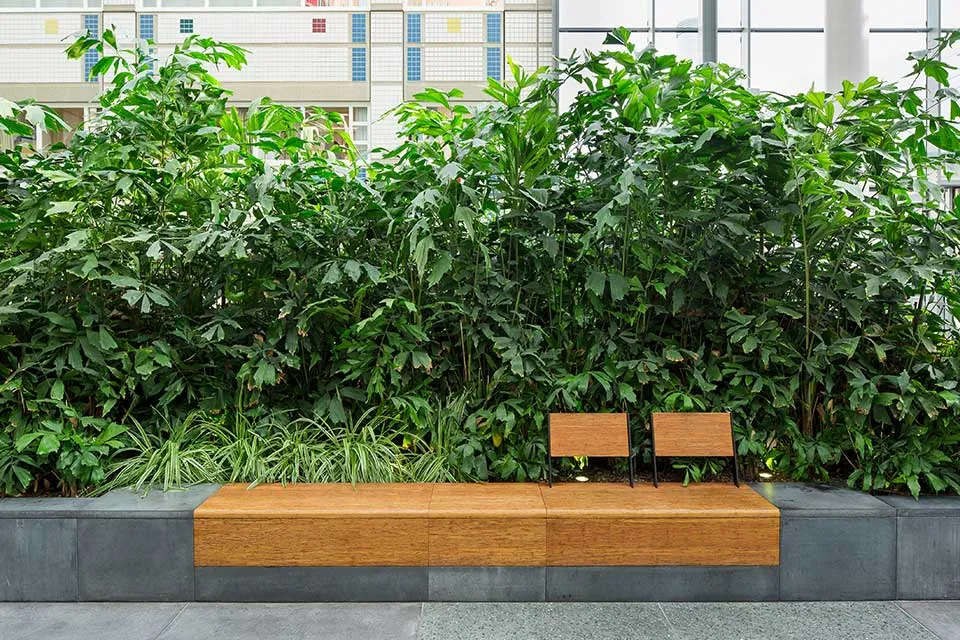
The same applies to landscaping and improving an office building with plants. “We work on every aspect of improving the climate, which also gives us a wide range of opportunities. On the one hand, clients want to make a building more sustainable, as was the case with De Peperklip. But we also find that architects are involved in the thinking and put forward solutions. Van der Tol provides technical solutions for architects and building contractors. Fortunately, we are seeing local authorities give climate adaptation increasing priority. This is a positive development, and we are happy to contribute to the discussion and help shape the plans.”
With its Eco-city concept, Van der Tol covers every aspect, including water storage, water management and biodiversity, to improve people’s wellbeing in urban areas. “And the multifunctional use of roofs is growing all the time: sport, recreation on a roof terrace, water storage, nesting sites for birds and, of course, the challenge of the energy transition. Roofs are increasingly being used to address a wide range of issues. They remain the least developed space in the city, especially when you consider how many roofs are still unused today. There is a lot to be gained. This trend will shape how buildings are constructed in the future. I believe we must continue to push for roofs to be seen as another storey. That means ensuring the structure has sufficient load-bearing capacity, so more can be done. If we can all make that happen, it will be a huge gain.
Question about this story? Ask your question
Keep following this
Get an email when a new story is published. No account needed.
- ThemeSoil and water in balance
- SubjectGeneral







