









‘We give the soil a boost’
Text Nolanda KlunderImage Van Berkel Groep
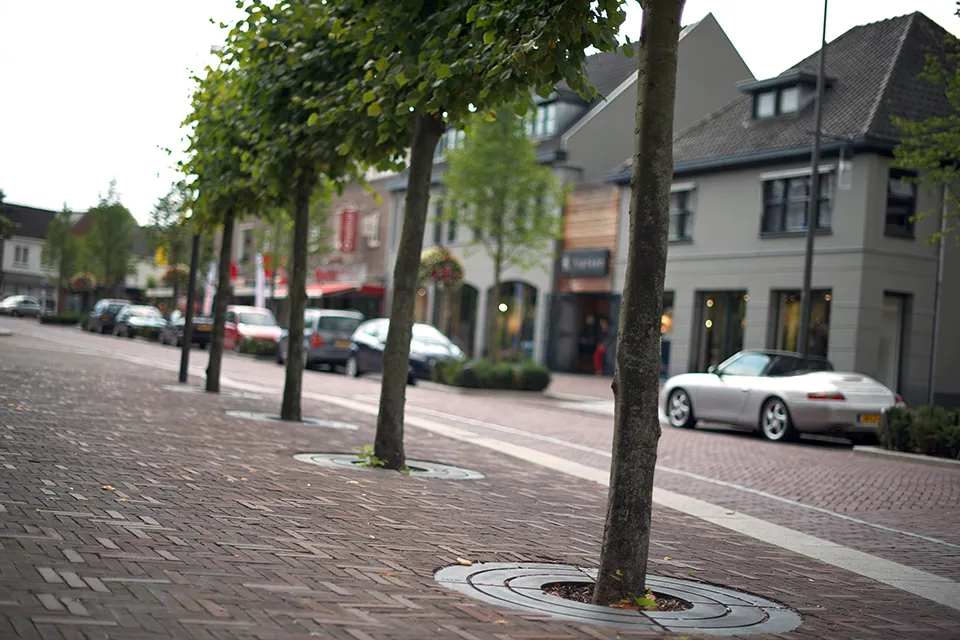
Circular soil improvers
To reach their full potential, trees and plants need good growing conditions and healthy soil. Van Berkel makes natural soil improvers from recycled green waste and offers a solution for roots beneath paved surfaces.
Van Berkel Biomassa en Bodemproducten, one of the four divisions of the Van Berkel Groep, processes green waste through composting to produce soil improvers. “This is how we close the loop: we return green waste to public spaces as high-quality soil improvers,” says Berend Aelbers, soil improver adviser at Van Berkel. “Healthy soil is particularly important for trees in cities.”

Healthy soil
Soil health is assessed using various parameters, Aelbers explains. “A few crucial parameters are organic matter content and pH. The amount of organic matter is important for water management and for retaining nutrients in the soil. The pH indicates how available nutrients are to plants and trees. There are also specific nutrients such as nitrogen, phosphorus and potassium, which need to be at the right levels. We can analyse existing soil based on these parameters. This enables us to provide project-specific advice on the most suitable soil improver. In practice, it is not always necessary to remove large quantities of soil, as upgrading the existing soil is often an excellent option and gives the soil a boost.”
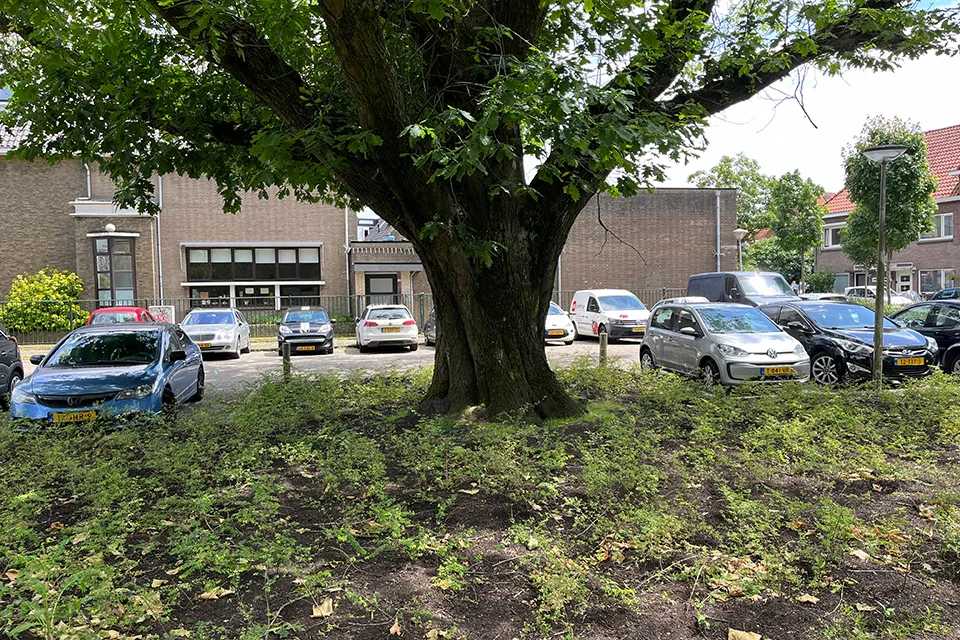
Trees in the city
A good growing site has healthy soil and is well designed. Aelbers says: “Everyone agrees on the importance of trees in urban areas. They reduce heat stress, absorb peak rainfall, provide shade, convert CO2 into oxygen, contribute to people’s wellbeing through their appearance and increase the economic value of the built environment. But trees only start making a significant contribution after about twenty years, when their canopy has grown large enough for them to provide substantial benefits. To grow well, a tree needs a good growing site with plenty of room for its roots. In cities, paving is often close to trees. This can cause root heave: trees need to survive, so they seek out moisture and nutrients. That is why we have developed a product that creates growing space beneath paving and reduces root heave: tree gravel.”
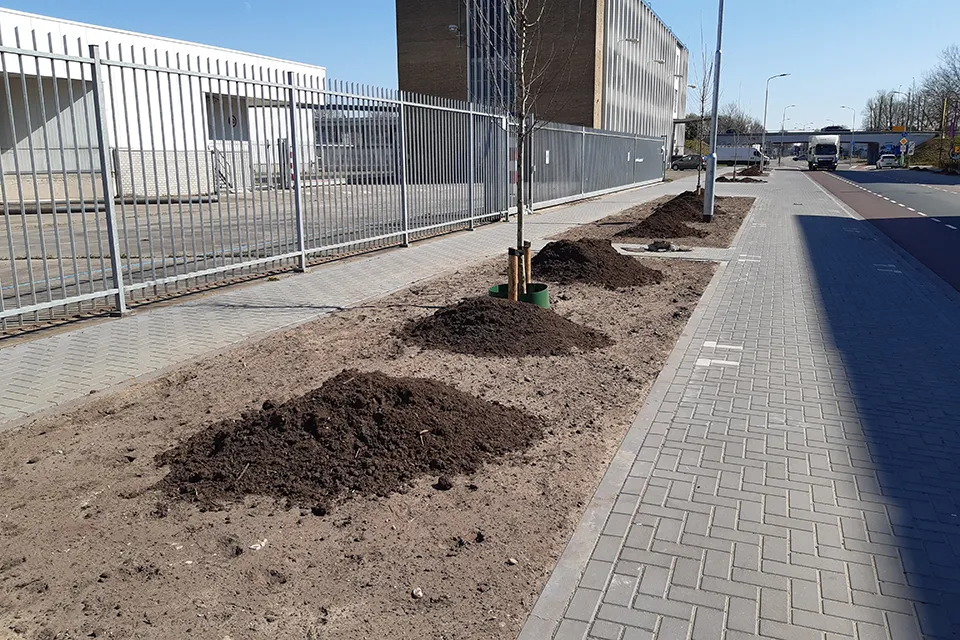
Growing space beneath paving
“Tree gravel consists of stone and nutrients. The stone forms a framework strong enough to support paving and allow (heavy) traffic to pass over it. The stone is fairly coarse, leaving voids between the pieces. These voids contain nutrient-rich soil. Roots can grow between the stones, making this an excellent natural solution.” For use beneath pavements, there is tree sand. “Less load-bearing capacity is needed there, so sand is sufficient. This tree sand contains organic matter and nutrients. It offers the load-bearing capacity and ease of handling of crusher sand, as well as nutrients for the trees. This also creates growing space for trees beneath the pavement.”
Years of experience
“No one would deny the importance of trees, but we specialise in creating growing sites where trees can really grow to maturity and make the greatest possible contribution,” Aelbers concludes. “We work with our clients and can provide tailored solutions, thanks to our experience and knowledge. We have been making soil improvers from green waste for years. Van Berkel specialised in circular processes before circularity became a societal issue. We have never done anything else.”
Question about this story? Ask your question
Keep following this
Get an email when a new story is published. No account needed.
- ThemeSoil and water in balance
- SubjectGeneral







