









‘We have lost our knowledge of plants’
Text Armand LandmanImage Rijksmuseum, Sanne Horn
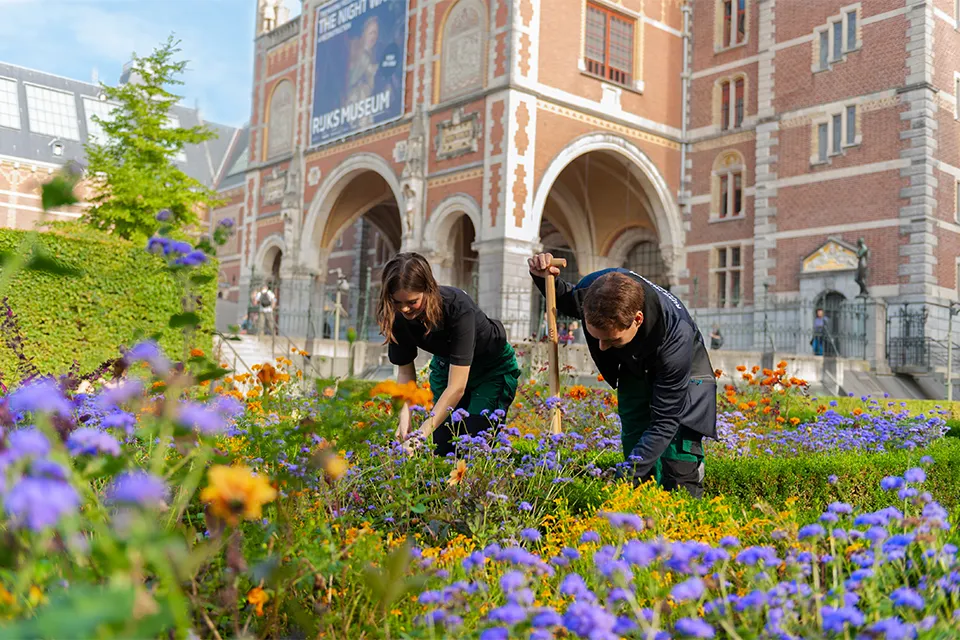
Interview with planting designer Sanne Horn (Rijksmuseumtuin)
Greenpro spoke at length with planting designer Sanne Horn. In the Rijksmuseumtuin, she is leading a special training programme in partnership with the municipality of Amsterdam to show what true expertise in green-space management requires. “Everyone says there needs to be more greenery, but hardly anyone knows who manages the planting or what that work actually involves.”
You studied at an art academy. How did you end up working in green spaces?
“I studied painting. But I wanted to work with my material as an artist would, and my material became plants. So after art school I trained as a gardener. Being outdoors, mowing, sawing, driving a tractor: wonderful. But… you learnt almost nothing about planting. I found that striking.”
So you realised early on that the profession lacked knowledge of plants?
“Everywhere. Among gardeners, designers, training providers and students. In practice, I also found that designers and managers barely speak the same language. Designers hardly ever go outside. The planting plans they produce contain little useful information for those responsible for managing the planting. Gardeners often know too little about planting and are not trained to read planting plans. Yet planting is something you have to feel, see and understand.”
How did you come to work at the Rijksmuseum?
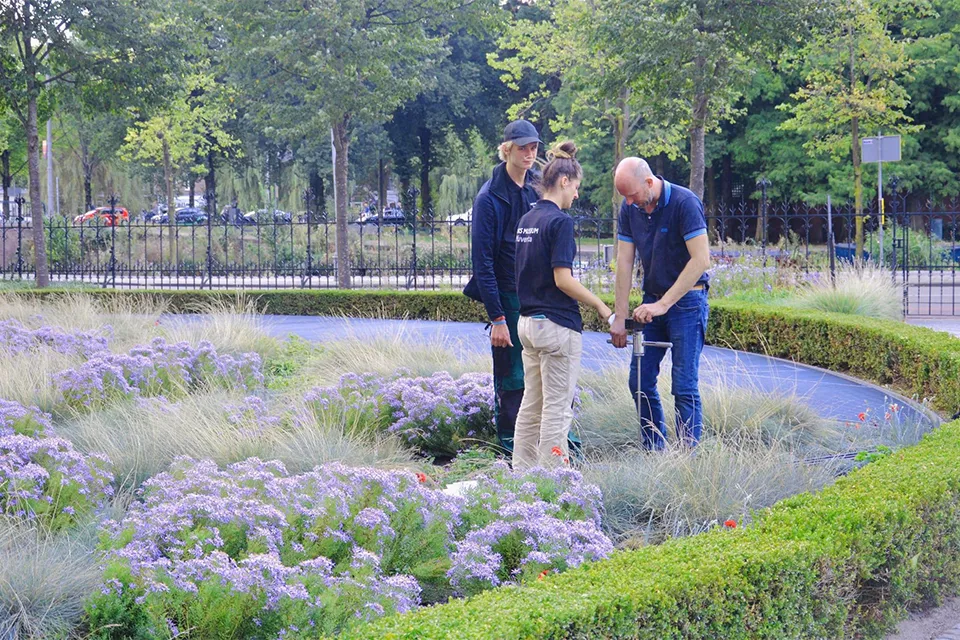
“Copijn carried out the spatial redesign of the garden, based on the original design by Cuypers, the Rijksmuseum’s architect. I was asked to draw up the planting plan. When I later went freelance, fortunately I was able to keep the Rijksmuseum work. That was ten years ago now.”
And then the idea for a training programme came about?
“We saw that gardeners’ knowledge of plants had declined dramatically. There were still a few older gardeners working in the garden with great care and dedication, but most of the new generation of gardeners are mainly interested in mowing lawns and trimming hedges, and know little about plants and natural processes. Almost nowhere teaches you to work with planting, think from the plant’s perspective and understand how people relate to nature. There are courses in ecological management, but these gardeners do not end up at the large companies that now maintain public green spaces. A donor with a passion for gardens then made funding available to set up a training programme.”
Who did you want to train?
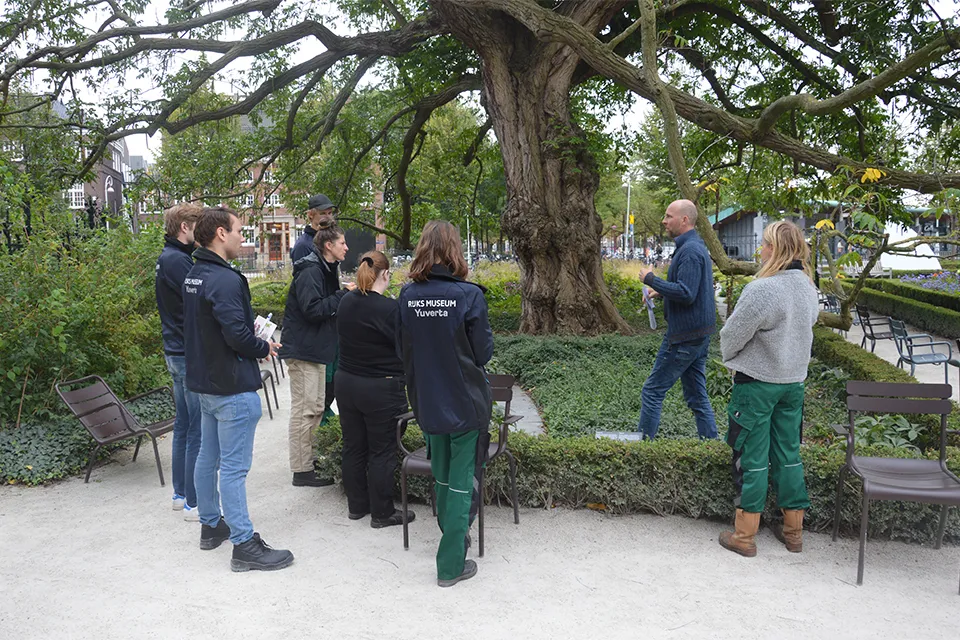
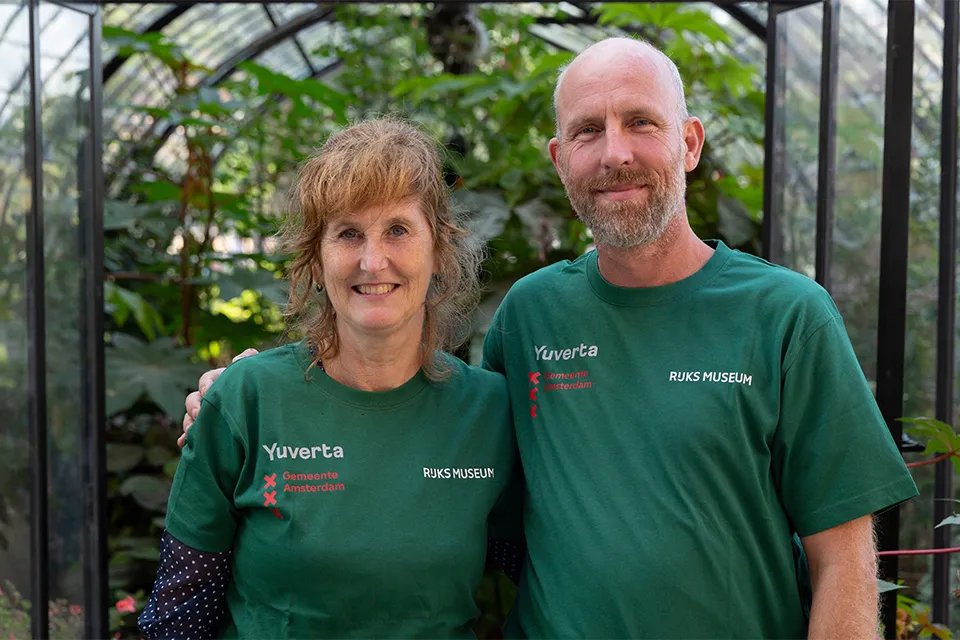
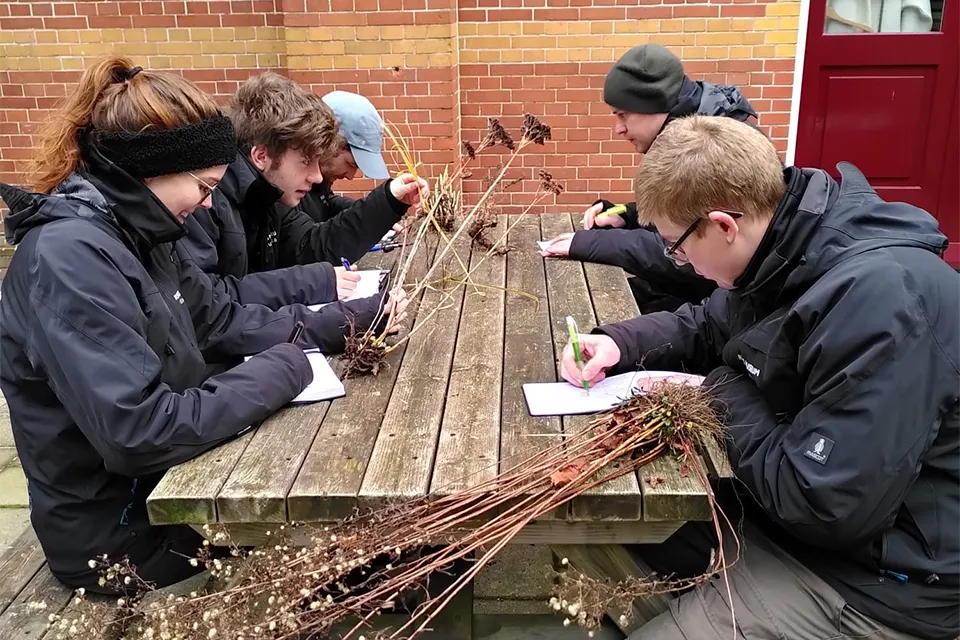
“We started with an internship programme for MBO students, in partnership with Yuverta (MBO green-sector training). The Rijksmuseum does a lot for MBO education, under the inspiring leadership of Merel Brugman, MBO educator. Yuverta put me in touch with practical training teacher Jurjen Hoogervorst. We now teach the classes together, a golden duo.
“Unfortunately, few Yuverta students were interested in the internship. The students are mainly keen to build fences and work with machinery. That is why we added career changers to the group, and it has grown into a training programme. As part of Amsterdam’s 750th anniversary, we have partnered with the municipality of Amsterdam. Here too, a lack of young people entering the field is a problem. Ten people now come every Tuesday: gardeners, career changers and even recently graduated landscape architects. The last group is often particularly motivated. They realise that, from behind their desks, they have too little practical knowledge.”
What exactly do they learn?
“That design and management cannot be separated. If you want something from nature, you have to look after it. We work together for a year: a morning of theory, covering subjects such as plant biology, soil life, pruning and planting plans, followed by an afternoon in the garden or out in the city. We ask ‘why?’ about everything and always look at the underlying principles. Why was this planting chosen, and what is the desired end result? That is the only way to guide the dynamics of the planting. Why do you prune, really? People often work on autopilot. But management always involves a choice, depending on the intended outcome. What is more, the performance specifications used are no longer fit for purpose. They say nothing about the principles behind a site or about biodiversity.”
You are critical of the role of contractors in green-space management. Why?
“In Amsterdam, contractors look after 80 per cent of green spaces. After three years of aftercare, those areas are often already completely neglected. They are then earmarked for renovation and redesigned. That costs a huge amount of money. Everyone thinks contractors are cheap, but nobody calculates the cost of poor quality.”
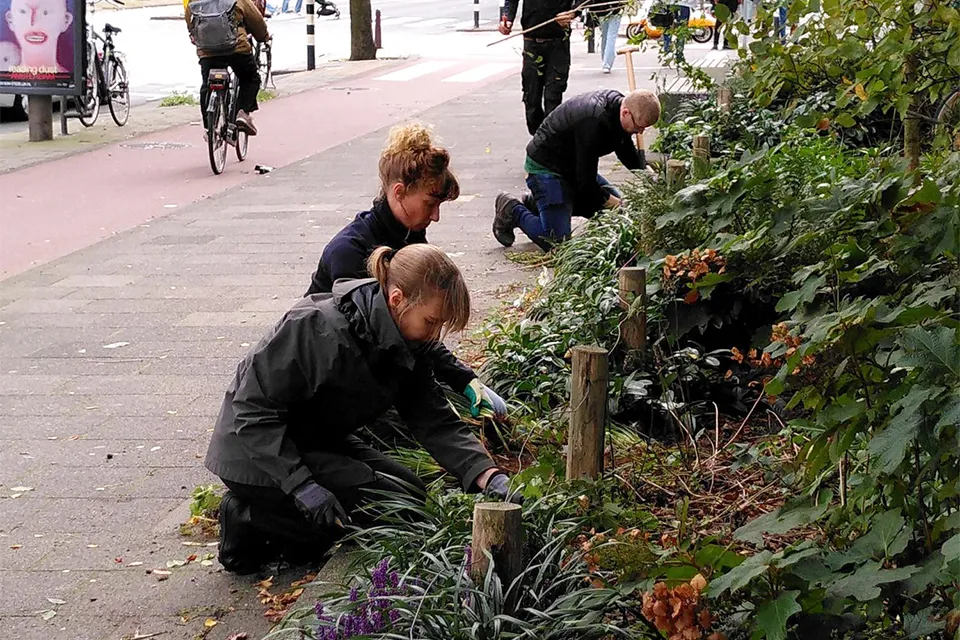
“Alongside the training programme, I am working on setting up an experiment with Sylvain Scheers, Head of the Greenery, Flora and Fauna Department at the municipality of Amsterdam. In recent years, many green spaces have been created in densely built-up urban areas. These places have a major impact on their surroundings, but are also vulnerable because of the large numbers of pedestrians, traffic and pollution. At present, these spaces are maintained by the large green-space contractors. In practice, it has become clear that their maintenance does not meet the required standard. Knowledge and expertise in planting and biodiversity are lacking because there are not enough trained staff. Planting beds are neglected or damaged by excessive hoeing. The green spaces then have to be redesigned and replanted. This is costly and unsustainable. An existing system can only be transformed if there is a concrete alternative with a corresponding cost breakdown. This experiment is intended to provide one.
We want to remove seven vulnerable, prominent sites in Oost and Centrum from the contractors’ contracts and have them maintained by well-trained in-house staff. We will monitor the quality of the planting, the amount of work involved, contact with residents and job satisfaction. We simply have to prove that expertise pays off.”
How did we reach the point where so much knowledge of plants has been lost?
“In the past, you had the head gardener, who was both designer and manager. When public green spaces were introduced, municipal nurseries and parks departments were set up. Following large-scale rural development after the Second World War, the construction of polders and the rise of nature and heritage protection, a landscape architecture course was established in Wageningen in 1948, but planting was not included in its curriculum. Larenstein is a remnant of the horticultural college, but it has increasingly shifted its focus away from plant knowledge and working outdoors. Outsourcing gardening work, employing people through the probation service and phasing out in-house staff have all contributed to the decline of working with planting. Who wants to work in public green spaces these days? Green spaces are the ones that suffer.”
At the same time, planting is back in the spotlight because of climate change.
“Certainly. Planting can solve so many problems. But then the debate starts again, ‘ecological’ versus ‘non-ecological’. Yet every plant is a wonder. It is about care and attention. That interaction between people and nature is particularly important. That is how you get to know plants.”
How do you get young people back into the profession?
“By making the profession more attractive and more appealing. By showing that it is about expertise, observing, feeling and creating. We can already see a trend among young people taking an interest in crafts, such as baking bread, brewing beer and growing food. Not everyone is happy sitting behind a computer. If there can be a slight shift in culture at Stadswerken (green-space management Amsterdam) and the profession’s image improves, I am sure many people will want to work in public green spaces. The Rijksmuseum garden helps, it is a showcase. People think it is wonderful to work here.”
What does the training programme involve in practice?
“It runs for a year, every Tuesday, with ten participants. There is theory, site visits and practical work in the Rijksmuseumtuin and in public green spaces. We have fantastic guest lecturers. Participants receive a certificate. It is not a formal qualification, but its value lies in the practical experience.”
Is the training programme sustainable in the long term?
“That is uncertain. We depend entirely on one donor. The programme could stop at any moment. That is why the experiment in Amsterdam, which has been approved and is due to start in January, is so important. Hard data can help bring about change at policy level.”
What do you hope will ultimately change?
“That we realise we cannot keep planting healthy with just a leaf blower and a hoe. That cities once again employ their own well-trained staff. And that the gardening profession, the real craft, is valued again. It is the most wonderful profession there is, where knowledge of nature and beauty come together.”
Question about this story? Ask your question
Keep following this
Get an email when a new story is published. No account needed.
- ThemeTrees and plants for tomorrow
- SubjectGeneral







