









What are you already doing with rainwater?

What a waste: one moment we are draining rainwater as quickly as possible, and the next we are using precious drinking water to water the garden. Rainwater is naturally soft and clean, and offers a number of interesting benefits. It is environmentally friendly and free. So why let it run into the sewers? Disconnecting rainwater from the sewer system means it can be put to good use and helps reduce the load on the sewers. What are you already doing with rainwater in the garden?
Infiltrate directly and/or collect for later use
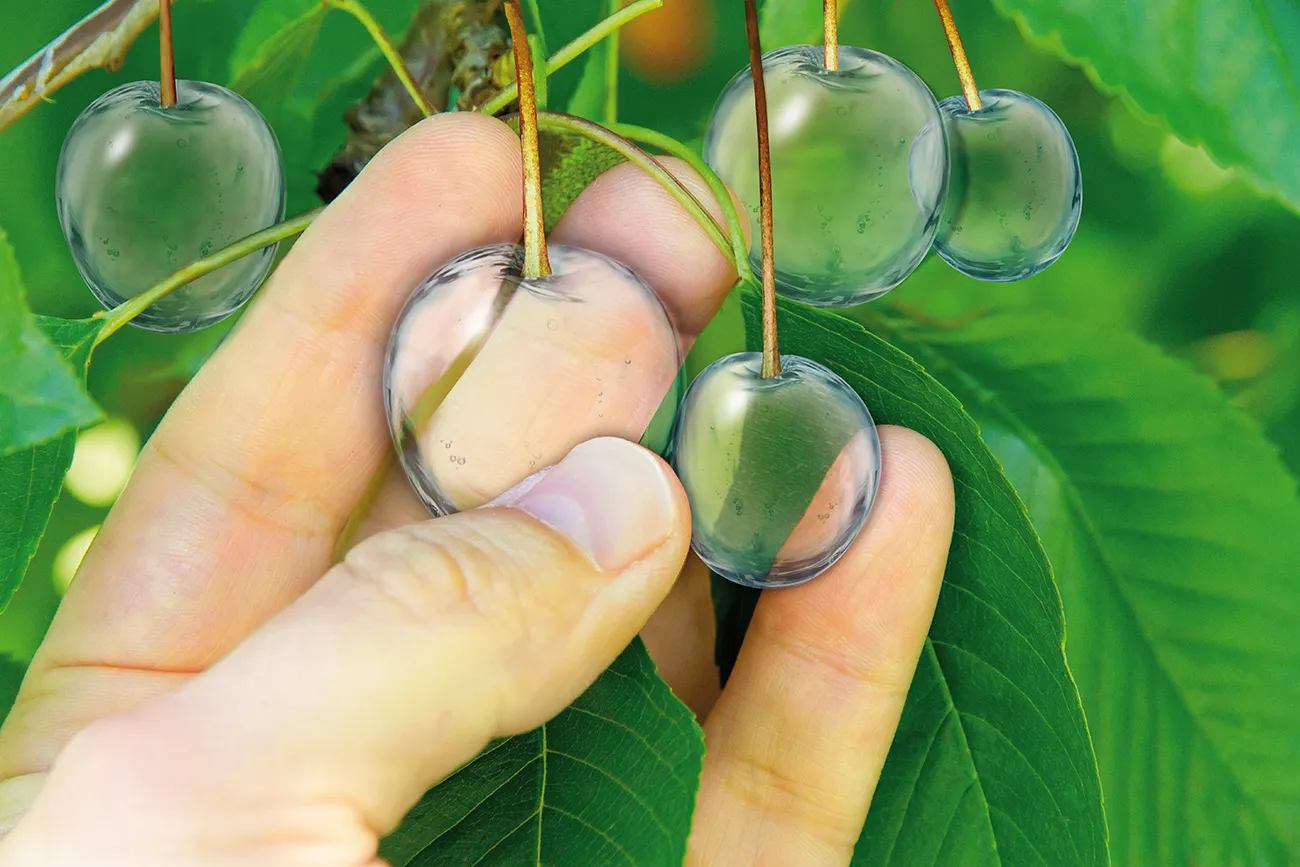
Managing rainwater wisely takes forward planning. Rainwater management solutions are largely installed underground, making them harder to add later. If you are creating a new garden, think carefully about how and where to collect water to prevent waterlogging or drought. But how do you go about it?
Rainwater infiltration
A patio is often a large surface area. By giving it a slight slope, you can collect water in a linear drain installed along the patio. Installing an infiltration system beneath the drain allows you to collect a large volume of water underground. This environmentally friendly, sustainable and lightweight infiltration system is made from specially treated stone wool. It absorbs and stores rainwater, then gradually releases it back into the garden during dry spells. There is nothing you need to do: it works like a sponge. Trees, shrubs and plants can draw water directly from these Rainbloxx units. Any excess water naturally infiltrates the soil from the system. This helps create a climate-resilient garden and reduces the need to use precious drinking water during dry periods. Installation is very straightforward, and the system can also be connected to drains or a downpipe.
Collect rainwater for later
Collecting rainwater in a tank means it can be used later. Using collected rainwater to water the garden or wash windows is a responsible and sustainable way to make use of rainwater.
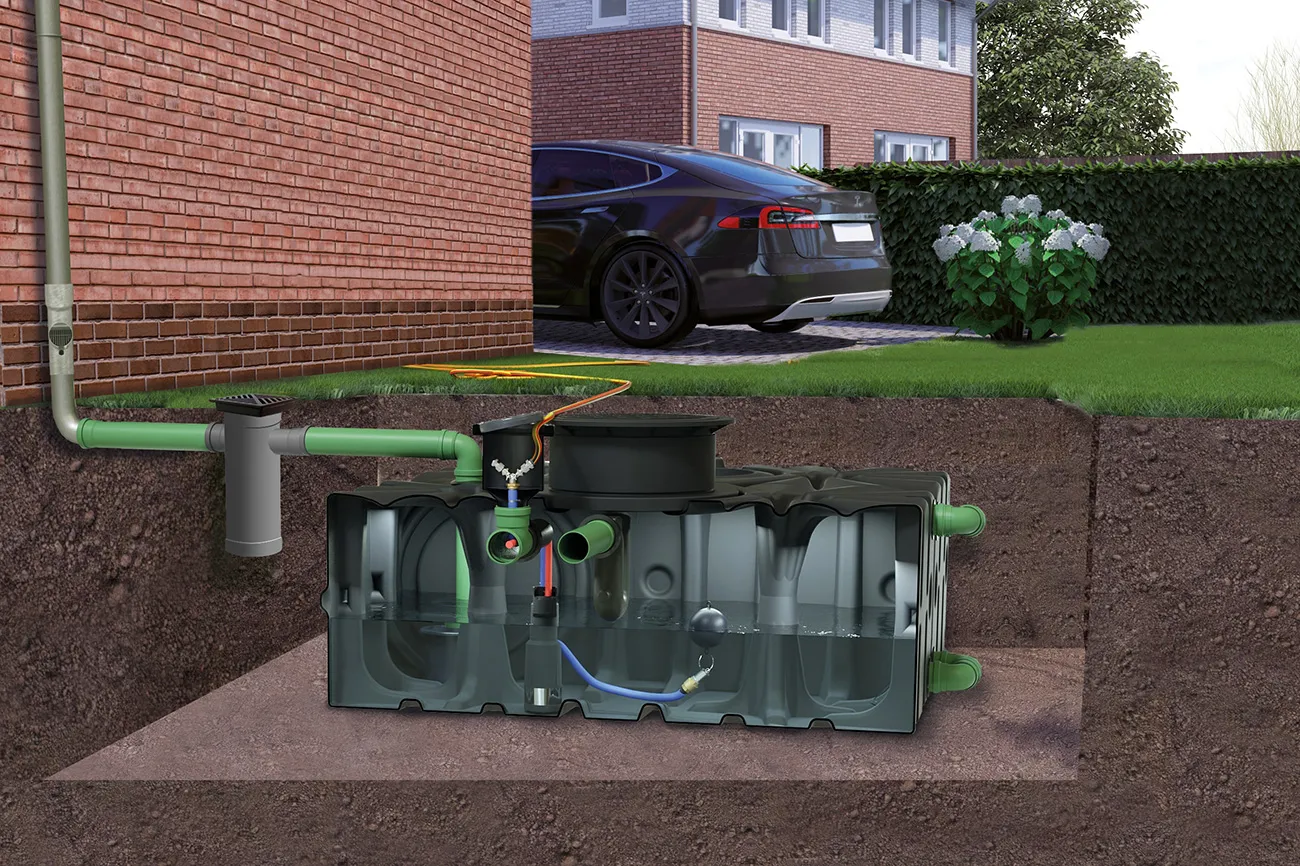
How does a rainwater storage tank work?
Clean rainwater is collected from the roof and flows into a plastic storage tank installed beneath the lawn, patio or border. Before entering the tank, the water passes through a filter that prevents dirt particles from getting in. The tank contains a durable pump, allowing you to use the water with two Gardena connectors to water the garden or for other activities. If the tank runs dry after a prolonged period without rain, it can optionally be topped up automatically with tap water.
In the event of heavy rainfall, the system has an overflow that can be connected either to an infiltration system or to a rainwater sewer. A standard rainwater tank holds 2,000 litres. Several tanks can be connected to provide a total capacity of 8,000 litres. For patios and driveways, the access shaft can be fitted with a paving-compatible cover, providing access to the water connections. The cover is therefore almost invisible in the paving and does not stand out.
An added cooling benefit for garden owners
By disconnecting rainwater from the sewer system so that trees and shrubs can benefit from it on hot days, there is no need to use precious drinking water for watering. Trees, plants and shrubs thrive on rainwater. Through evaporation, garden greenery has a cooling effect on hot days, which benefits garden owners.
Question about this story? Ask your question
Keep following this
Get an email when a new story is published. No account needed.
- ThemeSoil and water in balance
- SubjectGeneral







