









Green and blue lead the way
Text Armand LandmanImage Felixx, Jaspar Moulijn, Marcel IJzerman en Corné Sparidaens
Groningen’s new city architects on sustainable urban development
Earlier this year, the Municipality of Groningen appointed a duo as city architects: Ben van der Meer and Michiel Van Driessche. Groningen is the largest city in the Netherlands to traditionally appoint its own independent city architect as an adviser. The city architect’s role is to provide solicited and unsolicited advice on spatial quality in the broadest sense of the term. What makes the appointment unusual is not only that the role is now shared by a duo, but also that Van Driessche is a landscape architect. We spoke to Van Driessche about their vision for urban transformation, the role of green space in the city and Groningen’s unique challenges.
You have just been appointed as city architects of Groningen. What is your connection with the municipality?
Van Driessche: “I’m originally from Ghent and currently work from Rotterdam, but I have extensive experience of projects in Groningen. For example, with my firm Felixx, we drew up the Leidraad voor de openbare ruimte van Groningen. We looked at how to make the city more climate-resilient and socially attractive. I know Groningen well and have been involved in various projects here for many years.”
It is unusual for a landscape architect to become a city architect. Is this a first?
“Yes, as far as we know, this is the first time a landscape architect has taken on this role. I share the position with Ben van der Meer, who has a background in architecture. We were deliberately chosen as a duo, because today’s urban challenges are not just about buildings, but also about the spaces between them: the urban landscape. The major challenges of our time, such as climate change, call for an integrated approach.”
What makes Groningen unique compared with other cities?
“What makes Groningen special is the mix of urban and rural areas within the municipality’s boundaries. The city is surrounded by extensive farmland and natural areas, which creates unique opportunities to develop a sustainable relationship between town and country. The municipality is growing, but we want to shape that growth in a way that preserves and even strengthens its rural character. The challenge is to allow the city to grow without compromising the quality of the surrounding landscape.”
What specific challenges do you see for Groningen when it comes to urban development?
“Like other cities, Groningen faces the challenge of building more homes and the pressure to increase density. This calls for smart choices to safeguard both liveability and sustainability. The city also plays an important role as a centre for services and knowledge for the wider region. It is therefore crucial to strike a balance between urban growth and connections with the surrounding area.”
How are climate targets factored into Groningen’s development?
“The European Union’s Green Deal, which aims to cut CO2 emissions by 55% by 2030, provides an important framework. This means we need to rethink how we approach area development. Instead of demolishing buildings, we are looking at how they can be transformed and reused. We are also looking at greening and integrating natural elements into urban areas, so that the city is better equipped to cope with extreme weather.”
In many cities, green space is taking the lead in the design of new neighbourhoods. Is this also the case in Groningen?
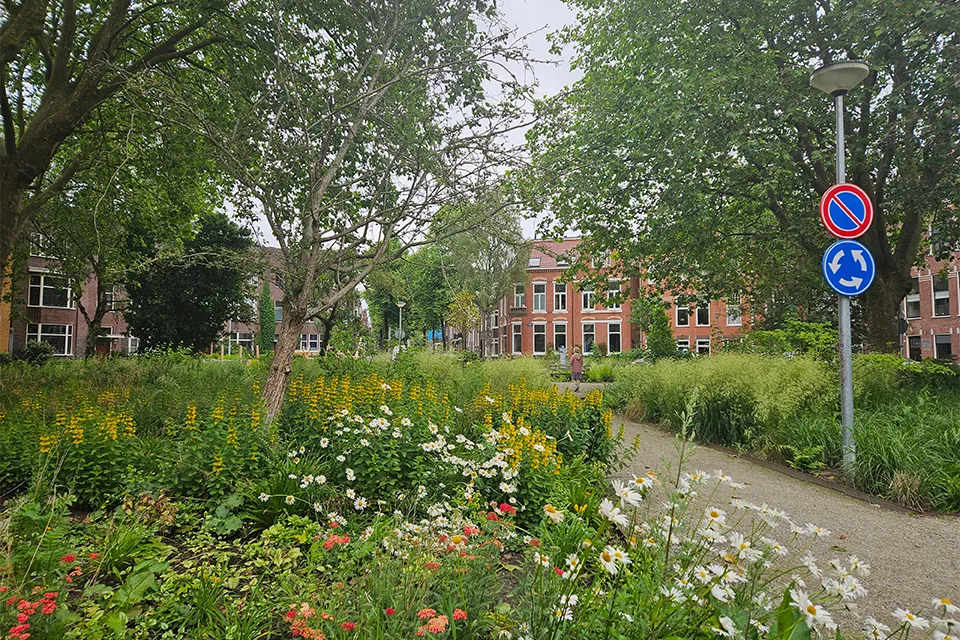
“Absolutely. We are aiming for an integrated approach in which green and blue (water) infrastructure forms the basis for new developments. This means putting nature-based solutions, such as water management and biodiversity, at the heart of our plans. We want new areas to adapt to the local ecosystem, which is essential for a climate-resilient city.”
You have been appointed as a duo. How is the collaboration between you and Ben van der Meer working?
“Ben and I have known each other for fifteen years, so we have a strong foundation of mutual trust. Our disciplines, architecture and landscape architecture, complement each other well. Architecture often focuses on the built environment, while we also look at the spaces around it. Together, we are working on an integrated approach that takes account of the city’s built fabric as well as its green and blue elements. This helps avoid potential friction and creates a more cohesive urban landscape.”
Greening is often more difficult in existing urban areas than in new-build projects. How are you tackling this?
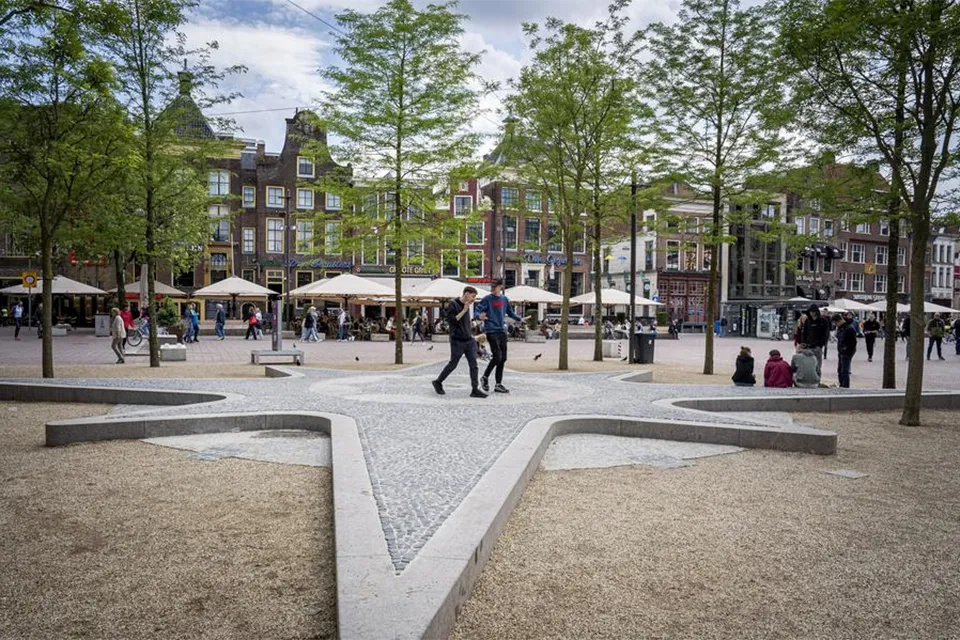
“That is indeed one of the bigger challenges, especially in a historic city like Groningen. It is easier to integrate green and blue infrastructure in new developments, but in the existing urban fabric we sometimes have to be more creative. A good example is the Grote Markt, where concerns were raised about the lack of trees. These are trade-offs we consider carefully: how do we balance heritage value with the need for more greenery? We want to take an innovative approach here, for example by introducing green roofs or façades in the existing city.”
Do you also have specific targets for 2030 as city architects?
“We are committed to ensuring that Groningen’s growth helps achieve the European climate targets. For example, we want to move away from the automatic reflex to demolish buildings. Instead, we are looking at transformation and reuse. The public realm, which is being redesigned as energy infrastructure is installed, also presents a major opportunity to green the city and strengthen its blue infrastructure.”
What role do you see for residents and businesses in this process?
“We actively involve residents and businesses in our plans. Groningen has a highly engaged community, and Architectuurcentrum GRAS regularly organises events to involve the city in the development of spatial plans. We also work with local organisations and professionals to ensure that the plans have broad support and meet the city’s needs.”
More green and blue space in the city also calls for more and better maintenance. Is the Municipality of Groningen prepared for this?
“That is certainly a challenge. Maintaining green space and climate-resilient infrastructure requires specialist knowledge and higher costs. We are working to ensure that maintenance is integrated throughout the area-development process, for example by also securing resources from other portfolios, such as sport and mobility. Collaboration between different disciplines is crucial here.”
You are working on new ways to integrate green and blue infrastructure into the city. Are there any specific projects where this is already happening?
“Although we have only been in post since February, we are already closely involved in various projects. We are also working on implementing the Leidraad voor de openbare ruimte, with street redesigns, partly driven by the energy transition, offering opportunities to green the city. These are long-term processes, but we are working hard towards a green and sustainable future for Groningen.”
Question about this story? Ask your question
Keep following this
Get an email when a new story is published. No account needed.
- SubjectGeneral







