









‘Green is not a left-wing hobby’
Text Armand LandmanImage Gemeente Den Bosch
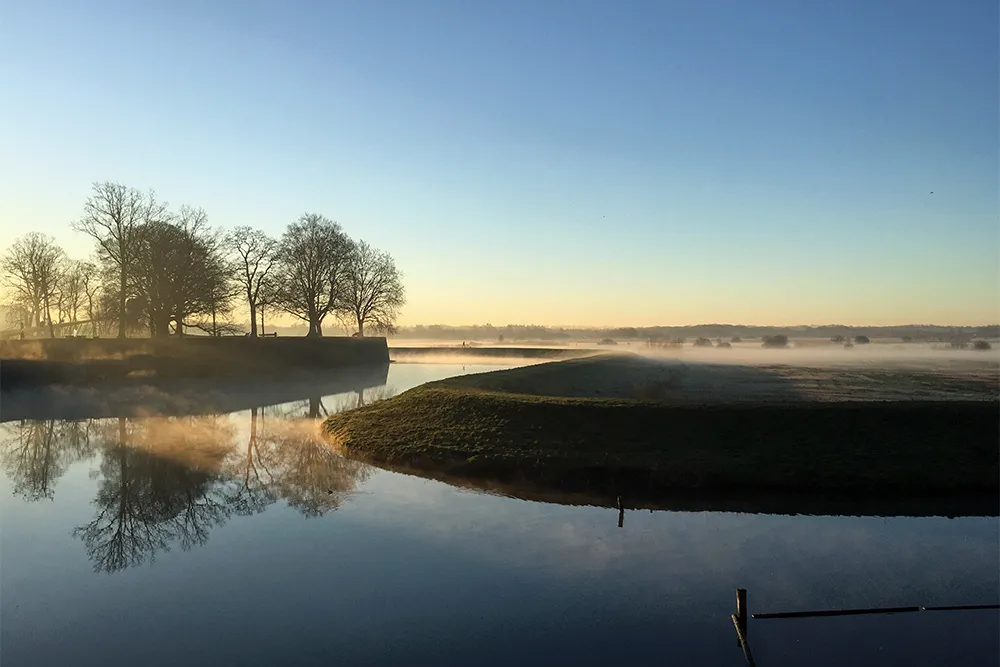
Den Bosch goes all in on nature restoration
Located next to a Natura 2000 site, Den Bosch is making the most of its limited space. Nature restoration is essential if the city is to build enough homes as well. Alderman Ralph Geers (VVD, Public Realm, Water & Green) has ambitious plans to make the city greener. “Green makes life more pleasant for everyone.”
Most of the aldermen we interviewed for this series were from GroenLinks. You are the first VVD member. What does that say about green space in Den Bosch?
“Not much. To me, green means more than climate adaptation alone. It also means a pleasant living environment and a good place to live. Green space and water help people feel at ease. That is the approach I take as a VVD councillor.”
How ambitious is Den Bosch when it comes to this green and blue living environment?
“Very ambitious. We have a lot of ground to make up. Den Bosch does have some unique green features, such as the Bossche Broek Natura 2000 site right next to the city centre, but there is still plenty to do. The city is heavily paved over, we want a more robust link between its different green areas, and we need to significantly increase the city’s capacity to absorb water. That is why I always talk about green and blue together. Plants and water cannot do without each other. In recent years, we have done a lot on the edges of the city, and now we want to undertake large-scale work within the city.”
What will that look like in practice? Will streets be dug up and trees planted?
“It will be a combination of measures. We have a target, agreed with the city council, to plant thousands of additional trees over the next 7 years. But it also means disconnecting rainwater from the sewer system and building rain gardens, investing in smaller parks and creating green avenues, while linking these to opportunities for exercise. How can we design the public spaces around schools and sports grounds so that children are encouraged to climb up or jump down from things? In other words, enhancing people’s experience of green space.”
Some local authorities require developers to include green space when building homes and offices. Does Den Bosch have a similar requirement?
“We do have a green-space standard for construction projects and developments larger than 500 square metres. This applies, for example, to business parks, where green space is often poorly designed: a patch of grass and that is it. We also want to tighten the rules for housing by making agreements with housing associations and improving quality both in homes and in the public realm. In and around the Spoorzone, where we want to build 4500 new homes by 2030, we are working closely with the national government and the water authority, and investing millions in green and blue infrastructure. We believe urban development and greening can only go hand in hand.”
Nitrogen, Natura 2000 sites … Can you even build anything in Den Bosch?
“It is difficult, yes. External offsetting is no longer permitted in Brabant. The province no longer issues permits for it. That means we are going all in on restoring these Natura 2000 sites and strengthening nature between green areas to create new habitats. We are working closely with organisations such as The Weather Makers and are in talks with the ministry about launching a pilot project to see how this could create additional nitrogen capacity. But it starts with nature restoration.”
Creating and restoring green space is one thing. Managing and maintaining it properly is another. How is that organised in Den Bosch?
“Some of it is done by our social employment enterprise, and much of it by green-space contractors selected on the basis of quality criteria. We have substantially increased the budgets for management and maintenance during this term because maintenance had fallen behind, but also because we want to manage green space differently. A lot of standard grass is being replaced, or has already been replaced, with species-rich grassland. That is better for biodiversity and means less mowing. At the same time, we are working with local authorities in
the south of the Netherlands and Flanders to explore how to keep urban green space viable as summers get hotter and drier and autumn becomes soaking wet.”
Green-space contractors tell us they would like to be responsible for the green areas they maintain for longer, because they have more expertise than many local authorities. Could that work in Den Bosch?
“I couldn’t say for certain, but I’m very much in favour of shared ownership. We are already trying this with residents, for example by inviting them to adopt a patch of green space or a tree. Together, we can come up with smart ways to raise maintenance standards.”
Do you involve residents and businesses in your green-space policy?
“Absolutely. We are seeing growing demand from businesses in the city centre to make it greener. The organisation that manages our city centre is taking a creative approach to this through a project called ‘Stadsboschbeheer’. They advise on façade gardens, green roofs and additional planting. One challenge we face is that there are many obstacles underground in the historic city centre. These include archaeological remains, as well as cables, pipes and parking spaces that sometimes get in the way of greening. The same goes for low-maintenance gardens. As a VVD member, I may be a fan of tarmac, but not in the garden. We are trying to change that through behaviour-change campaigns. Because to me, nature is not a left-wing hobby; it makes life more pleasant for everyone.”
Question about this story? Ask your question
Keep following this
Get an email when a new story is published. No account needed.
- SubjectGeneral







