









Knowledge of invasive alien species enhances green professionals’ service
Text Carolien KleesImage WUR/Wikimedia Commons
Identification and treatment
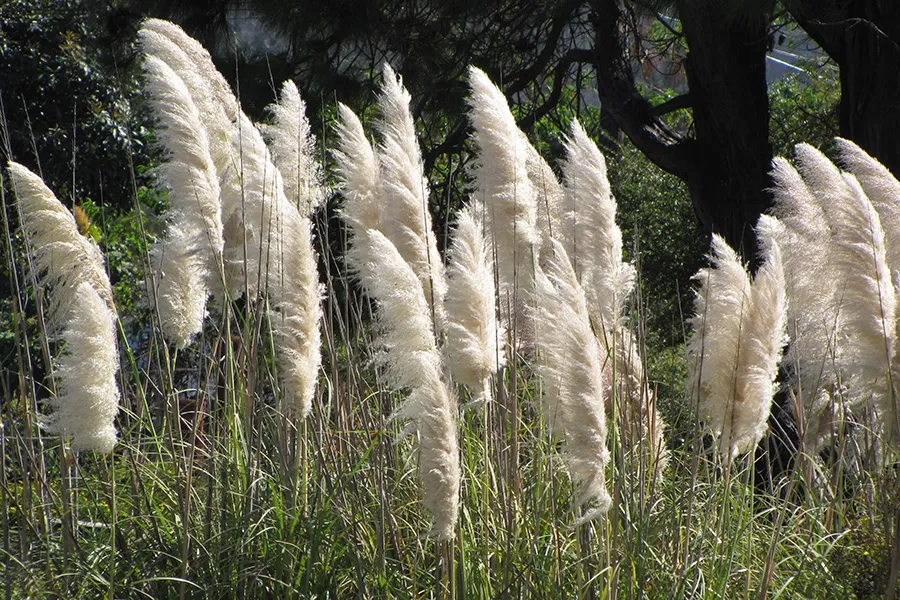
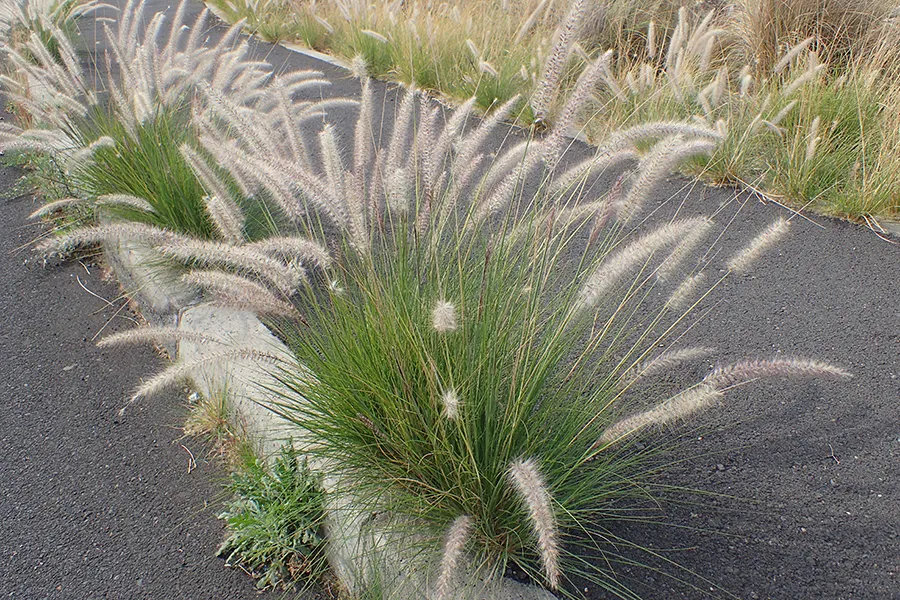
Did you know that varieties of Chinese fountain grass and pampas grasses are on the EU list of invasive alien species? And that some species on this list are still sometimes available to buy? The Invasive Alien Species Knowledge Network was established in 2019 to raise awareness of invasive alien species and curb their spread. “We set up this network to bring together knowledge and practical information about invasive plants and animals and make it available to everyone,” says co-founder Chris van Dijk, a Plant and Environment researcher at Wageningen University & Research.
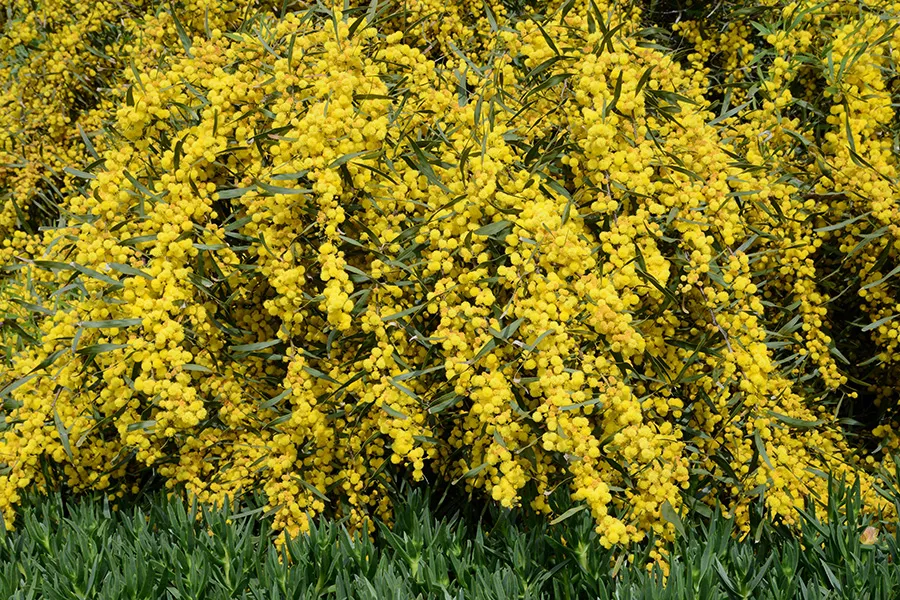
There was recently an uproar in the Alkmaar council chamber over the arrival of a new Robinia pseudoacacia. Thanks to its vigorous growth, this member of the pea family can seriously disrupt biodiversity. Although further investigation revealed that the tree was not on the EU list but on the ‘blacklist’, the incident does show that the threat posed by certain plant species is being taken increasingly seriously. This is a positive development, as they pose a threat to our biodiversity, native species and health. They can also create unsafe situations and cause damage, for example to walls, pipes and paved surfaces. Green professionals should therefore have a good understanding of invasive alien species in order to provide the best possible service. “Clients want to know what is growing on their site, so you are doing them a service when you point out an invasive alien species.”
Legislation and regulations
Specific laws and regulations apply at European and national level to prevent, as far as possible, the spread and negative impacts of invasive alien species. The EU has drawn up a list of invasive species found in Europe that cause harm or are likely to do so in the future. Possessing, trading, breeding, transporting and importing these species is prohibited throughout the EU.
Information sheets
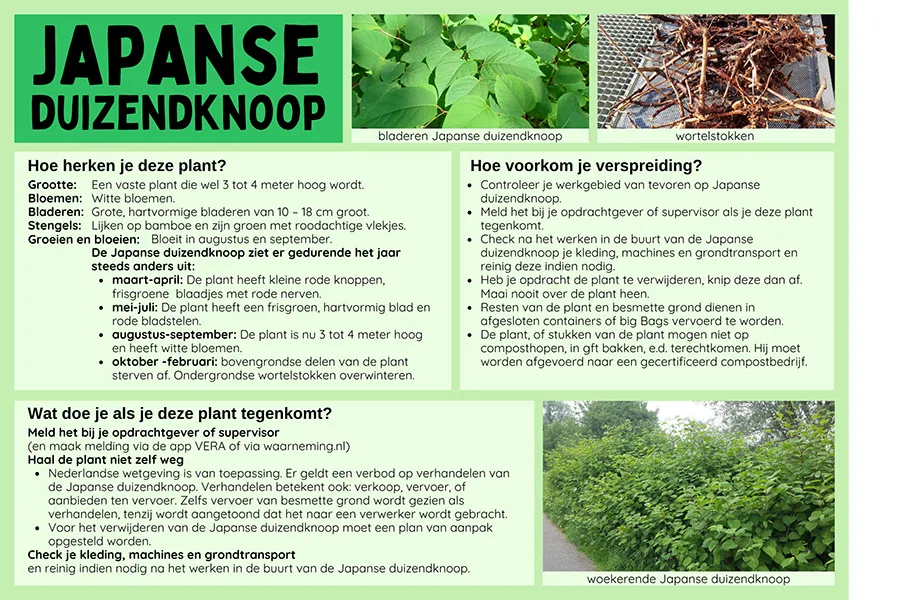
“We are currently developing information sheets for green professionals to help them identify the main invasive alien species and know what to do when they come across them. This does not mean tackling them yourself, as that should really be left to specialists. Instead, you should avoid moving the species, work around it, brush down your clothing afterwards and clean your machinery thoroughly. It is also important to report it to a manager or client so that action can be taken. These information sheets will soon be available free of charge through VHG.”
Further training
Van Dijk also advocates raising awareness through education. “For example, we are currently working with a vocational training college that plans to use the information sheets in its lessons. It would also be a positive development to include the subject as much as possible in further training for gardeners, for example in their toolbox meetings.”
Knowledge
The Invasive Alien Species Knowledge Network provides plenty of useful information on its website, www.invasieve-exoten.info. Visitors can find an overview of invasive alien species, including images and useful background information, such as the relevant regulations and the steps to take when one is identified.
The website also features an overview of webinars, meetings, organisations and working groups. It also shares the latest news, including new findings and research results.
Finally, the knowledge network offers an online forum where users can ask questions. Access is restricted to staff from government bodies, public organisations and nature organisations, allowing members to share cost information or other internal matters securely, without making them public.
Question about this story? Ask your question
Keep following this
Get an email when a new story is published. No account needed.
- SubjectGeneral







