









Quality and trust once again win out over the lowest price
Text Kris VandekerckhoveImage Donar Groen
Service and expertise can provide a foundation for growth
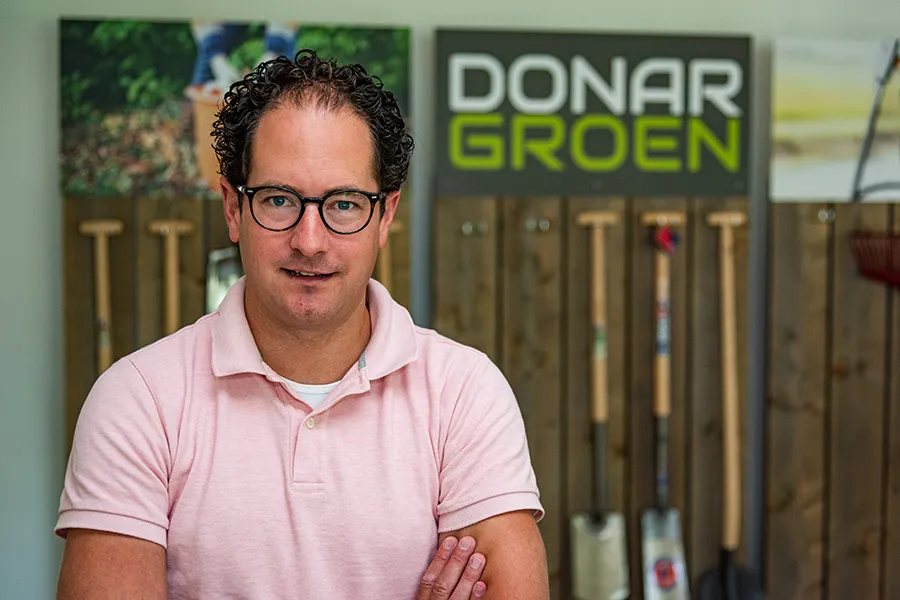
For years, price was the deciding factor in the green sector. Today, the focus is shifting increasingly towards quality, service and trust. Ralph van der Hulst, owner and director of Donar Groen, a supplier of hand tools for green professionals, has noticed the change too. “The market is more positive and customers are more willing to award contracts on merit again”, he says. “That makes all the difference.”
Donar Groen has been in business for over thirty years and has grown from a family firm into a trusted partner for many green professionals. Ralph joined his parents’ business in 2014, during a difficult economic period. “That was still the aftermath of the crisis. Local authorities had to make savings, margins were under pressure and purchasing decisions were based mainly on price”, he recalls.
Today, the situation is different. “Customers still look at price, but it’s no longer the only factor. Quality, delivery times and good advice play a bigger role. That gives us scope to operate more sustainably.”
Quality as a constant
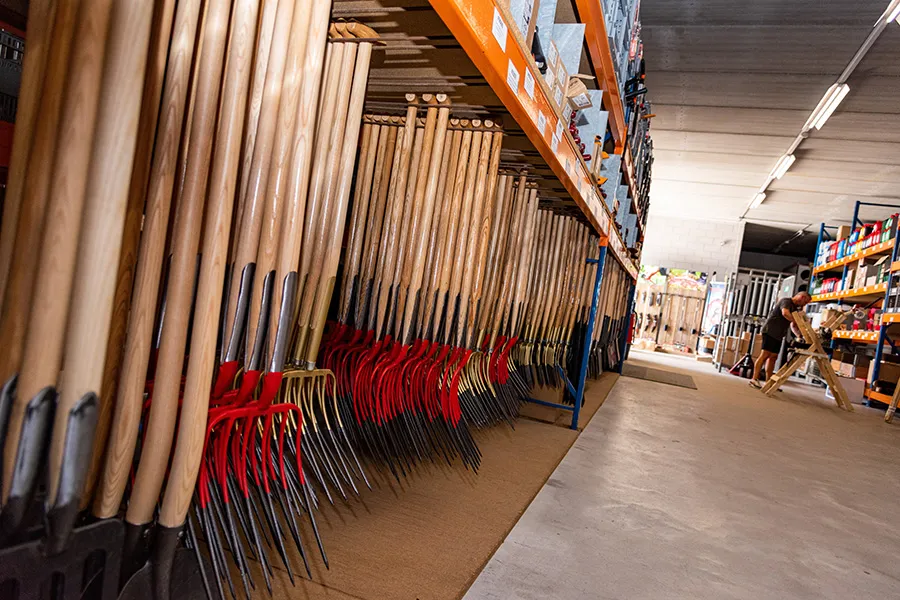
Notably, strong brands are holding on to their position. “Good brands continue to do well. Think Felco or Silky. Professionals aren’t willing to compromise on those”, says van der Hulst. “Put a cheaper alternative alongside them and they’ll still choose quality.”
In his view, that is not just about performance, but also about durability. “A well-made tool works better, lasts longer and is simply an honest product. That too is a form of sustainability, although the word is sometimes used far too freely.”
Ergonomics: important, but (not yet) decisive
Although ergonomics is increasingly on the agenda, it remains an under-addressed issue in practice. “There is certainly awareness, but it doesn’t always determine purchasing behaviour”, the business owner explains. Innovative solutions, such as ergonomic aids or support systems, do not automatically make their way onto the work floor. “Sometimes they are too expensive, or people only think about them once they start experiencing problems. It’s difficult to force the issue.”
Nevertheless, he sees progress. “Compared with twenty years ago, a lot has already improved in terms of safety and comfort. It’s a step-by-step process.”
Staying small, but strong on service
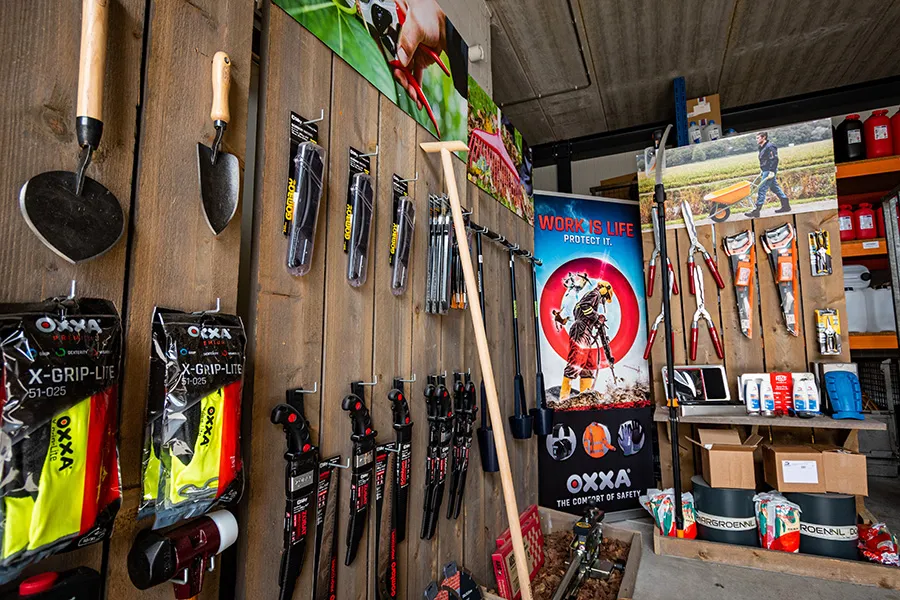
What explains Donar Groen’s success after more than three decades? Van der Hulst believes it comes down to keeping things simple. “We do what we say we’ll do. If we say we’ll call back, we do. If something goes wrong, we put it right straight away.” With a compact team of seven employees, the company serves a broad customer base. “We may be small, but we’re quick to respond. Customers know us and we know them. That’s what makes the difference.”
In recent years, that approach has been reinforced by some targeted decisions. The business owner reshaped the product range, dropped less profitable activities such as workwear and focused fully on tools, among other things. “That was crucial. You have to be willing to choose what you’re good at.”
Digitalisation has also played a part. “We invested in a user-friendly webshop and refreshed our image. We’re a more modern company today than we were ten years ago.”
Looking ahead: across the border
Donar Groen is cautiously looking beyond the national borders for future opportunities. “We have a strong position in the Netherlands, but I certainly see opportunities in Belgium and Germany”, says the ambitious entrepreneur. The move will require careful consideration. “Every market is different, so you have to approach it thoughtfully. But I think it would be a great challenge to grow into those markets step by step.”
Finally, Ralph points to a structural challenge facing the sector: the shortage of skilled workers. “Green-sector work is more important than ever, for liveability, health and the climate. But quite simply, we don’t have enough people.” His message is clear: “We need to keep the profession attractive. That also means paying people fairly for their work. It’s the only way to attract new people and keep the sector healthy.”
Question about this story? Ask your question
Keep following this
Get an email when a new story is published. No account needed.
- SubjectGeneral







