









Rotterdam urban forest showcases the value of green space
Text Carolien KleesImage Jaap Smit
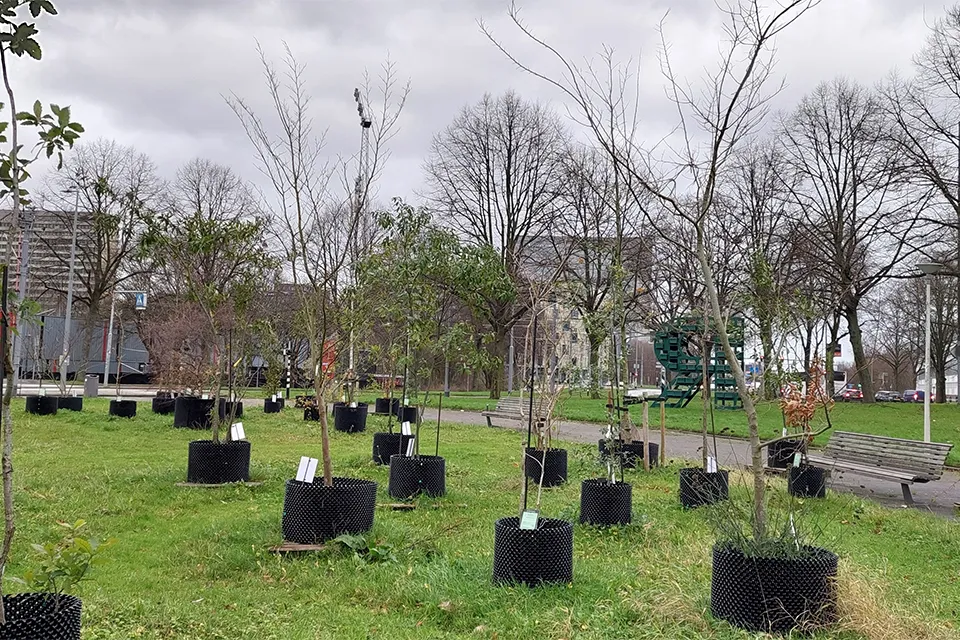
A green oasis where there was once ‘nothing at all’
What began as an inspiration evening grew into a complete, temporary forest in the heart of the port city. When Jaap Smit, green curator at Trompenburg Tuinen & Arboretum, told the residents’ organisation at the event about the added value of trees, the audience responded: “But then we should show Rotterdam, shouldn’t we?” And so it was decided to create a special forest using 64 trees from Trompenburg, which had temporarily been placed above ground while planting beds were being redesigned. One and one made three: the ‘waiting’ trees found a good temporary home, residents can learn from information boards what each tree species contributes to the living environment, and a dull spot has been transformed into a green oasis.
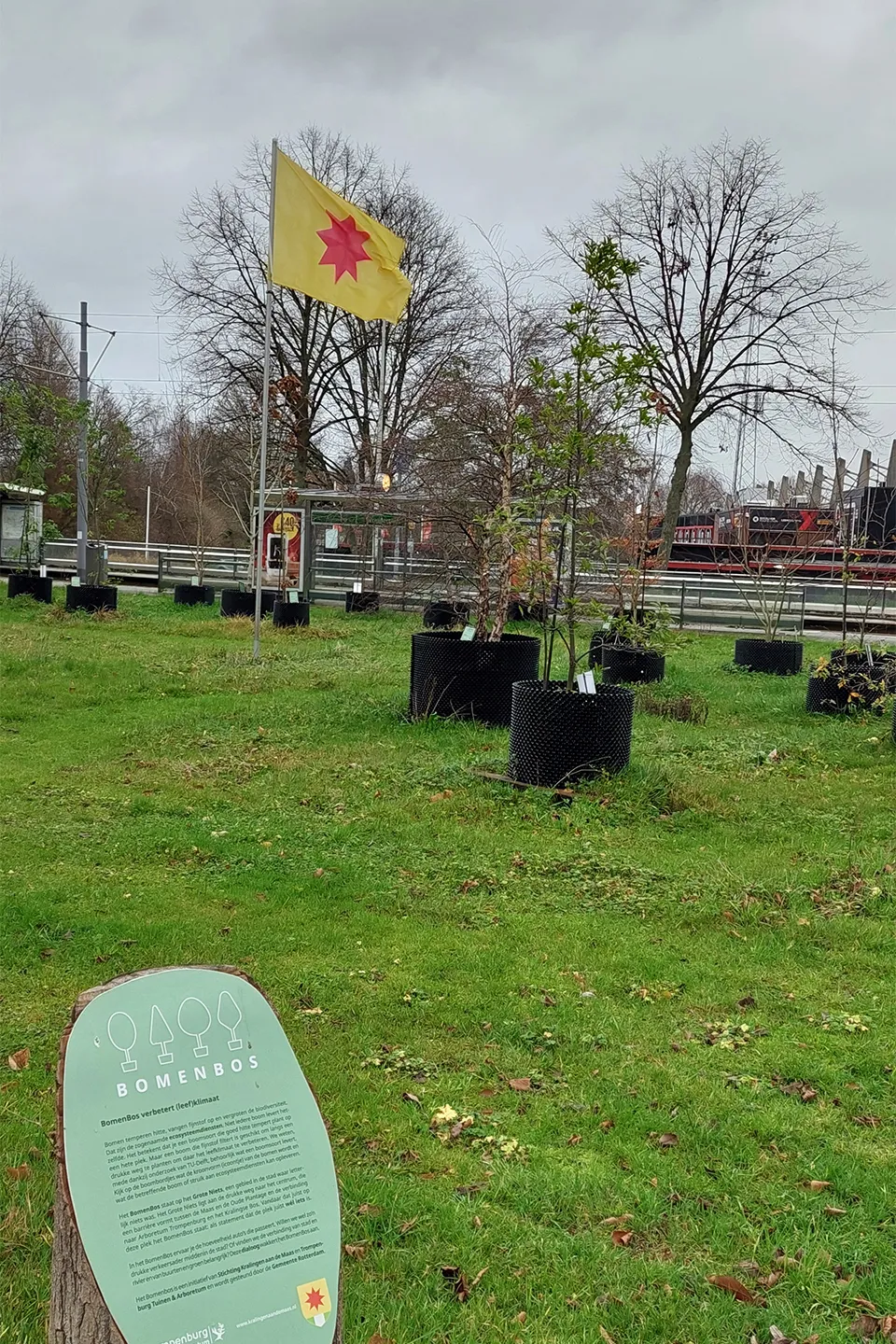
At the turn-off from the Abram van Rijckevorselweg towards Kralingen is a triangular plot where there was previously nothing to do, which is why locals called it Het Grote Niets (The Big Nothing). It was an unpleasant place, with traffic rushing past on all sides. Together with Els Leclercq, director of the Kralingen aan de Maas foundation, Smit has created a new forest here, co-funded by the municipality of Rotterdam and the Wijkraad Kralingen.
Ecosystem services
Smit: “Rotterdam has many plans for this area. With this initiative, we want to show the municipality that trees have a lot to offer, and that certain tree species in particular can make a difference. However, it takes a relatively long time for a tree to reach maturity and therefore deliver its maximum ecosystem services, so this project is also a case for the municipality to start thinking carefully now about the trees it wants to plant. If a busy road is planned, for example, it may be wise to plant trees that are good at capturing fine particulates. In that case, it is important not to wait, but to plant the trees now if you want them to be of benefit later.”
Added value
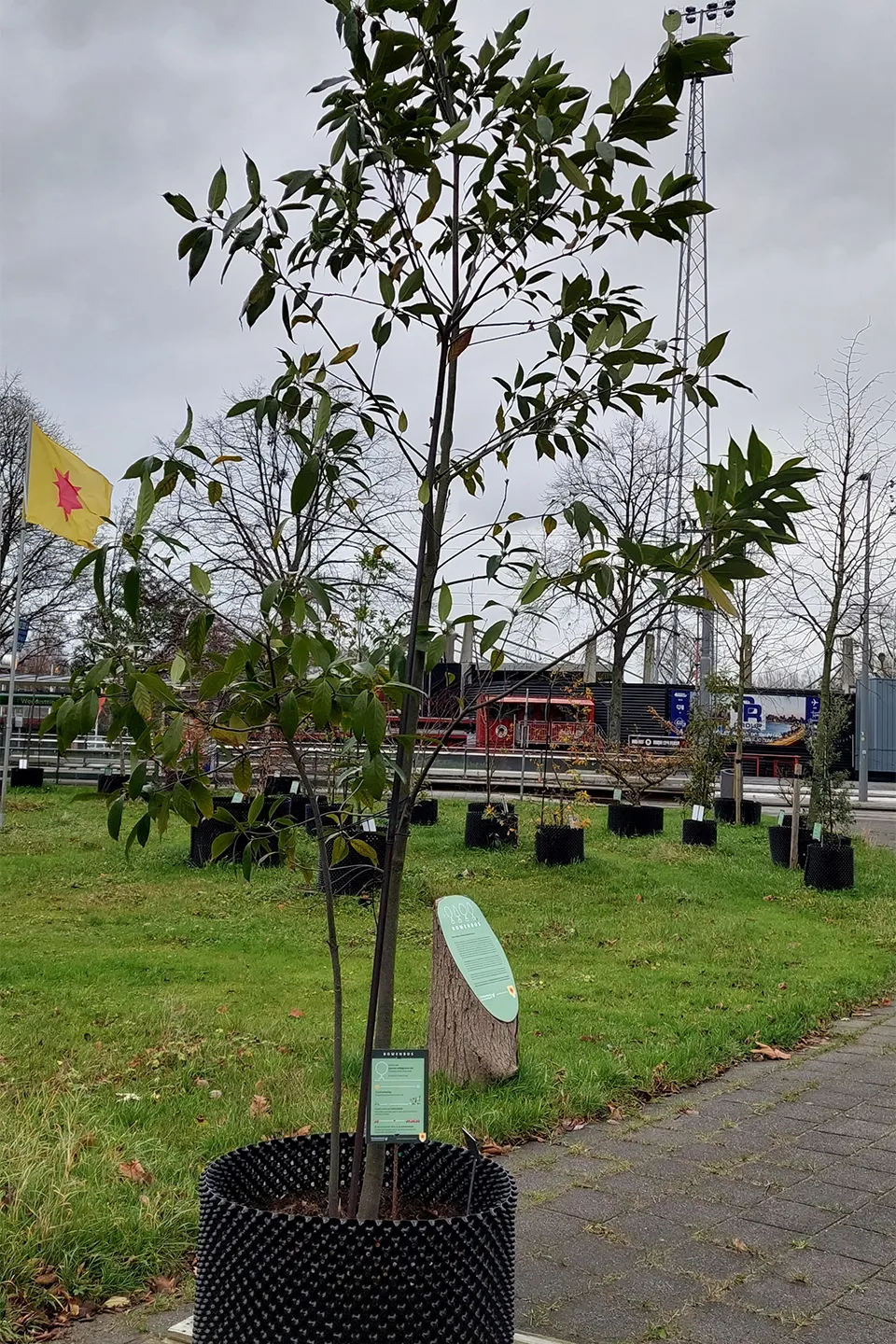
What makes this initiative special is that visitors to the forest get a good idea of the enormous added value of green space. Each tree has an information board showing how much that species contributes to biodiversity, captures fine particulates and helps to reduce heat. “To map this data, I consulted a great many sources, including the Urban Forestry tree research by TU Delft, to which I also contributed. I processed all the data in an Excel spreadsheet so we could establish which ecosystem services each species in the forest provides. A graphic designer then presented it beautifully using a kind of ‘sliders’ to show how each tree scores on the three aspects mentioned.”
A special selection of trees
The selection of trees in this forest, which will remain in place for three years, is also unique. The trees come from an arboretum. Alongside ten lime trees, there are 44 other special tree species from Trompenburg. “In a sense, Trompenburg is taking its work out into the city and showing people that there is much more to see just a little further on, in our arboretum,” says Smit enthusiastically. As well as being green curator at Trompenburg, he works as a Green City adviser through his own company, “Plantkundig”.
Social cohesion
The forest also highlights another important quality of trees: social cohesion. Earlier research, in which mobile trees were grouped in different ways, showed that people are more likely to use benches beside trees arranged in a circle than those beside trees planted in a row. “So we arranged the trees in groups in our forest and placed benches beside them. It’s wonderful to see people now making use of a place that used to be called Het Grote Niets.”
Question about this story? Ask your question
Keep following this
Get an email when a new story is published. No account needed.
- SubjectGeneral







