









‘The profession is becoming more complex, but also richer’
Text Armand LandmanImage Hogeschool Van Hall Larenstei
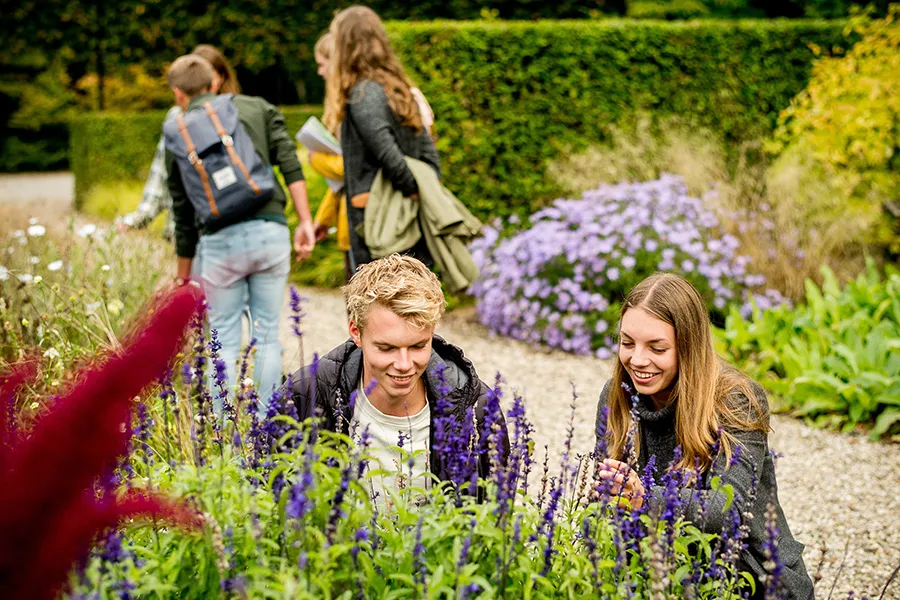
How Van Hall Larenstein is preparing green-sector students for a rapidly changing world
A recurring complaint in the green sector is that plant knowledge is declining, young professionals know too little about plant ranges and management, and designers draw up plans that may look attractive but are less practical to implement. But anyone who spends an afternoon listening to three lecturers from Van Hall Larenstein University of Applied Sciences (HVHL) hears a different story. Gerrit-Jan Smits, Jack Martin and Jurgen Hulst see a growing, motivated cohort of students; and a field that is rapidly becoming more mature and complex.
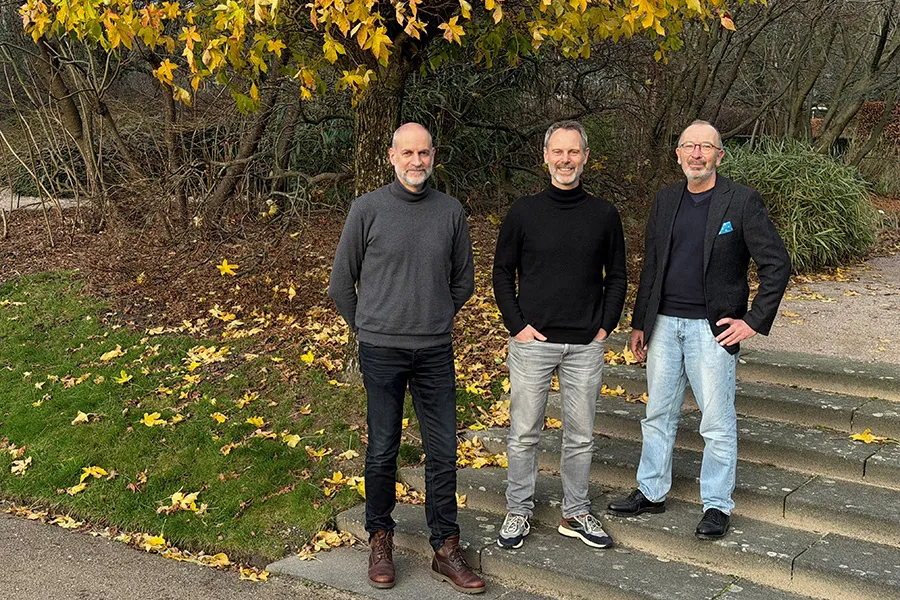
Gerrit-Jan Smits, lecturer in plant range, planting and management, responds immediately when the idea that ‘plant knowledge is being hollowed out’ comes up. “I don’t agree,” he says. “Every T&L student here takes two years of compulsory plant knowledge: identification, knowledge and application. It’s intensive teaching. And those who want to go further can specialise in planting in their third and fourth years. We also see that entrants from green vocational education generally have much less plant knowledge than they did 20 years ago. At the same time, whereas students from green vocational education used to have a significant advantage over entrants from senior general secondary education and pre-university education, that is no longer the case. And the amount of plant knowledge taught varies between green vocational colleges.”
According to his colleague Jack Martin, who has been at HVHL for almost 40 years, this complaint is nothing new. “When I started here, I heard the same things. In practice, people often think that ‘everything was better in the old days’. But our students demonstrably know more than cohorts from twenty years ago. And when our students taking the Urban Planting minor go on field trips, their guides are often astonished by their knowledge.”
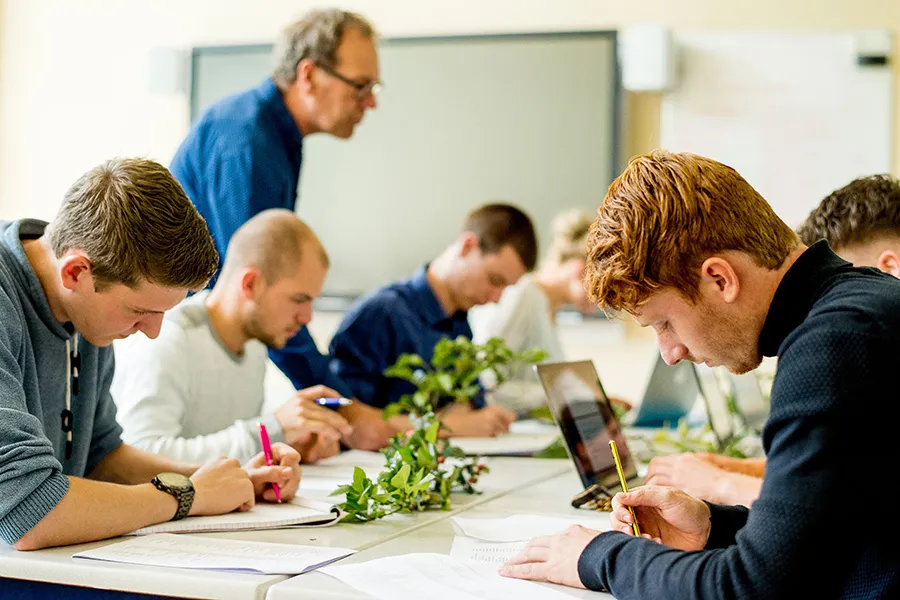
What is changing is how students have to acquire that knowledge. Jurgen Hulst: “Many students have to learn how to learn again: repeat, study hard, persevere. We give them plenty of support with this. How do you learn about plants? How do you identify the really essential details? It can be more complicated than many people think.”
Idealism and realism
Remarkably, HVHL is not struggling to attract students. On the contrary: while the youth population as a whole is shrinking, the number of first-year students rose from an average of 90 to 112 this academic year. Students make a conscious choice, says Smits. “They want to help create a healthier living environment, support biodiversity and adapt to climate change. That idealism is very much in evidence.”
This is even more true of part-time students, says Hulst. “Part-time students say explicitly: I want to make a difference. Some come from jobs where they felt their work had little meaning. Here, they can see that their work has a direct impact.”
Social media play a dual role in this. Yes, students are drawn in by slick designs on Instagram, says Hulst with a laugh. “But we have to teach them that an attractive image is not the same as good design. A garden that looks fantastic in a render may not function at all in practice. We teach students to look beyond the picture.”
A changing plant range
According to the lecturers, the changing plant range is where the importance of plant knowledge is most apparent. Hulst: “Species considered drought-tolerant five years ago proved vulnerable after extreme summers. And after several wet years, we realise that climate resilience also means being able to withstand prolonged wet conditions. The plant range is constantly shifting.”
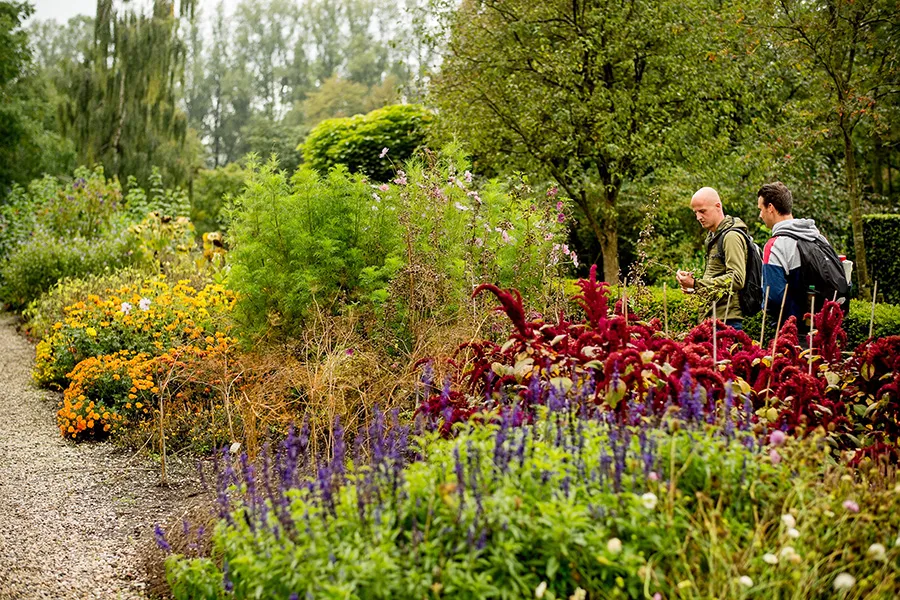
HVHL keeps track of these changes. Smits: “We update our plant lists continuously. We keep a close eye on growers, visit many businesses and trial plants in our own plant collection garden. Students learn season by season: they start with 95 plants as an introduction in the first teaching period. By the end of their first year, students know around 400 cultivated plants, including trees, shrubs, climbers, perennials, ornamental grasses and bulbs, and around 125 wild plants.”
Martin adds: “We have the advantage of being in the middle of a rich country estate. 70 per cent of the Dutch flora can be found here. That is unique in Europe. Many educational institutions do not have a garden of their own. Their students learn about plants mainly from books.”
In the field: from tree nurseries to policy departments
Where do HVHL students end up? Everywhere, says Smits. “Local authorities, consultancies, contractors, the Central Government Real Estate Agency, landscape architecture practices. And a striking number of alumni start out as self-employed professionals or in cooperatives.”
They see the changing world of management reflected in their teaching. Local authorities such as Amsterdam are increasingly hiring their own green-space professionals, after years of outsourcing. “That makes sense,” says Martin. “If you work in the same place for ten years, you get to know the planting inside out. You build up knowledge over time. You can’t buy that in a three-year contract specification.”
But students also need to be able to design for situations where management is not in the hands of professionals. Hulst: “We teach them to take account of places maintained by people without training in the green sector, such as people who are distanced from the labour market or temporary workers. That calls for different design choices. Not because we think it is ideal, but because that is the reality.”
A profession with a future, but also with uncertainty
The lecturers are cautiously optimistic about the future. Society’s appreciation of green spaces is growing. Green spaces are being brought into spatial planning challenges at an increasingly early stage. But the profession is also becoming more complex. Martin: “You no longer work behind a drawing board. You work with residents, traffic engineers, emergency services, ecologists and property companies. It requires communication skills that we did not used to have to teach.”
Hulst sees one major challenge above all: teaching students to deal with change. “We simply don’t know what our cities will look like in twenty years. Will farmland become nature? Will private gardens become communal gardens? Will urban heat islands become even more extreme? We can’t give students a fixed formula. But we can teach them to think critically, build up knowledge, develop a vision and remain flexible. That may well be the core competence of the green professional of the future.”
Question about this story? Ask your question
Keep following this
Get an email when a new story is published. No account needed.
- ThemeTrees and plants for tomorrow
- SubjectGeneral







