Climate change calls for new choices in trees
Text Fleur DilImage Van den Berk Boomkwekerijen
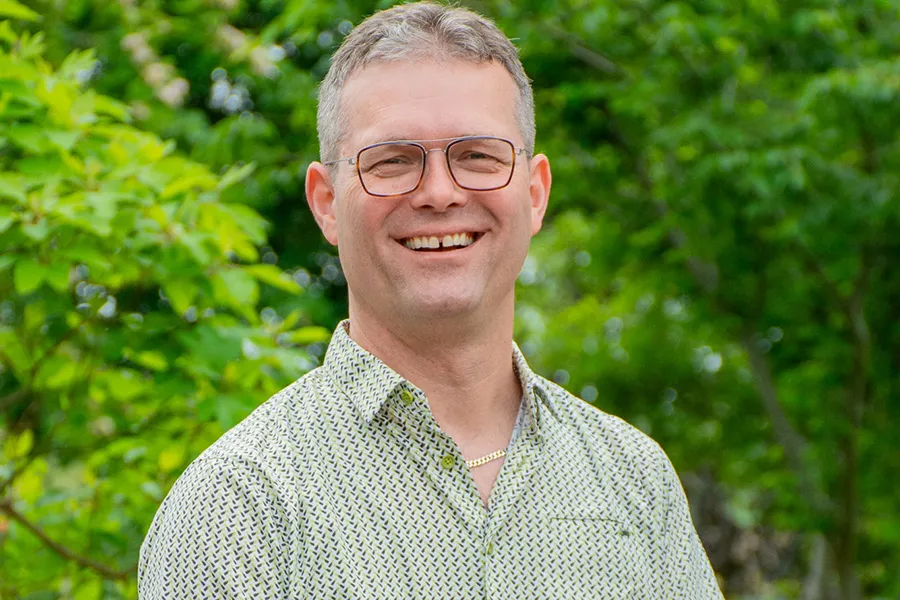
‘We need to learn to think more outside the box’
The climate is increasingly changing the rules for the greenery around us. The effects of extreme weather on our tree stock are becoming ever more visible. Johan van den Berk, co-owner of Van den Berk Boomkwekerijen, believes we will need to be more open to non-native species to meet these challenges. “We don’t know exactly what the climate will be like in 80 years, so we’ll have to hedge our bets.”
Some species, such as beech, are clearly struggling with increasing drought. “We’ve had a lot of problems with that over the past five years. Now everyone is being jolted awake again, because since October last year it has never been this wet. Other trees, such as maple species, can’t cope with that. On the other hand, there are also trees that thrive in this climate.” This changing dynamic means we need to make considered choices when planting trees.
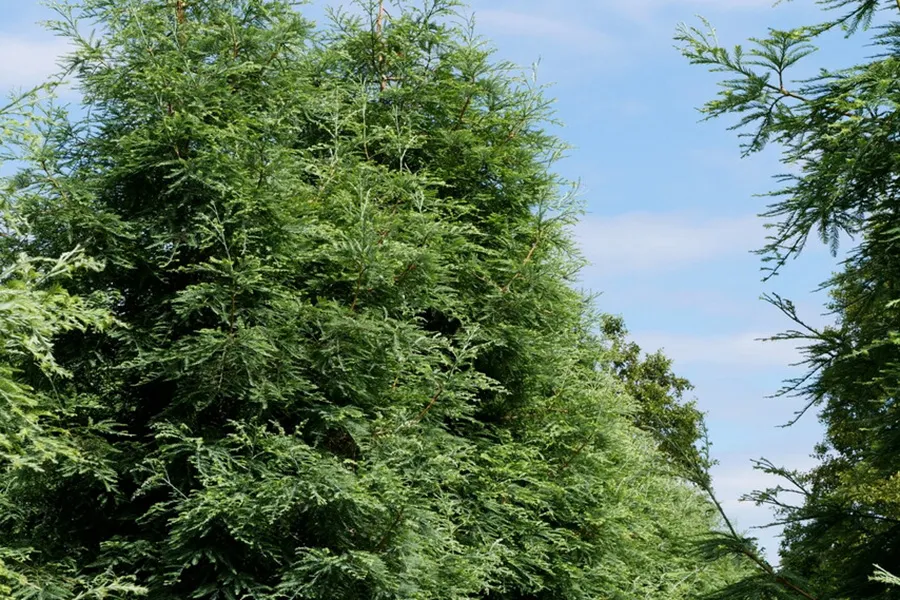
Tree of the future
This means moving towards a diverse mix of native and non-native species that can withstand both drought and wet periods. Not everyone agrees with this approach. “There’s a school of thought that says we should restrict ourselves to using native species only. In my view, we can’t keep sticking to that. Besides, how non-native are these species really? Before the ice ages, many species such as Magnolia, Gingko, Metasequoia and Sequoiadendron were commonly found in the Netherlands. In that respect, I also have some reservations about the term ‘climate tree’.”
To find out which tree species will be suitable in the future, we need to look at regions with the climate we can expect here in 80 years, says Van den Berk. “For example, you could look at the central United States, on both the east and west coasts, or at China, Japan and the Caucasus. I’m thinking of Quercus texana ‘New Madrid’, an oak from Texas, or Tilia mongolica ‘Buda’ (lime) from Mongolia. These trees can withstand extreme drought and heat. Another American oak, Quercus imbricaria, is also highly tolerant of moisture as well as heat. Zelkova carpinifolia ‘Verschaffeltii’ comes from the Caucasus. It is accustomed to high altitudes and can withstand different climatic conditions. We’ll have to harness the strengths of these trees. They have proved to be true survivors.”
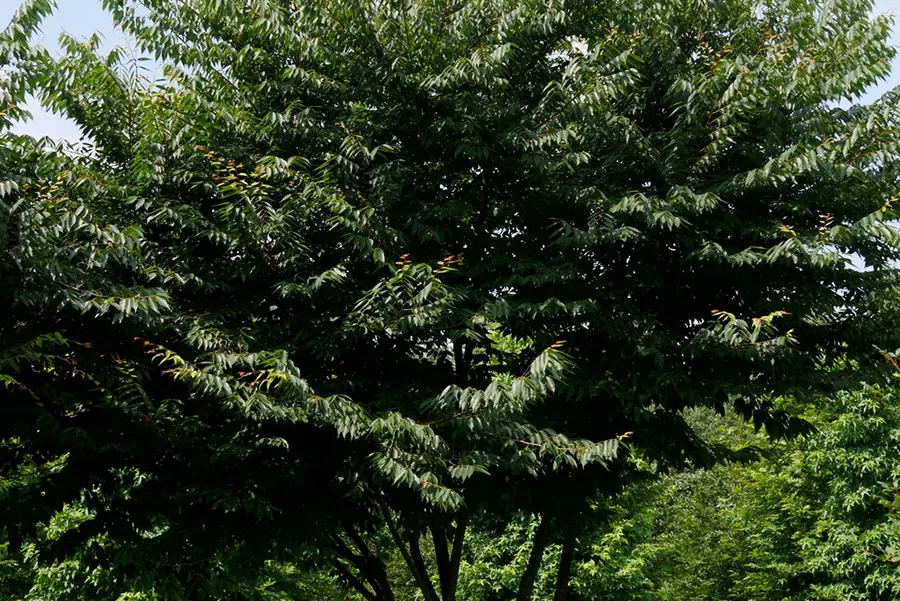
C4 metabolism
Van den Berk considers several other species to be trees of the future, too. “Think of Zelkova serrata ‘Urban Ruby’ or ‘Village Green’, the Japanese zelkova, or Pauwlonia tomentosa and Pauwlonia elongata. These are typically fast-growing trees because they have a different metabolism. This C4 metabolism allows them to bind carbon much faster. In five years, these trees can reach a height of ten metres, allowing them to absorb a lot of CO2 very quickly. I think there’s also a lot we can gain from this.” Growing large quantities of Paulownia cultivars in forestry plantations could remove a great deal of CO2 from the air in a relatively short time. “It’s a shame that this species is still sometimes disparaged because it really is non-native.”
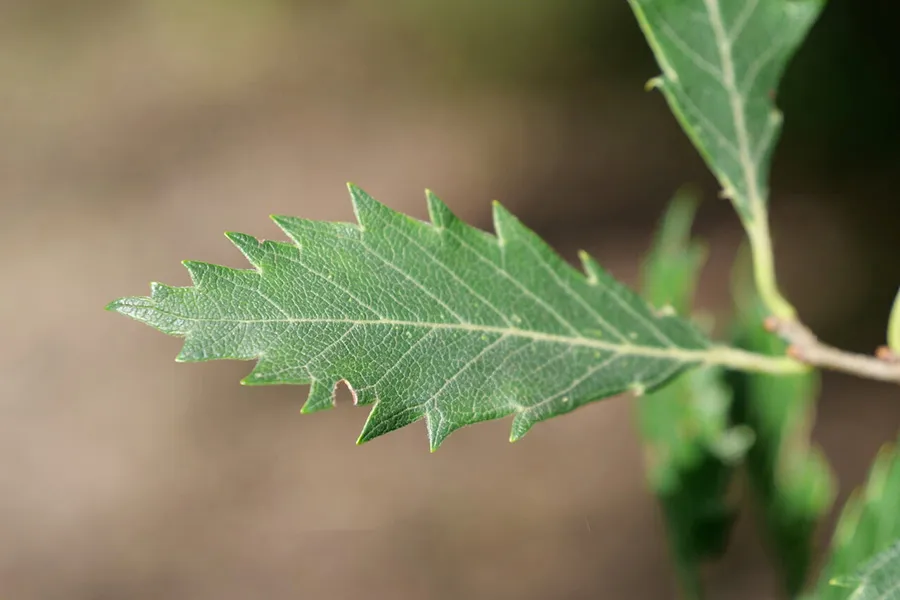
A holistic approach
Good tree policy is about more than planting trees that are resilient to future conditions. “In cities, you need to consider all the factors that affect trees, such as heat radiating from stone or the reflection of sunlight. Not all trees can cope with that. You also need to know what your aim is. Do you want a tree that grows quickly and gets big? Field maple and common oak are both champions of biodiversity, but if you want a fast-growing tree in the city that provides plenty of shade, they aren’t the best options. You’d be better off choosing a plane tree or a Chinese swamp cypress. They’re not the most biodiverse, but they’re very suitable for urban heat. So you always need to weigh up the options: do you want more shade in a city, or more biodiversity?”
CSI Trees
Scientific research also shows that a shift towards other species is more than necessary. The CSI Trees project, led by Mark Ravensloot of Wageningen University, is studying different climate scenarios. “Ravensloot is researching what the climate will be like in 2055 and 2085. He has developed four potential scenarios that could occur. These show that 70% of the current tree stock will no longer be suitable within the next 30 years. That’s quite alarming.”
Diseases and pests
Climate change is also associated with tree diseases and pests that we are increasingly having to deal with, such as the oak processionary moth. “100 years ago, it was not really found in the Netherlands. Climate change has enabled it to spread to the Netherlands. The pine processionary moth has fortunately not reached the Netherlands yet, but it is spreading. Then there’s the European spruce bark beetle, which has been able to thrive in pines and spruces because of the drought in recent years.” These pests are also a consequence of our monoculture, Van den Berk stresses. “My advice is to plant mixed stands, which gives insects less chance to spread. Also consider trees that are resistant to diseases and pests, such as Sequoia sempervirens ‘Winter Blue’ or Eucommia ulmoides, the rubber tree.”
Outside the box
Van den Berk is certainly seeing this shift towards other tree species taking place among tree growers. “We’re naturally taking this into account when purchasing stock, but we also want to keep our range as biodiverse as possible. We’ve also been working for around five years to switch to 100% organically produced trees certified to the SKAL standard. These factors also play an important role in a climate-resilient future. It’s no coincidence that we’re a partner of NL Greenlabel, an organisation that, like us, is committed to a sustainable society and keeps urgent issues like these high on the agenda.” Van den Berk believes that working together makes it possible to pool knowledge and resources and increase the impact of our efforts. “If we want to make this transition successfully, we’ll have to learn to think outside the box. But it really is a long-term process of change.”
Question about this story? Ask your question
Companies in this story

Keep following this
Get an email when a new story is published. No account needed.
- ThemeTrees and plants for tomorrow
- SubjectTrees & plants
- CompanyNL Greenlabel