Tree planting and forest regeneration in Kenya
Text and images Heidi Peters
Trees for a better life
JustDiggit, The Tree Sisters, Africa Wood Grow, WorldVision, Trees of Hope, Eden Reforestation Projects, Tree-Planters, The Green Belt Movement. These are all organisations working to green dry areas, and the list is far from complete. The importance of green cover is becoming more widely recognised, as is the fact that tree canopy cover matters more than the number of trunks. In November ’24, I travelled to Kenya and visited three very different projects.
I had never been to Kenya before. Visiting had been a dream of mine for some time, along with seeing some tree-planting projects. On LinkedIn, I describe myself as a tree evangelist as well as an editor, though I am not quite sure why. Years ago, while researching an article, I spoke to an arborist who spoke about trees with such reverence that this was probably where the spark was lit. As I wrote, I learnt about the importance of trees for people, wildlife and the climate. Two years ago, I watched a documentary about the FMNR (Farmer Managed Natural Regeneration) method, which uses careful pruning and protection to encourage surviving stumps to regrow into trees. The results were fantastic. I thought to myself: I have to see this. In November, I managed to do so, at least in part.
Africa Wood Grow
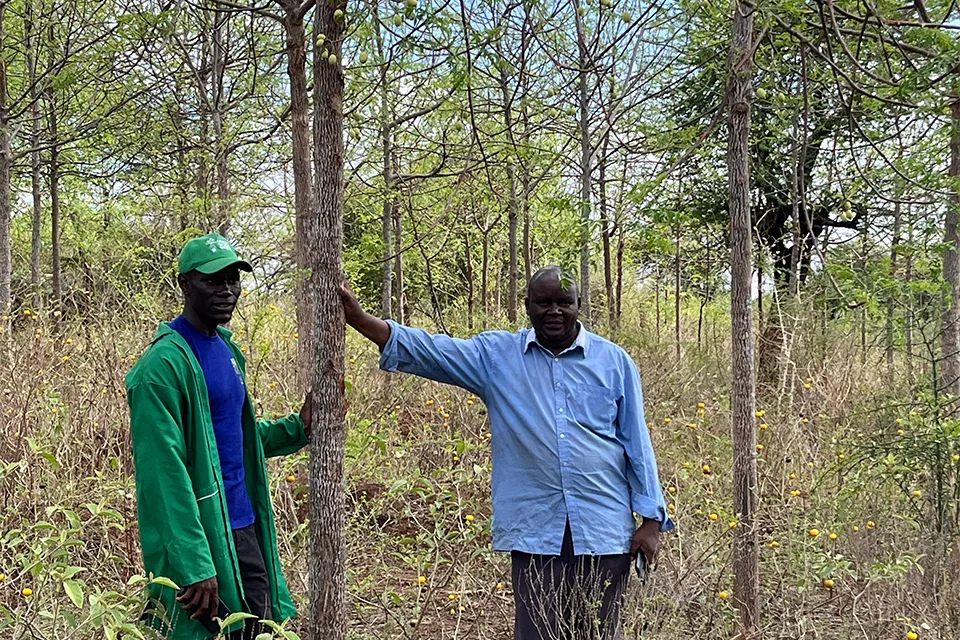
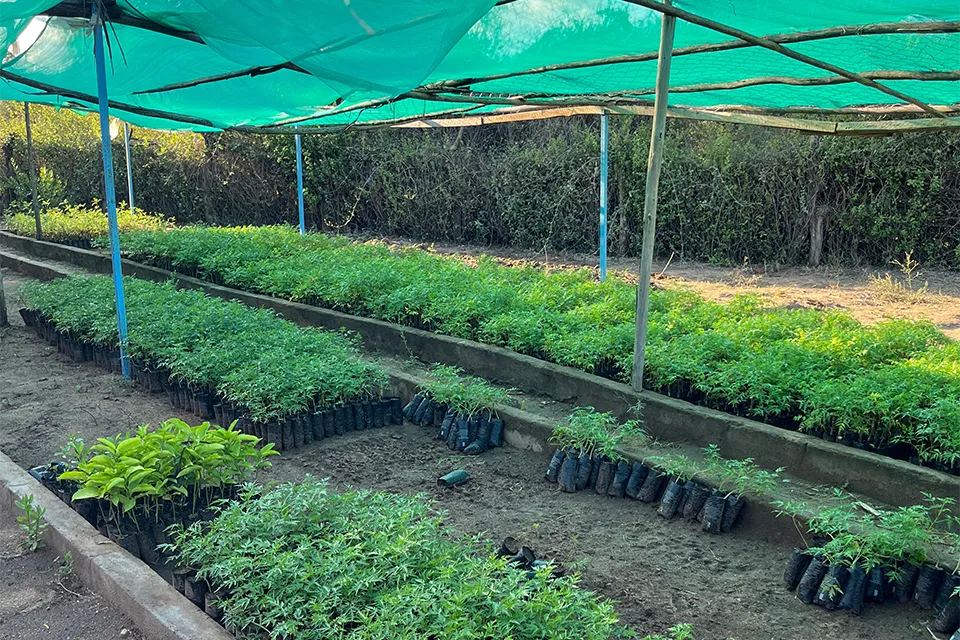
I started with Africa Wood Grow (AWG), founded by Dutchman Roeland Lelieveld and Kenyan Daniel Muvali. When it was established in 2010, AWG set itself the goal of restoring 600 km2 in 30 years in Kitui County, a county further south. So far, 400 hectares have been greened across seven sites of its own. Alongside the foundation, AWG comprises a nursery called Africa Wood Grow Ltd and Kamiti Community Based Organisation (CBO), which is loosely comparable to a co-operative. The nursery supplies indigenous fruit trees, timber trees and other native species, with more than twenty species in total.
More than 230 families have joined the CBO. They receive guidance on the importance of trees, how to plant them and how to grow crops. AWG has also built water kiosks, making it easier for people to plant trees. Everyone who joins receives 150 trees, and those who keep them alive receive more each year. More than 80,000 trees have now been planted. One of the many positive outcomes is that monkeys have returned to the newly planted forest near the nursery and are once again swinging through the trees. Wonderful!
FMNR
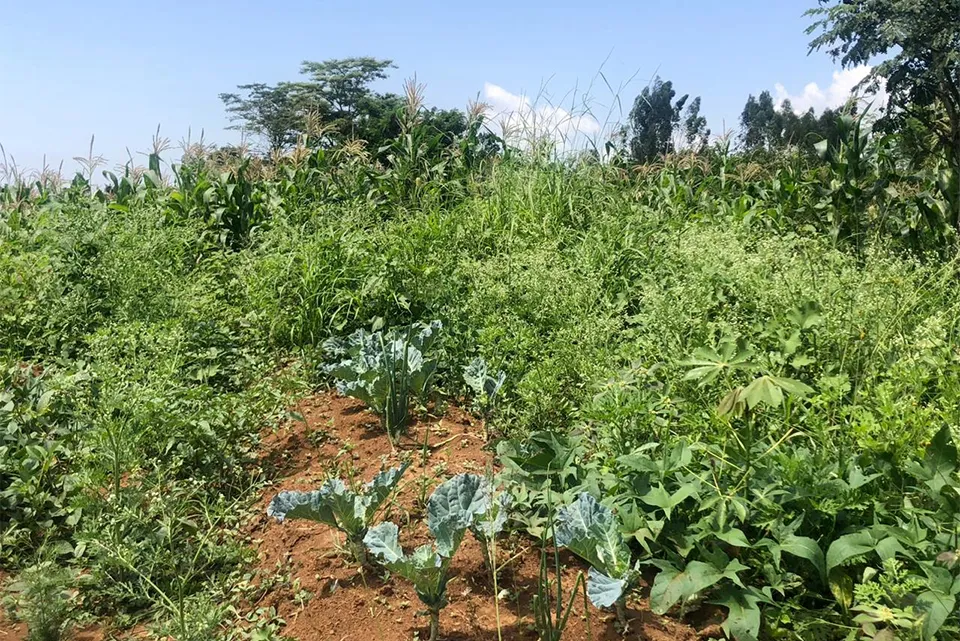
My aim was to visit an FMNR project during the trip, but that proved difficult. In the end, I did manage to do so, more or less, although it meant spending eight hours in a car for a visit lasting barely two hours. FMNR is a method developed by WorldVision, but anyone can use it. Stumps are pruned in a specific way and protected from animals, allowing trees to grow back in a relatively short time. FMNR has been practised for decades and is now used in 40 countries. There are several projects in Kenya, including one in Homabay County.
FMNR has many advantages: it is inexpensive, the risk is low because it relies on root systems already adapted to local conditions, and the impact is rapid. Restoring a billion hectares through regenerated agroforestry could capture up to 26 per cent of annual global CO2 emissions. That is why World Vision has set itself the goal of achieving this by 2033. Most investment goes towards community education.
Trees of Hope
Miti ya Matumaini. Swahili for Trees of Hope. A lovely name that captures what trees represent: more rain, or rain returning; shade; the return of wildlife such as monkeys; and healthier soil that retains water for longer. Trees of Hope is a small initiative in Bondo, originally started by a private individual. The town is in the west of the country, above a promontory of Lake Victoria.
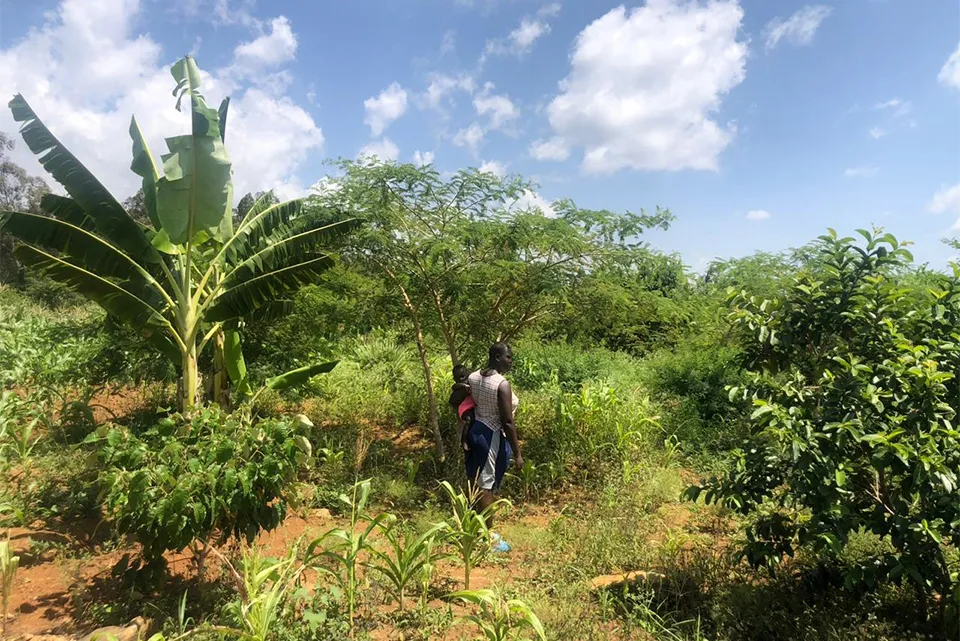
Trees of Hope covers one hectare and is now also a CBO, with 20 members. The site is home to various trees, including Croton Megalovania, Terminelia brownies, Polyacanta senegali and Carissa spinarum. The melia (Indian lilac) produces medicinal oils. All members have also received trees to plant on their own land. The project aims to create better living conditions for the community. The expectation is that the CBO will be self-sufficient from 2026, with the seedlings sown and trees planted sustaining the forest. That will only be possible if enough money is also raised to install a well.
This is just a small sample of all the work taking place in Kenya and many other countries. The importance of trees is clear. As Tanzanian singer Frida Amani sings in her song ‘Kisiki Hai’ (Swahili for ‘living stump’): ‘Because if I (the stump) disappear, then you disappear too.’
Question about this story? Ask your question
Keep following this
Get an email when a new story is published. No account needed.
- SubjectTrees & plants