Getting the job done for the next generation
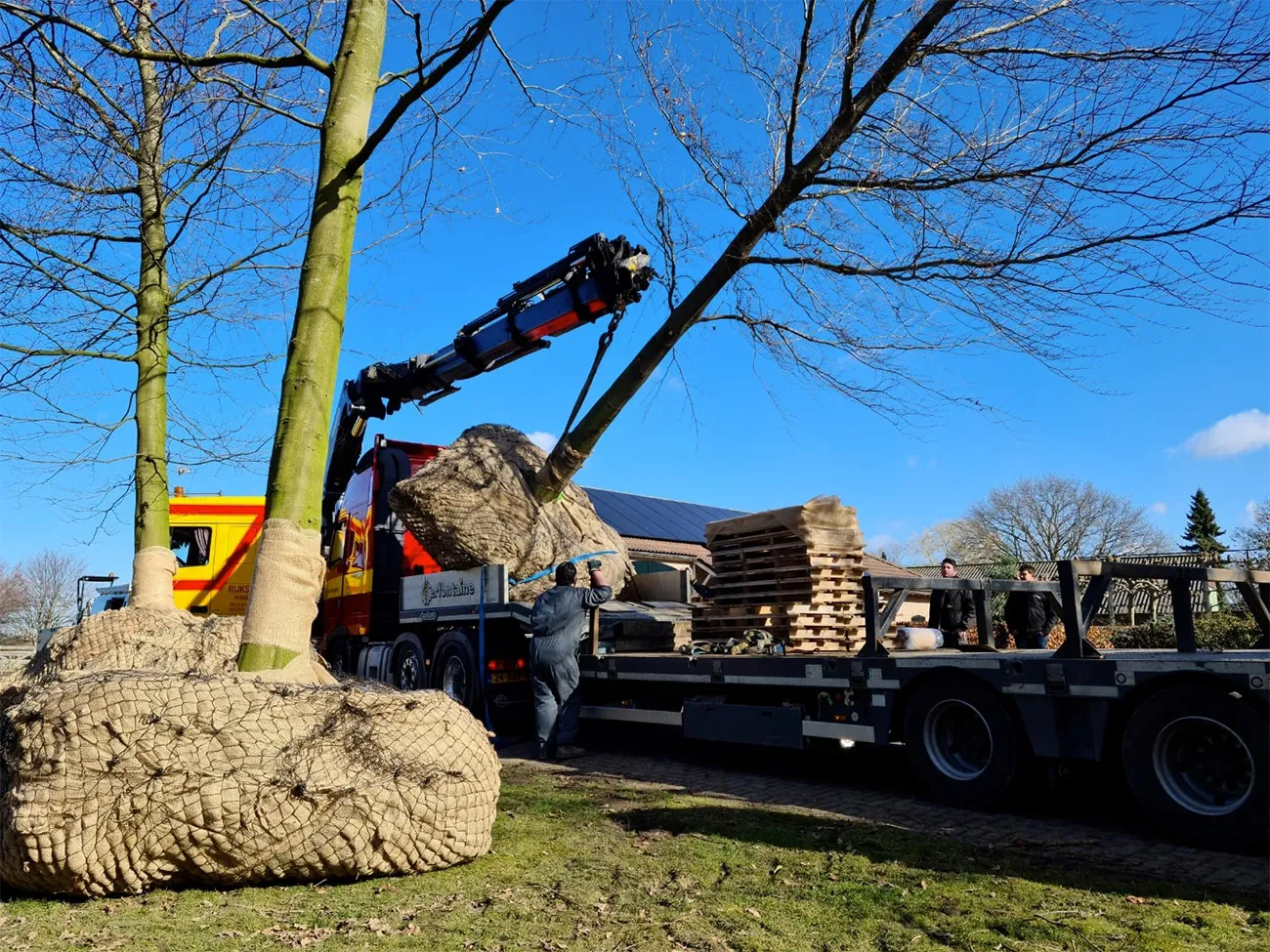
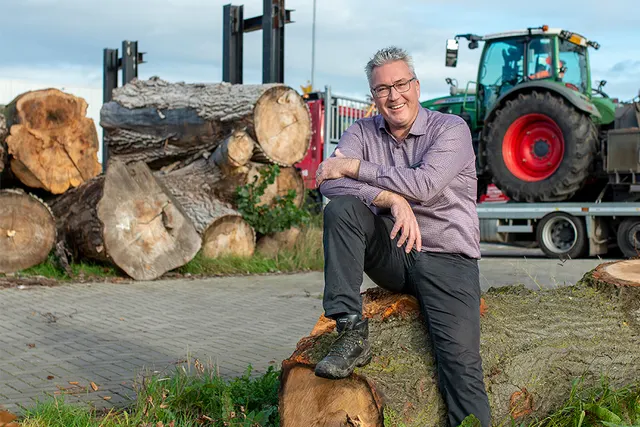
They all come from a practical background, are qualified ETTs/ETWs and landscape gardeners, carry out analyses on behalf of contractors and, above all, work collaboratively. Specialist Gijsbert-Jan van Voorthuizen at Van Voorthuizen Boom- & Groenverzorging B.V. “Where should something go, or what should be planted? What is the best way to maintain it? How can it be preserved sustainably? Are the plans actually feasible? These are the questions we deal with. We take a realistic look at the plan as a whole.”
Van Voorthuizen: “Our staff are qualified and certified. Our company is VCA **/Groenkeur and ISO certified. We are also members of various trade associations and focus mainly on green spaces in the broadest sense of the word, from trees and gardens to bank protection and paving. Our area of work is generally within an hour’s drive of Lienden, particularly in the central Netherlands.”
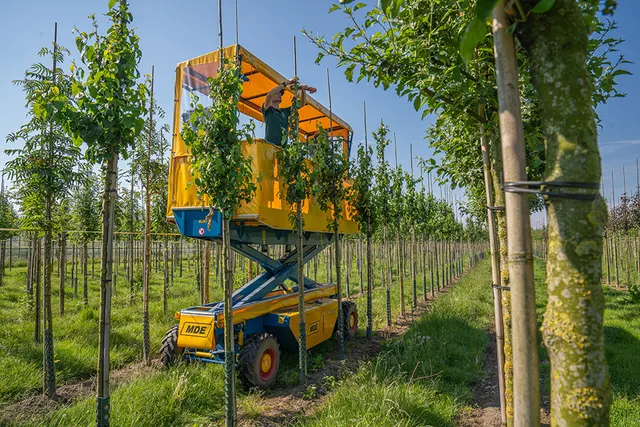
Looking ahead is very important, says Van Voorthuizen. “The further ahead, the better. That is also what makes the work so enjoyable for us. You contribute something for the years to come and get the work done now for the next generation. I want them to be able to enjoy a green living environment for a long time too. That means getting involved as an arborist as early as possible. I’m delighted when the right planting is in the right place. The opposite makes me sad: planting or transplanting trees or greenery in an environment that will no longer exist in fifteen years’ time.”
Thinking circularly
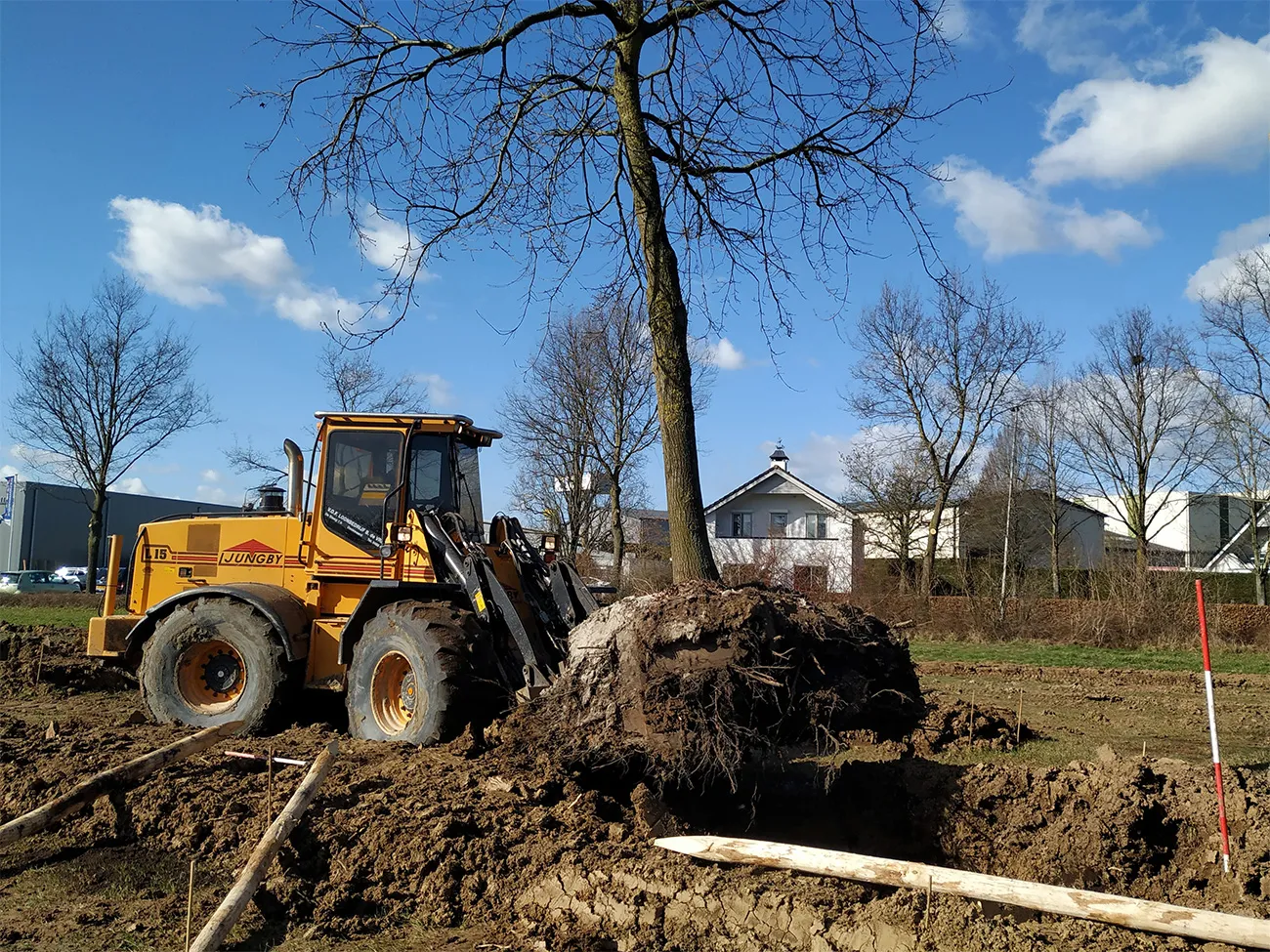
“On industrial estates and in redevelopment projects, for example, trees and shrubs are sometimes needlessly felled, even when they are attractive plantings and mature trees. Often the excuse is that it is economically advantageous. But we think they can still be put to good use in a new project, on another site. We call that thinking circularly. If there is valuable planting on a site earmarked for redevelopment, we want to look at where it could add value. The first step is certainly not to cut it down. First, we want to explore ways of preserving it sustainably on site, for example by adapting the design, and if that is not possible, reusing it elsewhere. That way, everything is in balance, taking account of all existing planting and biodiversity.
That is why we want to inspect and map out everything on site first. Only then can you move to the drawing board. It is good to have ambitions, but you also need to be realistic. Planting an additional million trees is a wonderful goal, but it needs to be part of an integrated approach. Consider factors such as history, soil, the condition and vitality of existing planting, and a diverse range of species to replace it. Take everything into account so that a good compromise can be reached.”
Question about this story? Ask your question
Keep following this
Get an email when a new story is published. No account needed.
- ThemeTrees and plants for tomorrow
- SubjectTrees & plants