‘Trees play a key role in our plan of action’
Text Nolanda KlunderImage Tree-o-logic
Trees for climate adaptation
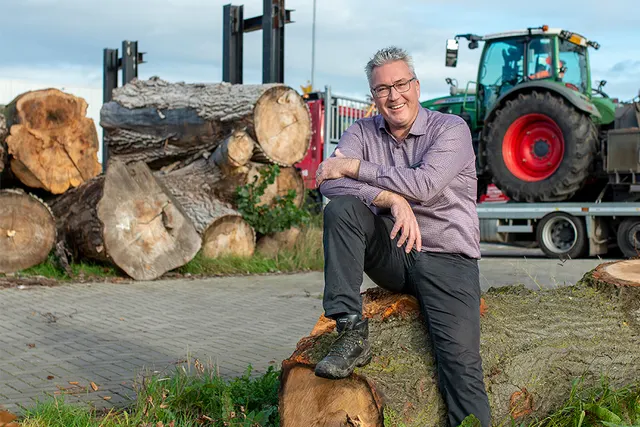
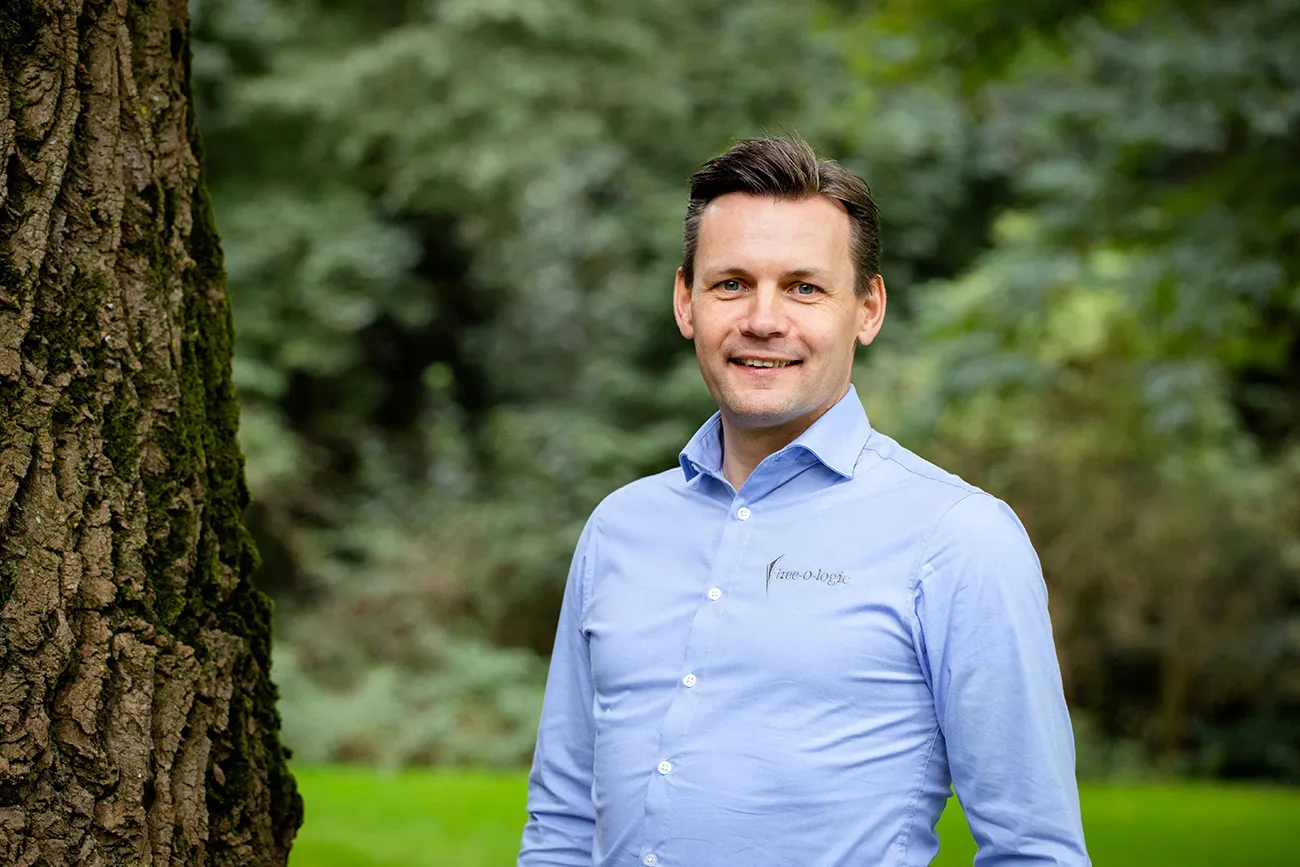
Mature trees can play an important role in climate adaptation and climate mitigation, Bernard Flier emphasises. Through his company Tree-o-logic, he advises public authorities on how to make the best use of trees for this purpose.
“Trees are key to adapting to, or perhaps even reversing, climate change, because they absorb CO2, have a cooling effect, produce oxygen and capture polluted air,” says Bernard Flier, consultant and co-owner of Tree-o-logic. The research and consultancy firm works mainly on behalf of public authorities, advising on tree policy, management and inspection, as well as data analysis and greening strategies. “We can increase the positive effects of trees by planting more of them. The first question, then, is: where can we create additional growing sites? We are talking about places where trees can remain for decades. They only start making a substantial contribution once they reach maturity, after around 40 years.”
Linking to legislation
Flier: “We have developed a plan of action to support and advise public authorities (municipalities, provinces and water authorities) on policies to increase greening with trees. First, you need to agree on your vision for trees and your objectives. Then you look at the legislation and regulations that provide the basis for your work. First, there are the United Nations’ sustainability objectives. Four of them are related to green spaces and trees. There is also the European Green Deal, which aims to achieve climate neutrality by 2050 and includes a target of planting 3 billion additional trees across Europe by 2030. Third, there is the Nature Restoration Law, which also stipulates that the area of green space in urban environments must be expanded. It sets a target percentage for tree canopy cover that we need to reach by 2040/2050. Fourth, there is the National Forest Strategy, which states that we aim to add 37,000 hectares of forest by expanding existing forests and planting trees in urban areas. This legislation therefore offers opportunities to align our objectives with.”
Opportunity map
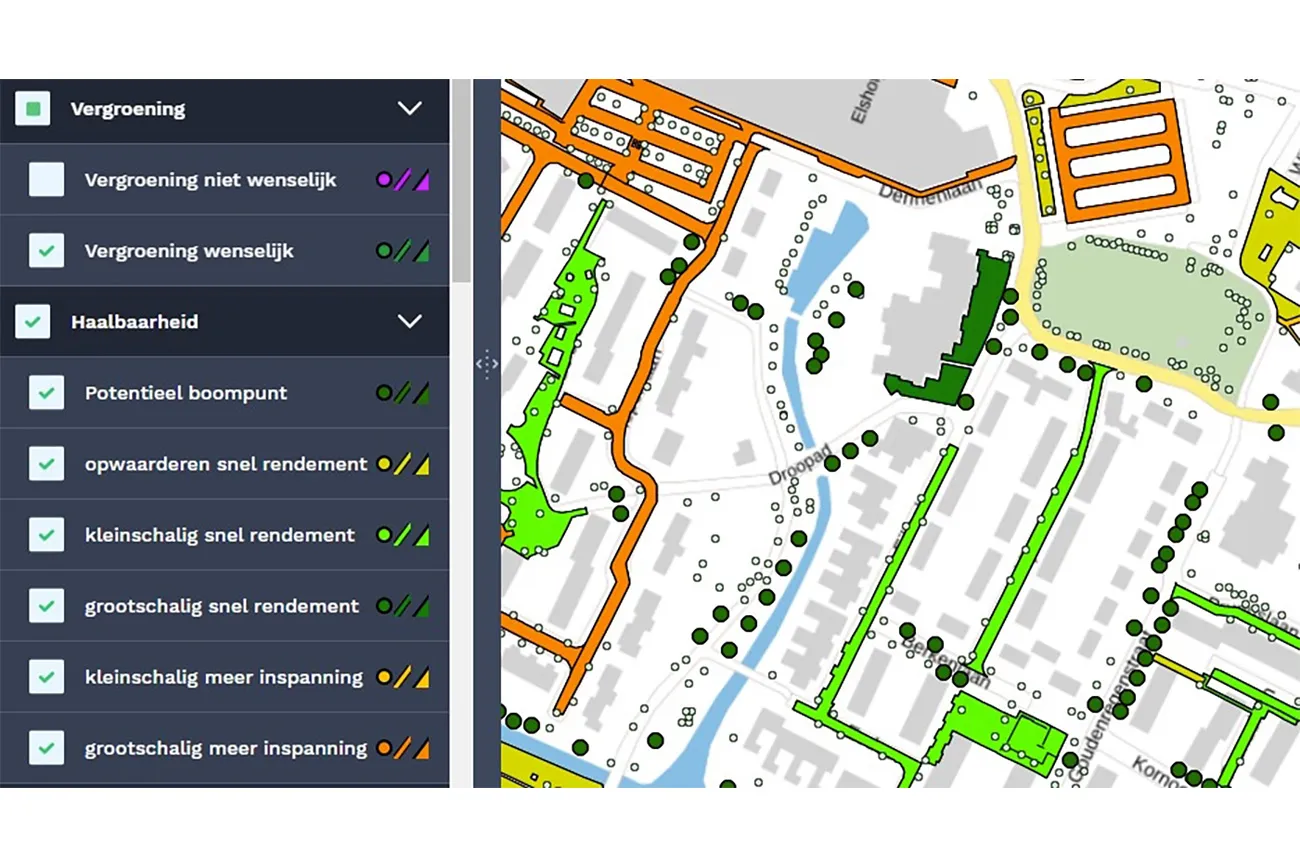
“Once we have established our objectives, we can analyse whether we have the space needed for the desired greening. We do this through a desk study of public spaces, also taking into account maps showing heat stress and flooding. This produces an opportunity map showing where there is potential for greening.” The next step is to visit those locations. “What is feasible at each site in practice? And what contribution should the trees make in these specific locations: do they need to capture particulate matter because they are close to a major road, or should they mainly provide shade because they are next to a playground? This results in a design brief for the designer to work with. The next step is to put the project out to tender and carry it out. The final step is evaluation and monitoring. We periodically assess whether the objectives are being met.”
Combining expertise
“It is of course vital under this plan to ensure that the green spaces also have water during dry periods. Rainwater can be stored in underground reservoirs, for example beneath car parks. This plan of action therefore brings together a wide range of expertise: knowledge of trees, data analysis and GIS, legislation and regulations, and spatial planning. We work with municipalities to review the urban development programme. For example, who owns vacant land? Could it be transferred to public space through an internal land swap, making it available for greening?” There are also limits to what is possible, Flier emphasises. “We will also encounter situations where trees are not an option. In those cases, we need to find an alternative way to add greenery, such as green roofs and walls.”
Question about this story? Ask your question
Keep following this
Get an email when a new story is published. No account needed.
- ThemeSoil and water in balance
- SubjectTrees & plants