Vaccination prevents damage caused by Dutch elm disease
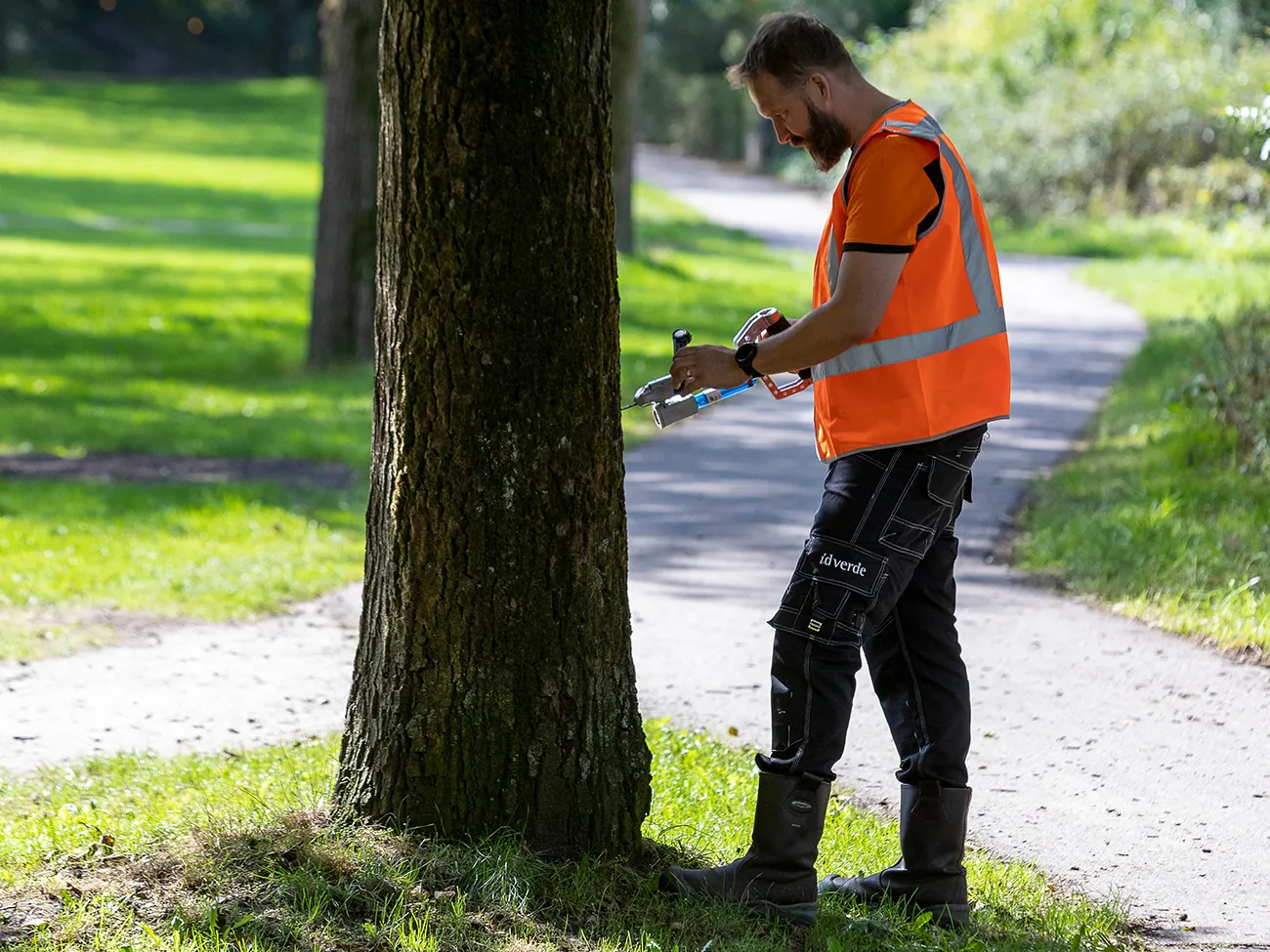
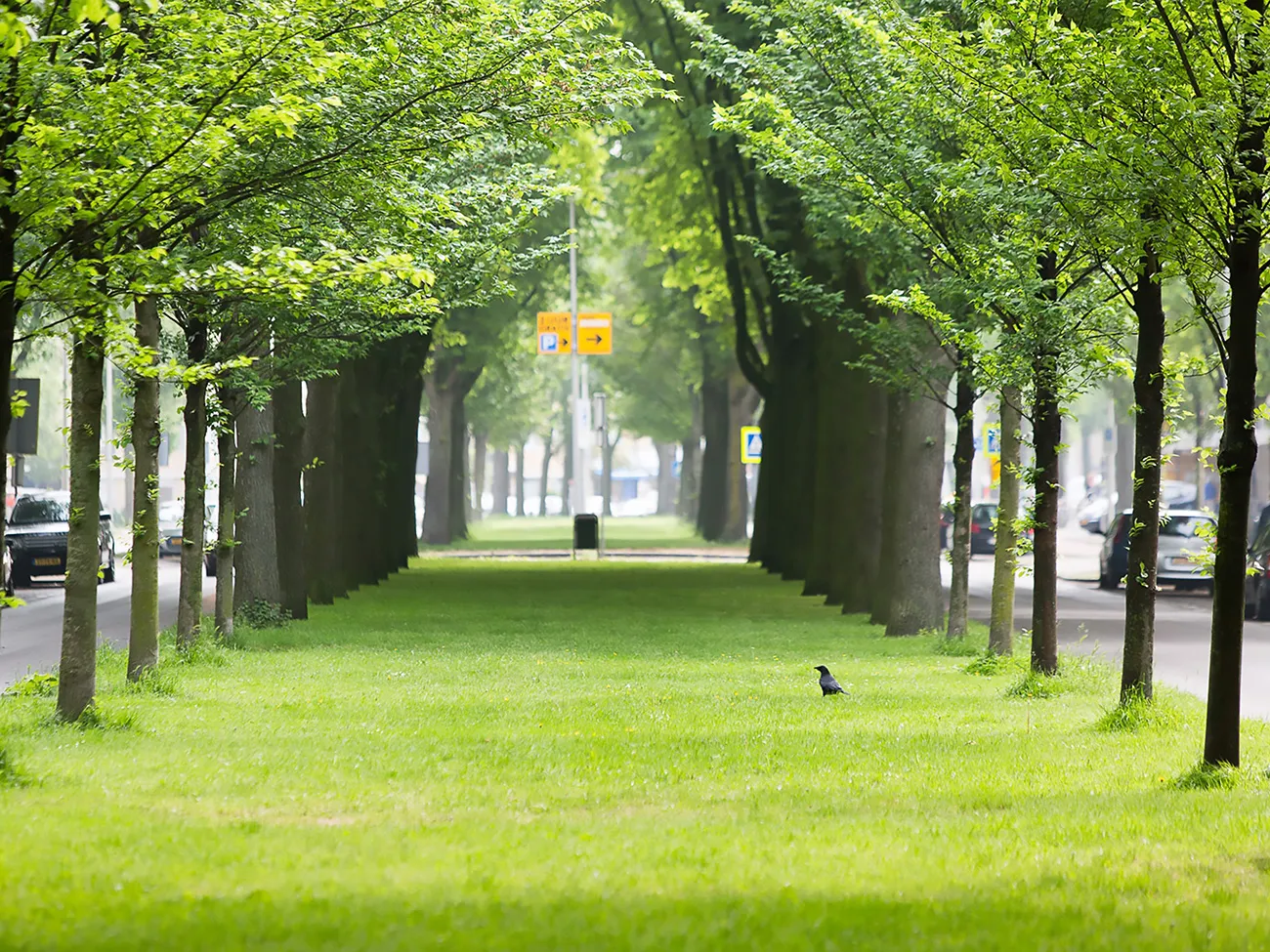
The elm is an integral part of Europe. In the Netherlands, it is found mainly along the coast, but it has traditionally also been a good urban tree. It can be found in many avenues and streets in The Hague, and along the quays in Rotterdam and Amsterdam. The elm has just one natural threat: Dutch elm disease, a contagious fungal disease. Damage caused by this disease can easily be prevented by vaccinating the trees once a year.
Protection for the elm
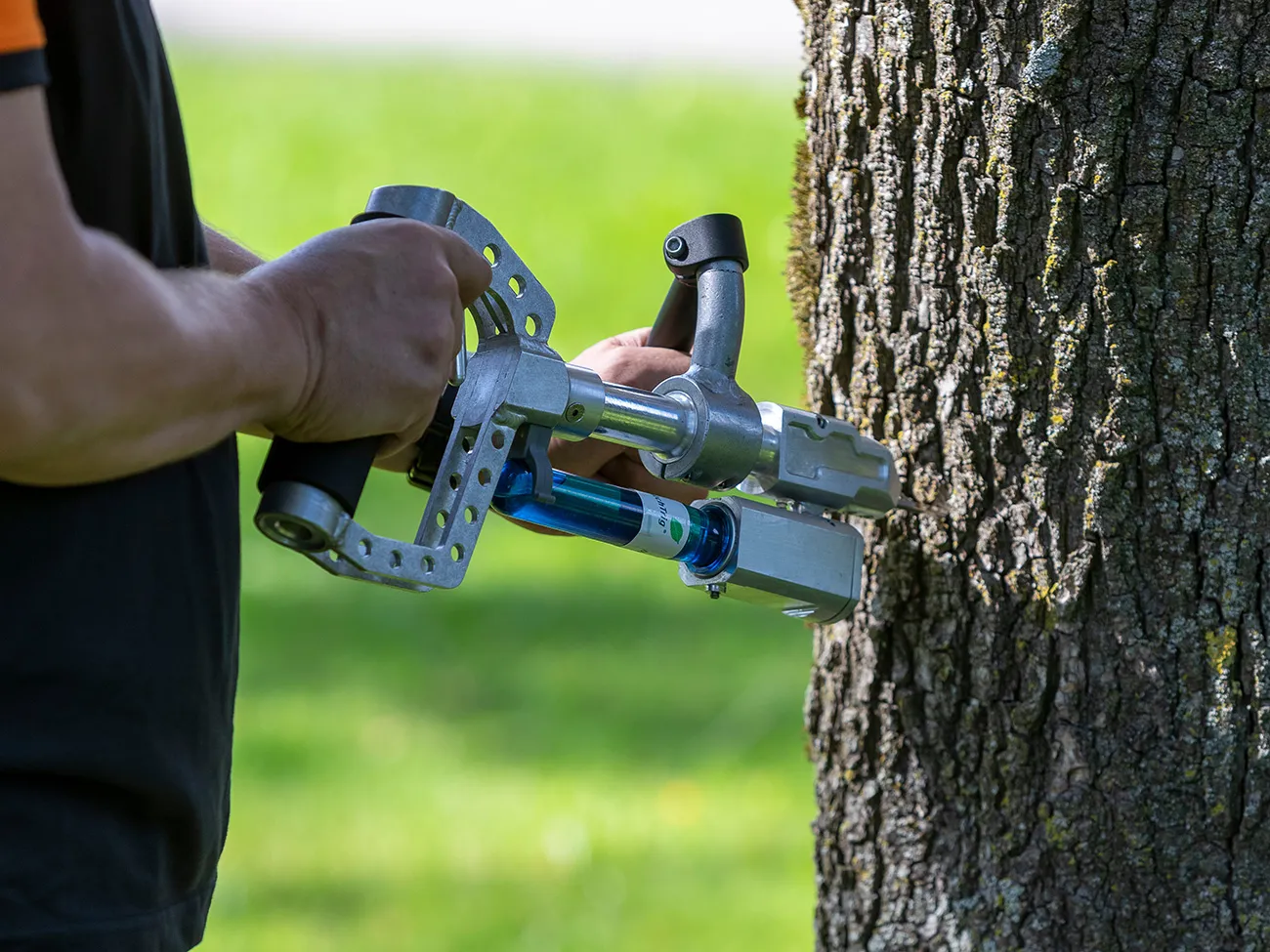
Ron Schraven is Head of Tree Diseases and Damage at idverde Bomendienst. “Dutch elm disease has been present in Europe since the beginning of the last century. The fungal disease caused enormous damage, particularly in Europe and North America. In the past, the east coast of the United States and Canada, and the British and European coast from France to Sweden, were dotted with elms. Millions of trees died in those areas.”
The contagious fungus spreads in two ways: via beetles carrying fungal spores from tree to tree, and through underground root contact between trees. Elms can use biochemical reactions to combat various types of fungi and damage, for example by closing their stomata or shedding their leaves. However, the elm’s response to Dutch elm disease is too slow. Schraven: “The infected tree’s natural response is to close off its vessels, so that no moisture reaches the leaves and no nutrients travel from the leaves to the trunk. This allows the tree to contain fungi, but it is not effective enough against Dutch elm disease. Because the disease spreads so quickly, the tree dies completely, sometimes in as little as six weeks.”
Preventive treatment
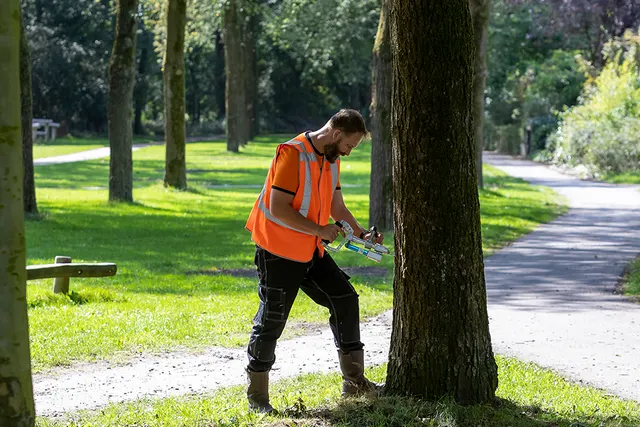
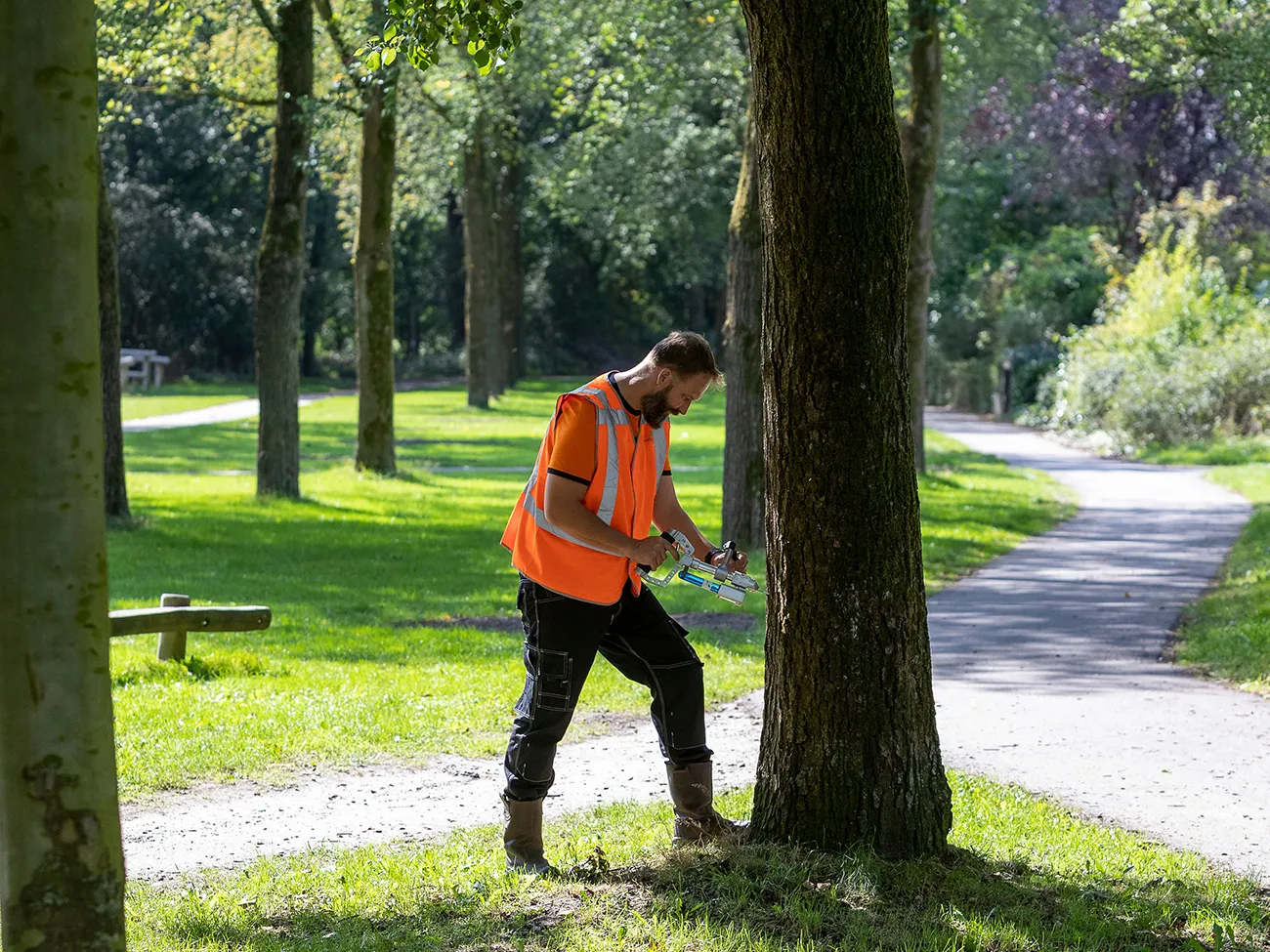
Once a tree is infected, felling it is the only option. However, the disease can be prevented. idverde Bomendienst is the only tree specialist in the Netherlands to offer a preventive treatment against Dutch elm disease: DutchTrig©. The treatment activates the tree’s natural defence system, enabling it to mount an optimal defence response if infected. “The treatment is a harmless fungus that puts the tree on the defensive. The vaccination must be administered annually. This is because the elm is a ring-porous tree species. Chemical processes take place in the outermost growth ring. That is why the defence system has to be activated again every year,” says Schraven.
To administer the vaccination efficiently and without causing damage, idverde Bomendienst developed a special injector for the treatment. The local authority or elm owner decides which elms are vaccinated, but idverde Bomendienst advises many local authorities on elm management. “Vaccination is one of the tools we can use. Felling trees is another option, but we do not favour it. We can also monitor the beetles that spread the disease. Using that data, we can act quickly at locations where problems are likely to arise.”
Biodiversity
Naturally, older trees are more valuable than young trees. Elms can live for hundreds of years outside cities, making a major contribution to biodiversity in an area. Vaccination is also many times cheaper than replacing a tree. Schraven: “Fortunately, there are still plenty of mature trees, and we now vaccinate more than 20,000 trees a year in the Netherlands, so that we can continue to enjoy our national heritage.
Question about this story? Ask your question
Keep following this
Get an email when a new story is published. No account needed.
- ThemeTrees and plants for tomorrow
- SubjectTrees & plants