Soil sensors tell you whether a tree needs water
Text Nolanda KlunderImage GreenDMS
Tree management through measurement
If you can monitor the condition of the soil around your trees in real time, you can ensure ideal conditions. GreenDMS has developed a soil sensor for this purpose. An app lets the tree manager see what the tree needs at any time.
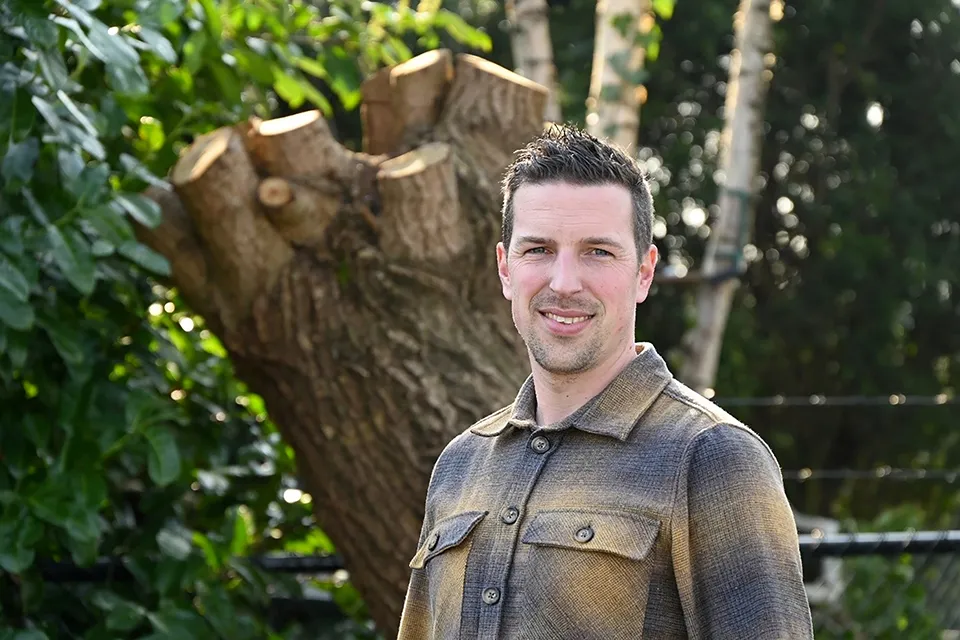
“In dry, hot summers, we see many young trees failing because they receive too little water or are consistently overwatered,” says Henk van Eldik, co-founder of GreenDMS. “We realised that soil sensors could solve several problems at once. With that idea, we founded GreenDMS in 2021. We ran pilot projects in 2022-2023, and are now taking our basic sensor to market. It measures soil moisture, EC and soil temperature.”
Below ground
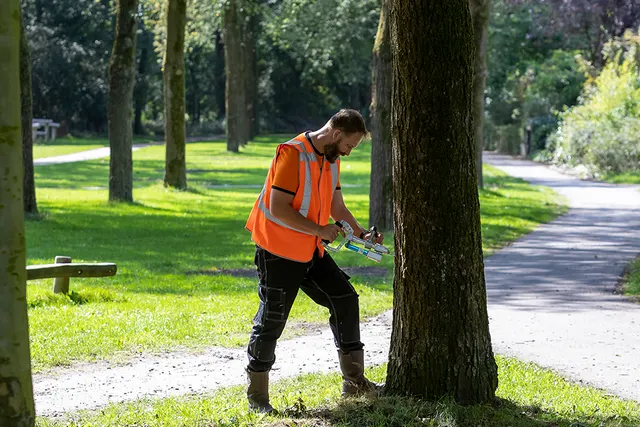
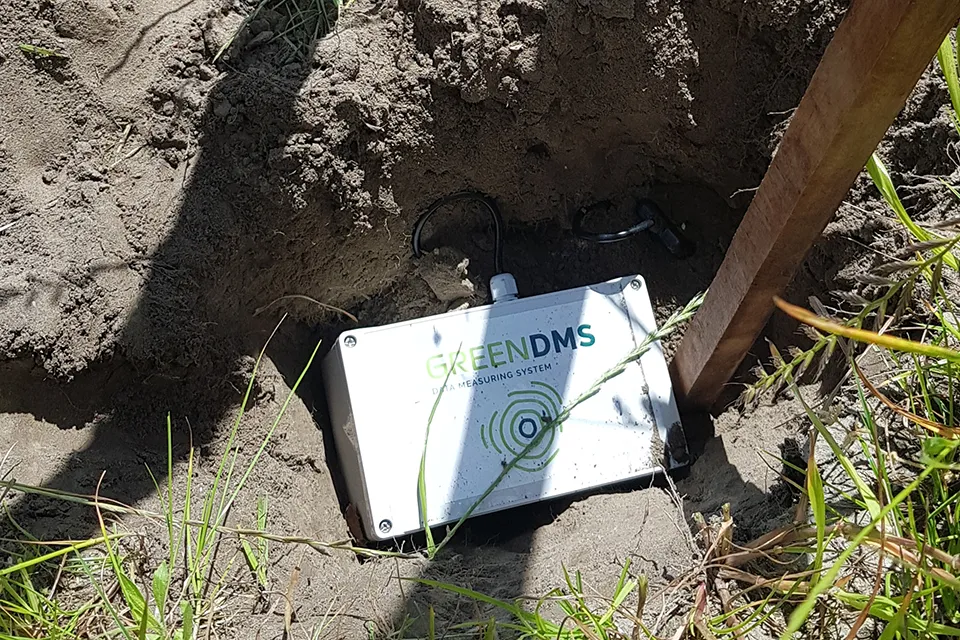
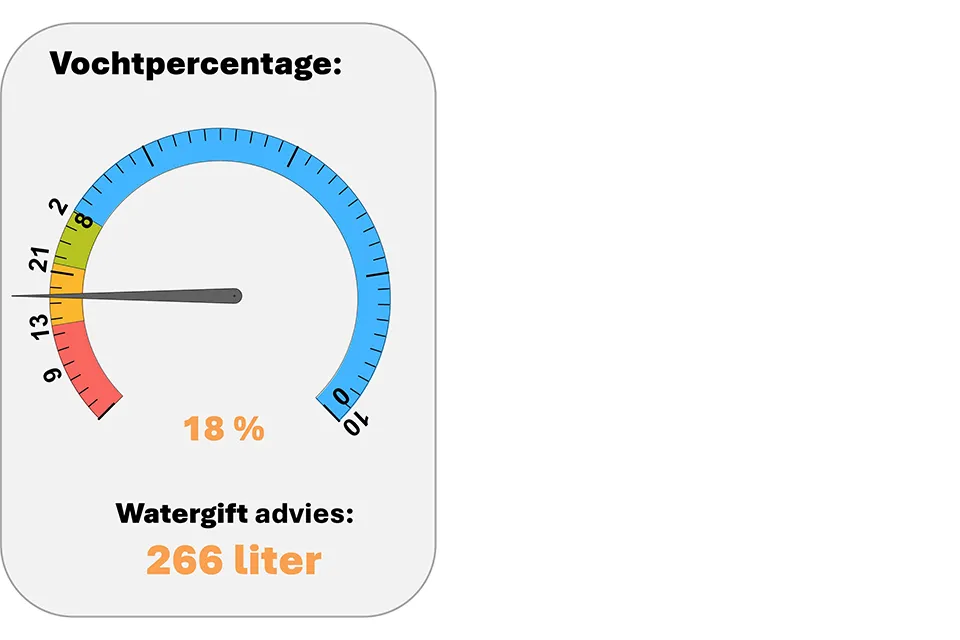
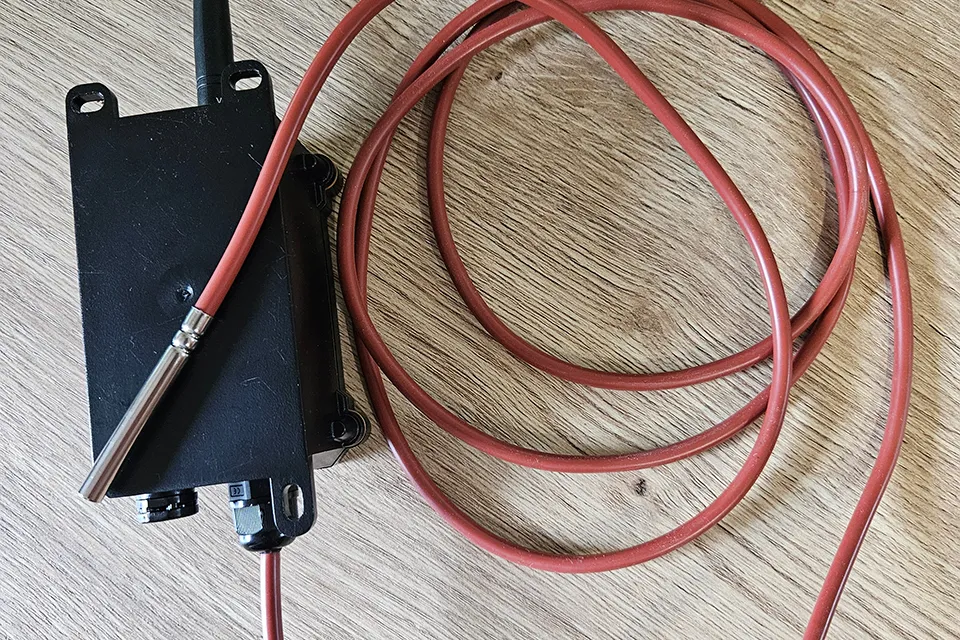
The sensor consists of a small unit connected to a flexible cable with measuring pins. Van Eldik explains: “You install the unit 10 to 15 cm below ground level, then insert the measuring pin where you want to take a reading. You then cover the whole assembly with soil, so it is hidden and cannot be stolen or damaged. In addition to this basic sensor, we are also launching a sensor with three measuring points.” The sensor sends information to the GreenDMS portal six times a day, or more or less often if required. “The tree manager can see the soil status immediately in the portal or the accompanying app. This information can be used for aftercare (does the tree need water?), but also to learn how to design planting sites so they can retain moisture.” Correctly interpreting the moisture balance and the associated watering advice is very important. “GreenDMS has made important progress in this area by linking moisture percentages to the pF curve for the soil type concerned. This enables us to provide sound advice.”
Soil preparation
“The better the soil is prepared, the less water is needed,” says Van Eldik. “This helps you use water sparingly when supplies are scarce. A major benefit is that you reduce your CO2 footprint if you do not need to make unnecessary trips to the trees with a watering unit and do not have to replace trees. With an optimal watering policy and a good planting site, no trees die from receiving too much or too little water, and they grow faster, enabling them to fulfil their functions sooner. The replacement rate can also be reduced to just a few per cent at most. Measuring EC and soil temperature also gives us insight into the soil’s electrical conductivity. This may prompt us to arrange for a soil sample analysis. In this way, we advise clients not only on watering, but also on the soil’s composition and mineral balance, and how these can be improved. We provide not only the technology, but also advice. Drawing on our years of experience, we know what is and is not good for trees.”
Measuring heat stress
In addition to soil moisture, other sensors can be used to measure temperatures in public spaces. “The well-known heat stress maps are often very general, and do not always reflect actual temperature differences at specific locations. Our sensors can show local differences very precisely, helping inform local authority policy. You can see exactly how much trees lower temperatures through their shade and cooling effect, and which tree species are best suited to this.” Van Eldik stresses that the sensors could be useful not only to local authorities and property developers, but also to tree nurseries: “You can use them to prevent sunscald in trees. We can measure how hot it gets in specific places and determine the temperatures at which the bark of trees with thin bark starts to split.”
Greater control
Van Eldik: “We are targeting local authorities, contractors and property developers to prevent tree losses and avoid unnecessary trips to water trees. We are also targeting tree nurseries and fruit growers, as the sensors give them greater control over moisture levels and temperatures in their plots. They could even use them to control their irrigation systems.”
Question about this story? Ask your question
Keep following this
Get an email when a new story is published. No account needed.
- ThemeTrees and plants for tomorrow
- SubjectTrees & plants