‘A garden begins with wonder’
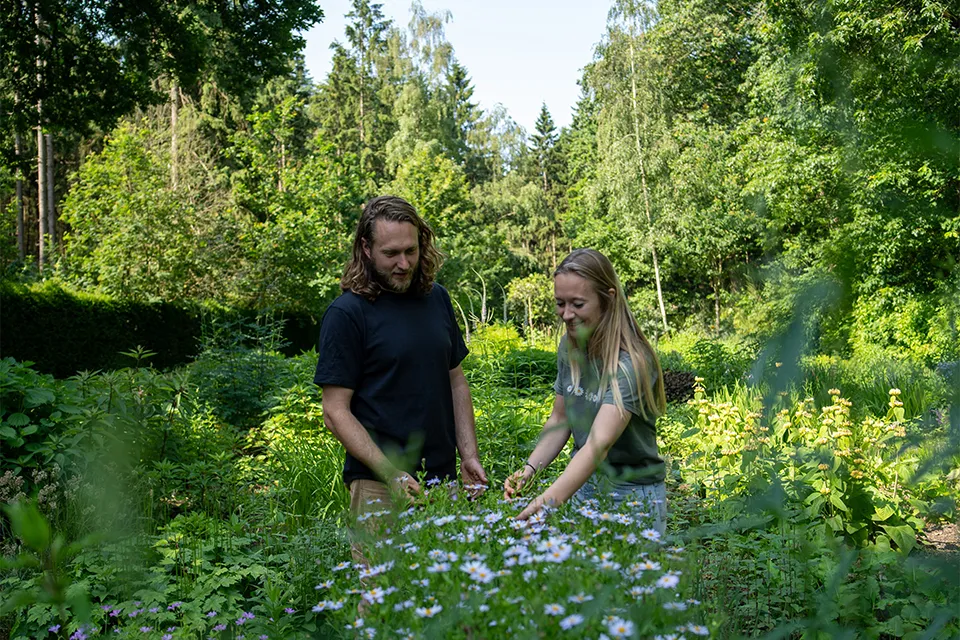
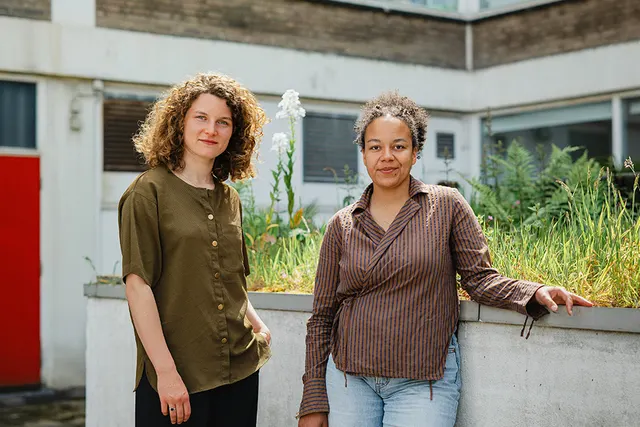
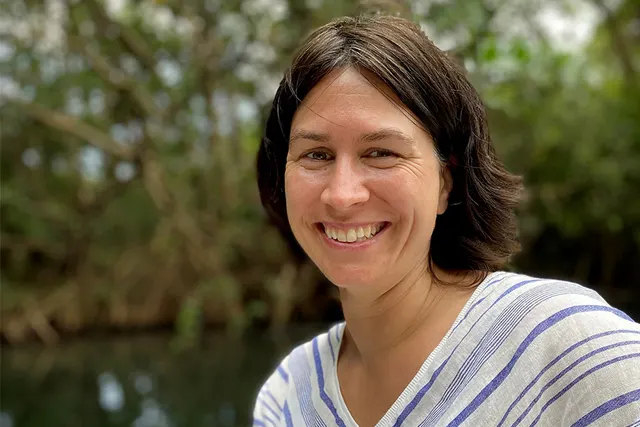
Marcelle van Houtum and Unze van Buuren, Bio-Kultura and Kwekerij van Houtum
At Bio-Kultura and Kwekerij van Houtum, we work with plants, compost and soil every day. With everything that grows, decomposes, takes root, teems with life and becomes nourishment for something new. That is precisely why we know that real change in the green sector does not begin with a product, a quality mark or a management plan. It begins with wonder.
When did we stop being amazed by nature? By a mole appearing beneath a lawn. By aphids on an apple tree. By a wasps’ nest under the eaves. By grass being allowed to grow tall and suddenly turning out to be full of life. By a little plant growing between paving slabs.
Many people do not see these things as nature, but as a nuisance. The mole must go. The aphids must be dealt with. The wasps’ nest must be removed. The grass must be short. The plant between the paving slabs is called a weed. And above all, the garden must be tidy. That word, tidy, may be what gets in our way most of all.
Over the past few decades, we have learnt to bend nature to our will. A garden became an extension of the living room: clean, neat and controllable. Soil became a growing medium, a place for plants to stand, rather than a living whole in which bacteria, fungi, worms, roots, water and air work together. A border became a picture. A lawn became a carpet. Green waste had to go in the garden waste bin. But a garden is not a showroom. A garden is a community.
There is constant activity beneath our feet. Plants exchange substances with soil life. Worms make tunnels. Fungi connect. Leaves become food. Dead material is not rubbish, but the beginning of new life. Anyone who clears, removes and smooths everything away takes the cycle out of their garden.
That may sound like ecological poetry, but it is above all practical. Leave the leaves. Use pruning waste as mulch. Make a compost heap. Choose a woodchip path instead of adding more hard surfaces. And sometimes dare to do nothing.
That last point is precisely what we find difficult. Not intervening can quickly feel like neglect. As if a garden is only being properly managed when visible work is being done. But good management does not always mean mowing, pruning, spraying, sweeping or removing. Good management can also mean looking, understanding and only then deciding.
That applies to private gardens, but just as much to public spaces. Local authorities mow less, leave verges to grow longer and give spontaneous vegetation more room. That is a gain. But if residents then only see that “the place is not being maintained”, we miss a crucial link: explanation. Without a story, ecological management simply looks like a mess to many people.
That is a challenge for everyone in the green sector. Not only to make places greener, but also to explain. Not only to supply plants, but to give them meaning. Not only to say that biodiversity matters, but to show what is living in that long grass. The major change we need is not just technical. It is social and societal. Perhaps even philosophical.
The future of green spaces requires knowledge, craftsmanship and good products. Certainly. But without wonder, greening remains a project. With wonder, it becomes culture.
So next time there is a molehill on the lawn, take a breath before fetching the trap from the shed: perhaps it is not a problem, but a compliment.
Question about this story? Ask your question
Keep following this
Get an email when a new story is published. No account needed.
- SubjectThe Pen