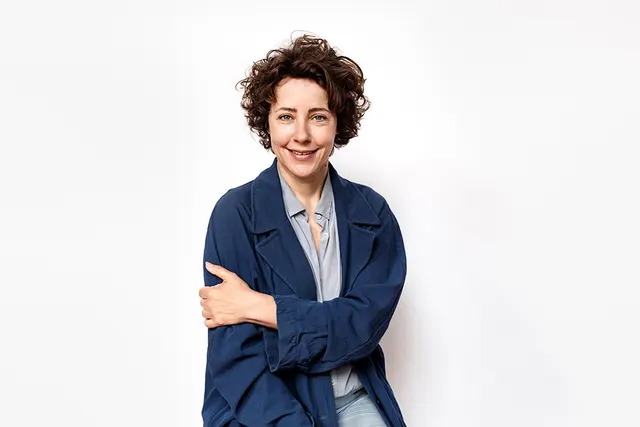
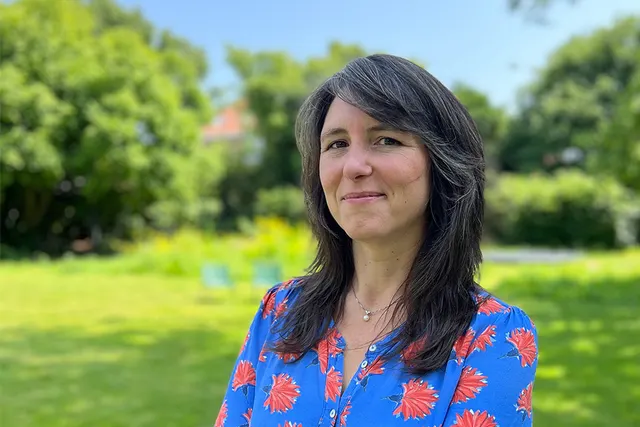
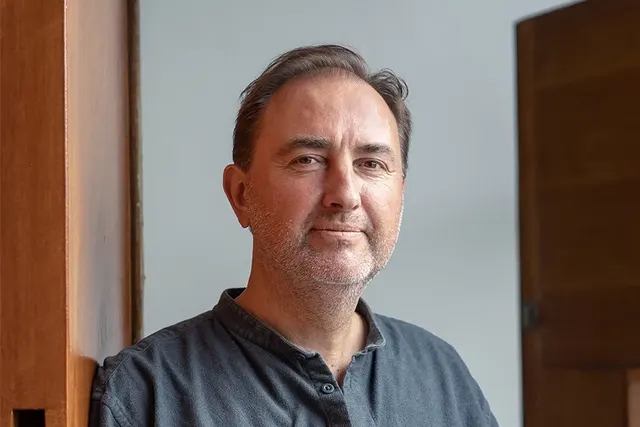
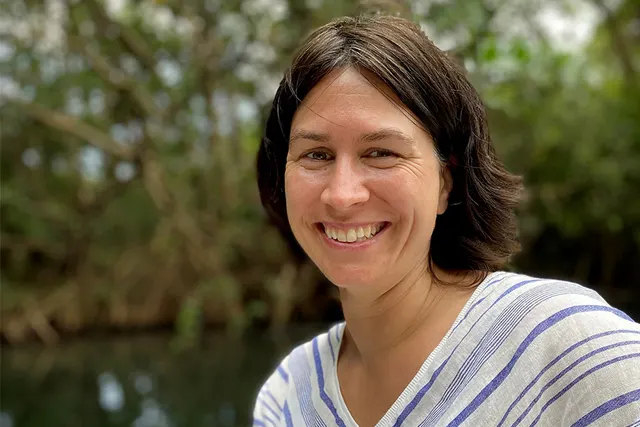
Maxine Luger: The city is not a system failure
We still too often treat urban greenery as an extra. An addition. A nice bit of dressing on the real estate sandwich. Something you “might as well include” if the budget allows. And that is exactly where things go wrong.
Because green is not an add-on. Green is the system.
Anyone who reduces urban greenery to a box that has to be ticked in a specification misses what it is really about. Trees, plants and soils are not props; they are functional infrastructure. They cool our buildings, buffer water, extend the lifespan of structures and make cities liveable on days when asphalt and steel turn into a hotplate.
And yet we keep acting as if green is something new. Even though greenery is closer to our nature than the buildings in which we live, work and spend time.
In my work, I measure what greenery actually does every day. No assumptions, no glossy renders, just objective data. In squares where a few green modules already deliver measurably lower temperatures, and where people suddenly want to spend time. On roofs where residents wanted to install air conditioning, until a green roof substantially lowered the indoor temperature. That is not aesthetics, that is building physics.
Yet I still hear the same objections: too heavy, too expensive, too complicated, too much maintenance. These arguments often say more about our way of thinking than about reality. There are now lightweight systems that can be installed on almost any roof. And maintenance is easy to manage if it is considered in advance. Roots will not grow through the roof if the system is well designed. In fact, the roof will last longer!
What gets in our way above all is short-term thinking.
Urban greenery requires us to look to the future. Plants do not grow according to the project phases used by developers. They require vision, confidence and a willingness to invest upfront today in effects that will only become fully visible later, but are crucial to the world of tomorrow. That clashes with models focused above all on quick returns and immediate yields.
That is precisely the challenge facing our sector.
If we are prepared to calculate over the long term, initial costs become an investment with a sustainable return. If we take a more holistic approach to the system, we can turn real estate into living assets. Green buildings can have a positive impact on lifespan, the climate and people’s health. Do we want to keep seeing green as a risk, or as an ally of technology, real estate and infrastructure?
Policymakers and municipalities seem to be increasingly aware of this. There is a growing understanding that cities without greenery are simply not future-proof. But as long as the real estate sector is still judged primarily on short-term profits, we will continue to invest in a system vulnerable to heat stress, flooding, air pollution and declining biodiversity. What will real estate be worth in a city where nobody wants to live?
Perhaps we need to approach the conversation differently. Less about whether we should green our cities, and more about how to do it effectively. Less about rules and obligations, and more about the opportunities offered by systems that work for us and demonstrably deliver returns.
The city itself is not a mistake. But the choices we keep making are. Let’s stop treating the symptoms and start restoring the system.
Question about this story? Ask your question
Keep following this
Get an email when a new story is published. No account needed.
- SubjectThe Pen