‘Each sub-ecosystem deserves its own design’
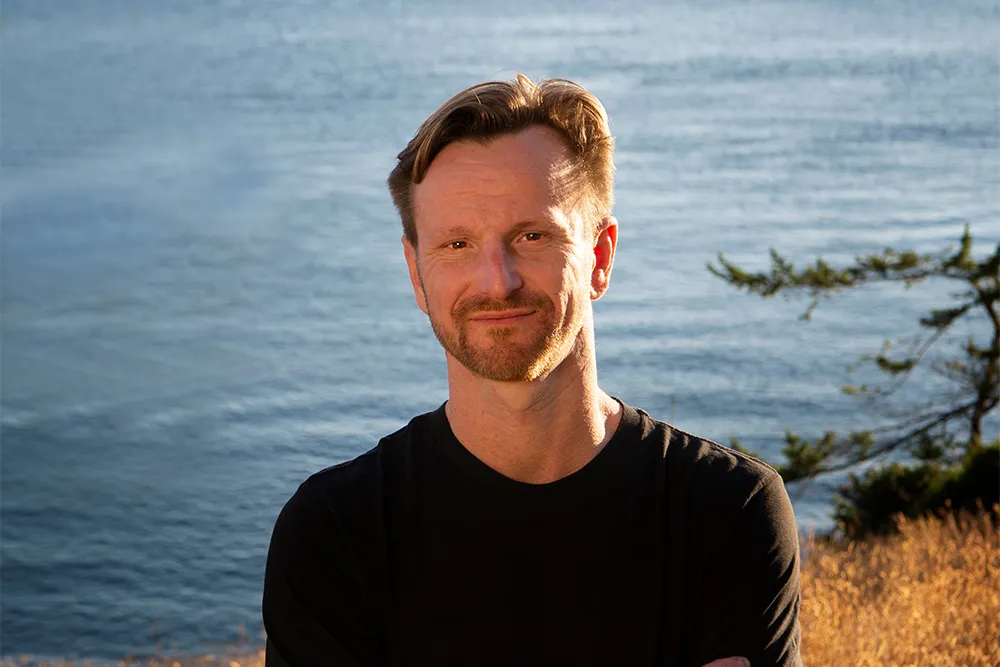
“Straight after graduating in Garden and Landscape Design from Van Hall Larenstein, I went to work for a large practice. I designed a lot of public spaces: parks, squares and urban developments. It was great fun and I learnt a lot. I was immediately fascinated by the large scale and the context of a place. But eventually, I found the complexity of information flows, the many stakeholders and the compromises you have to make to produce a workable plan difficult to deal with.
That is why I eventually decided to focus on gardens and set up on my own. First in the Netherlands, and later from Canada, where I moved a few years ago. I was looking for a new dream and more space.
From a house I built myself on Saturna Island, off the coast of Victoria in British Columbia, I am rebuilding my design studio. And it takes some getting used to. I have to adapt my design tools and approach quite considerably here, which has made me even more aware of the context. It is striking to see how the closely mown lawn, originating in the suburbs of the United States, has conquered the rest of the world. And how British, Victorian garden culture, with its introduction of exotic plants into gardens and its use of gardens as collections of plants, has also become commonplace here in Canada.
I believe we need to go back to the way the original inhabitants of a landscape lived with it. I am becoming increasingly aware of that.
That is where the strength of responsible, nature-inclusive and resilient outdoor spaces lies.
“You might not expect it in a vast country like Canada, but cities here are all built according to a highly dominant, rigid grid system. There is little room for spontaneity. The idea of green structures that can be linked to the organic growth of cities, as in Europe, is not familiar here. This has resulted in a rather poor green infrastructure. In that respect, the Netherlands and Europe are years ahead of North America and Canada.
Of course, there is genuine wilderness here, but at the same time you can see that people here, too, are constantly trying to cultivate and structure it. And that is reflected in their gardens.
Now that I can look at the Netherlands from a distance, I can see that we actually have things pretty well sorted in our little country. We are miles ahead of other countries when it comes to landscape design. When I board a plane here to the Netherlands and see the neatly mown lawns and cultivated rows of conifers, I often think, ‘Goodness me, surely we can do much better than this? There are so many opportunities to enrich biodiversity!’ Compare that with the verges in the Netherlands, which are increasingly left unmown, and how this is simply accepted by the general public. That is hopeful and inspiring.
I am slowly seeing a countermovement emerge against what I call ‘Luxury gardens’. Gardens that are all about luxury and bling, rather than the greenery or the materials we use and whether they are genuinely sustainable. Gardens that are more than just a swimming pool, a terrace and a jacuzzi. Since moving to Canada, it has become increasingly clear to me that a garden in Groningen cannot be the same as one in the Randstad or Limburg. A different landscape calls for a different design. You would not use the same paving on sandy soil as on peat soil. Each sub-ecosystem deserves its own design. I hope we are moving in that direction.”
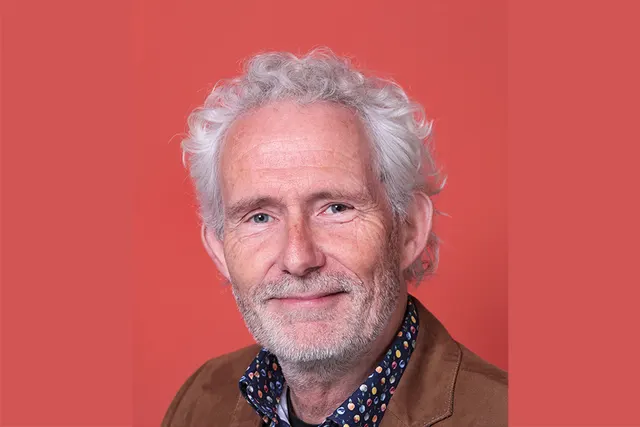
Andrew van Egmond
Garden & Landscape Design
Question about this story? Ask your question
Keep following this
Get an email when a new story is published. No account needed.
- SubjectThe Pen