How to bring nature back into the city
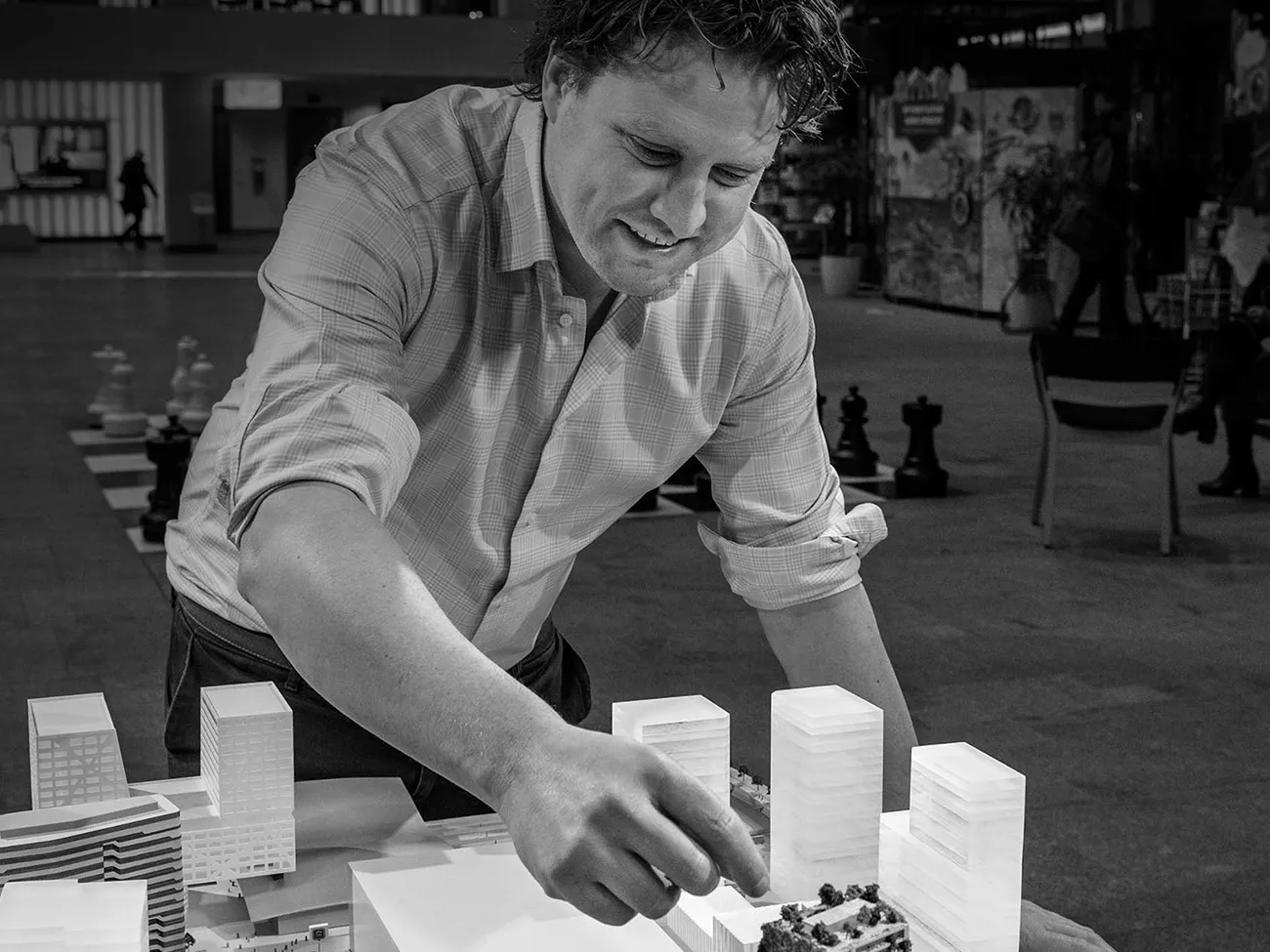
“Fortunately, I’m seeing landscape architects involved in building projects more often and at an earlier stage. This is of course closely linked to the major challenges of our time: protecting biodiversity, the energy transition and tackling climate change. It is good to have knowledgeable experts involved at an early stage, able to offer their input and set out a vision for the future.
Timo Cents: Independent landscape and urban designer
“I had the opportunity to do this, among other projects, for the construction of Triodos’ head office. The brief was not only to let employees of this sustainable bank work in a green setting, but also to give something back to nature. The result was a building made entirely of wood, as well as green roofs and a design that blends into the surrounding natural landscape.
“I also had the opportunity to help design the Wonderwoods project in Utrecht city centre, a 100-metre-high residential tower that is also a kind of vertical city park, with trees and shrubs along its walls and on the roof.
“The renewed focus on bringing more green space into urban environments is closely linked to the densification taking place in many cities. This is intended to preserve the landscape around cities, but it also creates an opportunity to bring more greenery into the city. After all, people like living in or near green spaces, if only to take the dog for a walk. The idea of living healthily in a healthy, and therefore green, environment is very important today. And this is exactly where landscape architects can make a difference.
“Not only by creating more greenery at height and on rooftops, but also, in my view, at ground level. Just as beautiful city parks were laid out more than a hundred years ago, where people still love to spend time, we need to focus once again on greening public spaces, to encourage city residents to get outdoors.
“Vertical greenery reaching up to 100 metres also calls for a different approach to maintenance. For one thing, there is still very little experience to draw on, so it is pioneering work. And it needs to be cared for differently from greenery at ground level. That means a maintenance provider needs to be at the design table from the very first sketches, able to contribute ideas and take part in decisions. Just as landscape architects are fortunately being brought in at an increasingly early stage. I’m pleased to see that, whereas construction and nature used to be separate worlds, there is now much closer collaboration with landscape architects, as well as ecologists and water experts. The result is better, more sustainable and, above all, more exciting concepts that are also robust and built to last.
“And it can certainly be done. We’ve proved it: trees at the former ING office in Amsterdam-Zuidoost are already 40 years old, with trunks a metre thick. If you create the right conditions and ensure the soil layer and irrigation are of good quality, a great deal is possible.
“And that, to me, is what it’s all about: creating a richer experience of nature in the city, where residents, as well as animals, can see, feel and experience nature and the seasons. That is ultimately the aim of my work.”
Question about this story? Ask your question
Keep following this
Get an email when a new story is published. No account needed.
- SubjectThe Pen