‘Taking a holistic view of our profession’

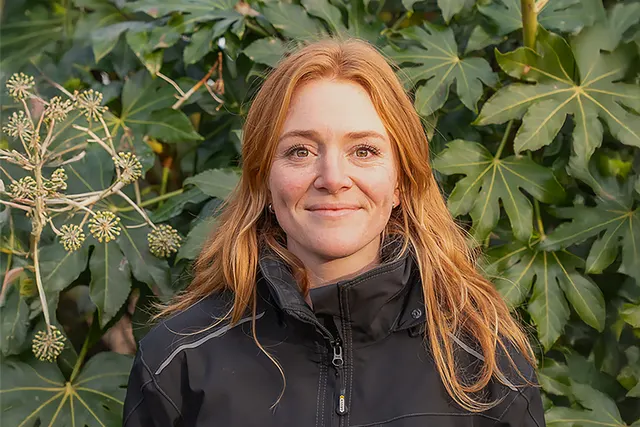
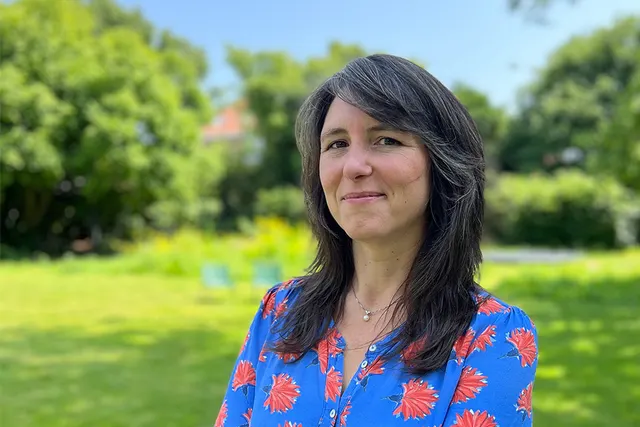
Tessa Duste, Founding Partner, Makers of Sustainable Spaces (MOSS Amsterdam)
“Green architecture is a relatively new part of landscape architecture. This means that projects were also completed in the past which, with the benefit of today’s knowledge, leave something to be desired in terms of quality, but which nevertheless marked significant progress and demonstrated what green architecture can be. Take Bosco Verticale in Milan, for example. The vision behind it is fantastic, but after the first few years following its construction, the technology and performance proved to be in need of improvement.
Landscape architecture used to be primarily about aesthetics. It had a rather British feel, with manicured garden designs and strict ‘design’ rules. When these landscapes began to appear on, around and inside buildings, it became a technical challenge, with feasibility taking on an increasingly important role.
Because there was little experience to draw on, in the early years greenery was ‘stuck on’ everywhere in all kinds of plans. That was not at all realistic. The end result was often disappointing, which almost brought our profession to an end. “All those lovely green pictures, but none of it actually works in practice” was a common, and justified, criticism for a while. I can point to several green façades in Amsterdam where nothing grows any more.
There are increasingly more examples proving that it can work. Landscape and green architecture have, fortunately, become a much more integrated challenge. It is also design guided by social needs and wellbeing, taking into account not only plants, but also ecology and people’s wellbeing. It involves the different functions of a building. Designing for a hospital is different from designing for a school, office building or residential complex. Piet Oudolf’s designs are created from an aesthetic point of view, rather than a social or ecological one. Don’t get me wrong, I think Piet’s designs are beautiful, but the future of our profession lies in integrated design, not aesthetics alone.
So we will have to take a more critical look at our own profession. Because we want not only beautiful cities and buildings, but also cities and buildings that are climate-resilient and future-proof, that promote ecology and people’s wellbeing, and so on. Landscape architecture and green architecture must be more than a picture on which you can create something beautiful with colour and form.
At the same time, this means we can no longer see our profession as simply a matter of design. It must be research-driven. You have to be willing to keep learning and adapting. What we are seeing and learning now is that you cannot keep using the same plant list for 20 years. The climate is changing, and so is the ecology. In 20 years, different insects and birds will be flying around here because our living environment is changing.
I know that architects and urban planners design for 40 years or more. However, our designs, those of green architects and landscape designers, are not finished when the project is handed over. For a building architect, a building is at its best just after handover and only deteriorates in the years that follow. For a green architect, handover is the starting point. Our designs need 20 or 40 years to be at their best. This calls for regular quality checks and ongoing guidance as the planting grows. In other words, we are not finished when a building or city is ‘finished’.
A good designer takes this into account. Adapts. Learns. Knows that they are part of a constantly changing world and bases their designs on that.
Question about this story? Ask your question
Keep following this
Get an email when a new story is published. No account needed.
- SubjectThe Pen